Rust is the silent enemy of metal fabrication shops, automotive restoration specialists, and industrial maintenance teams. When oxidation takes hold on thin metal surfaces — sheet metal panels, automotive body parts, ductwork, or lightweight structural components — the challenge intensifies. Aggressive rust removal methods can warp, gouge, or even punch through delicate substrates, turning a manageable restoration into a costly replacement. The wrong abrasive choice on a 0.8 mm steel panel can create irreversible damage in seconds. A properly selected round metal brush offers a safer alternative, delivering controlled abrasion that removes rust without compromising the integrity of thin-gauge materials.
This is where the round metal brush enters the equation as a precision tool rather than a blunt instrument. Unlike sanding discs, grinding wheels, or chemical strippers, a properly selected metal wire brush offers controlled abrasion that respects the integrity of the workpiece while efficiently removing corrosion. The geometry, wire gauge, material composition, and rotational speed all converge to determine whether your rust removal succeeds or leaves behind a damaged surface.
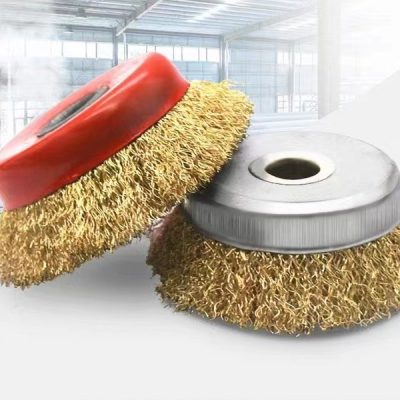
A round metal brush, when correctly specified for thin metal applications, removes surface rust and light corrosion without gouging, warping, or compromising the structural integrity of the substrate. Crimped stainless steel wire brushes running at moderate RPM on angle grinders or bench grinders provide the optimal balance of cutting action and surface preservation for sheet metal and other thin-gauge materials.
Understanding the interplay between brush configuration, wire material, and operating technique separates professionals who restore from those who replace. The following sections provide a comprehensive framework for selecting, using, and maintaining round metal brushes specifically for thin metal rust removal — drawing on material science, tool engineering, and practical field experience.
What Is a Round Metal Brush and How Does It Work
How a Round Metal Brush Works: Impact, Deflection, and Selective Rust Removal
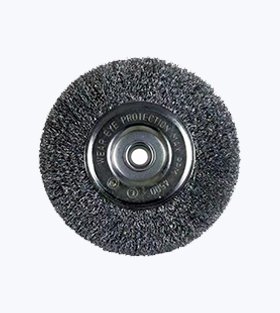
A round metal brush is a rotary abrasive tool featuring wire filaments arranged radially around a central arbor, designed for mounting on angle grinders, bench grinders, or dedicated brushing machines. The wires flex during rotation, striking the workpiece surface at high frequency to dislodge rust, scale, paint, and surface contaminants through a combination of impact and wiping action.
The mechanics of a rotary wire brush differ fundamentally from bonded abrasives like grinding wheels. Where a grinding wheel shears material through hard, fixed-abrasive cutting edges, a wire brush relies on the kinetic energy of individual wire tips. Each wire filament acts as a miniature spring-loaded scraper. Upon contact with the surface, the wire tip deflects, stores elastic energy, and then releases it as it clears the impact zone — producing a flicking action that fractures brittle rust layers while leaving the ductile base metal largely unaffected.
This differential action is precisely why a round metal brush excels on thin metal. The wire tips selectively attack the oxidized layer, which is harder and more brittle than the underlying steel. The base metal, being more ductile, absorbs the impact without material removal. This selectivity diminishes with overly aggressive wire types or excessive speed, which is why specification matters critically for thin-gauge work.
Key Operational Parameters: Wire Diameter, Speed, Pressure, and Hardness
Key operational parameters affecting performance include:
-
Wire diameter and crimp pattern
-
Rotational speed (RPM) and surface speed at the brush periphery
-
Brush diameter and wire length
-
Contact pressure and dwell time
-
Wire material hardness relative to the substrate
Wire Layout Types: Knot-Twisted, Crimped, and Straight Wire Configurations
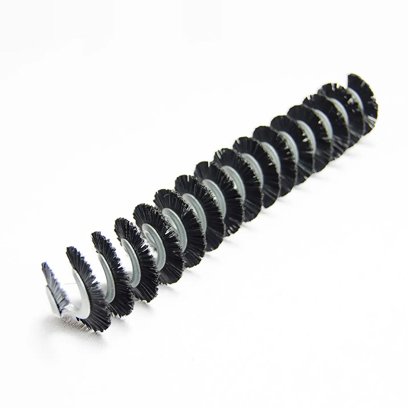
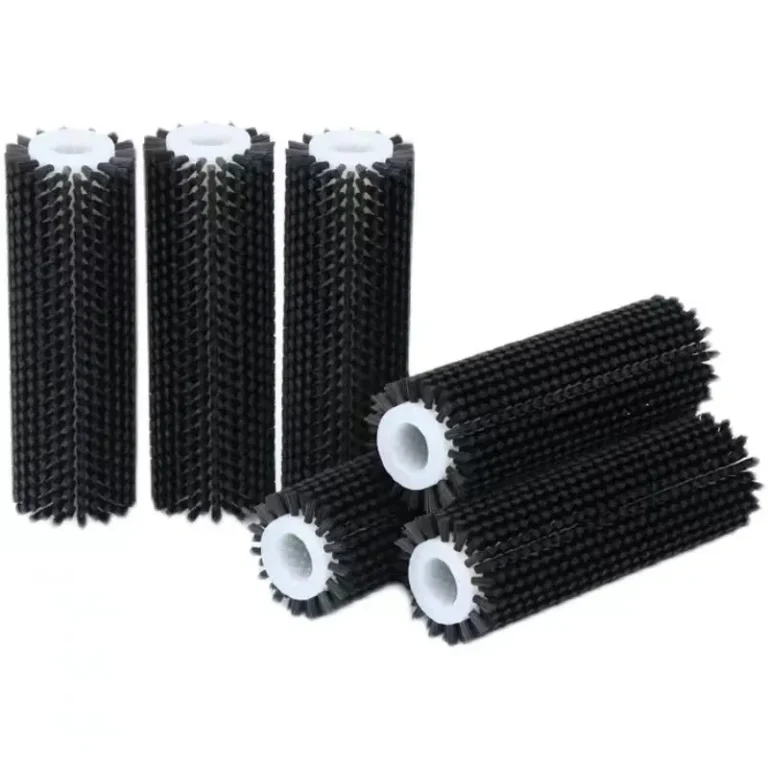
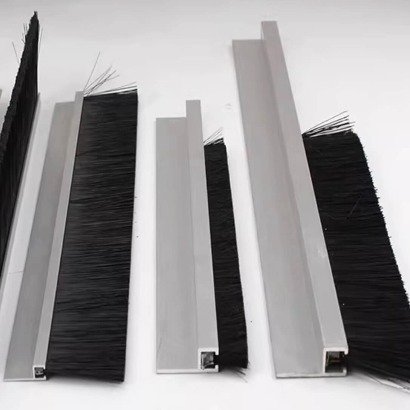
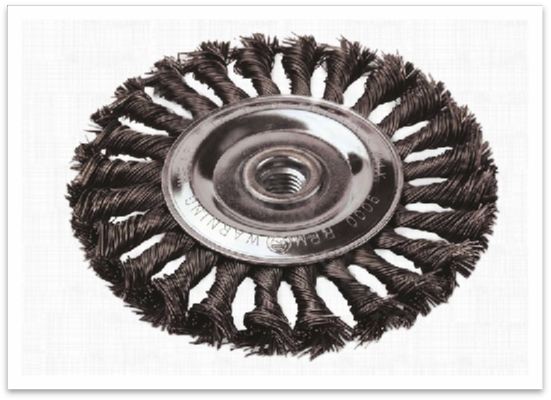
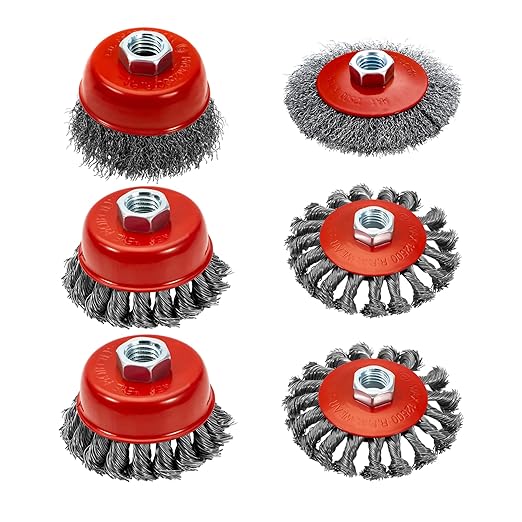
When browsing for the right tool, the range of available metal wire brushes spans multiple configurations. Understanding the differences between knot-twisted, crimped, and straight wire layouts is essential before committing to a specific brush for thin metal applications.
Why Choose a Round Metal Brush for Thin Metal Surfaces
Thin metal surfaces demand rust removal tools that maximize corrosion elimination while minimizing substrate loss, heat buildup, and mechanical stress. Round metal brushes — particularly crimped stainless steel variants — meet these requirements better than sanding discs, flap wheels, or chemical treatments because they offer adjustable aggression through wire selection and speed control.
Thin metal presents three interrelated vulnerabilities during rust removal. First, thermal sensitivity: excessive friction heat can cause localized expansion, leading to warping or buckling. Second, mechanical fragility: aggressive abrasive media can thin the cross-section, create stress risers, or blow through entirely. Third, surface finish requirements: many thin metal applications — automotive panels, appliance housings, architectural elements — demand a surface ready for painting or coating without additional smoothing steps.
The following comparison illustrates how different rust removal methods perform against these criteria:
| Method | Material Removal Control | Heat Generation | Surface Finish | Risk of Warping | Suitable for Thin Metal |
|---|---|---|---|---|---|
| Crimped Round Metal Brush | High | Low | Moderate-Fine | Low | Yes |
| Sanding Disc (36-60 grit) | Low | High | Rough | High | No |
| Flap Wheel (80-120 grit) | Moderate | Moderate | Fine | Moderate | Conditional |
| Chemical Rust Remover | None (substrate) | None | N/A | None | Yes (but slow) |
| Needle Scaler | Low-Moderate | Very Low | Rough | Moderate | No |
| Sandblasting | Low | Low | Variable | High | No |
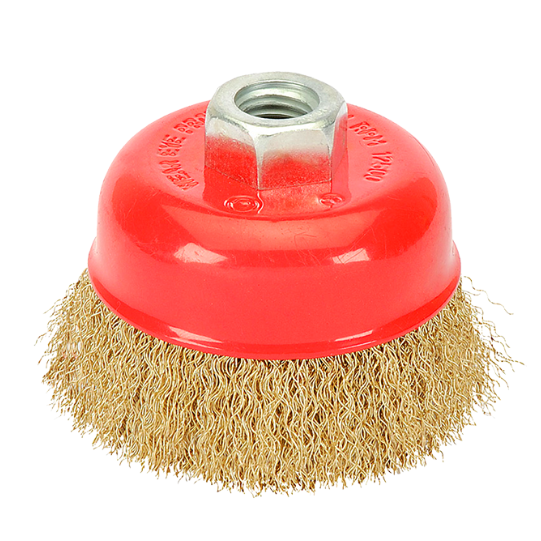
Crimped wire brushes occupy a unique position. The crimping process introduces a wavy pattern along each wire filament, creating multiple contact points per wire rather than a single tip. This distributed contact pattern reduces unit pressure at any single point, which in turn lowers the risk of gouging thin material. The crimped structure also helps the wires flex more readily, absorbing shock and minimizing heat buildup at the interface.
For professionals working with thin metal regularly, a dedicated stainless steel wire rust removal wheel brush provides consistent performance across multiple jobs. The stainless steel construction prevents after-rust contamination — a critical consideration when the cleaned surface will receive paint or coating, as carbon steel wire residues can initiate new corrosion under the finish.
Stainless Steel vs. Carbon Steel: Selecting the Right Metal Wire Brush
For thin metal rust removal, stainless steel wire brushes are the superior choice over carbon steel alternatives. Stainless steel wires resist corrosion themselves, leave no ferrous residue that could trigger flash rusting, and offer sufficient hardness to remove oxidation from most common steel alloys without excessive substrate wear. Carbon steel wire brushes, while cheaper and harder, introduce contamination risks and are better suited for heavy-scale removal on thick structural steel.
The material composition of the wire filaments directly influences three outcomes: rust removal effectiveness, surface contamination potential, and brush service life. These factors interact differently depending on whether you are working with mild steel, stainless steel, aluminum, or coated thin metal.
Wire material selection criteria in detail:
| Property | Stainless Steel Wire | Carbon Steel Wire | Brass Wire |
|---|---|---|---|
| Hardness (HRC equivalent) | 35-45 | 45-55 | 10-20 |
| Corrosion resistance | Excellent | Poor (self-rusts) | Good |
| Contamination risk to workpiece | Minimal | High (ferrous residue) | None |
| Suitable for stainless steel workpieces | Yes | No | Yes |
| Relative cost | Higher | Lower | Medium |
| Typical service life | Long | Moderate | Short |
| Spark generation | Low | Moderate | None |
For thin metal applications specifically, the stainless steel wire’s lower hardness becomes an advantage rather than a limitation. The slightly softer wire tips deform upon impact with the base metal rather than cutting into it, providing an inherent safety margin against over-penetration. Carbon steel wires, being harder, maintain sharper tips that can score thin material — especially at the higher surface speeds generated by angle grinders running at full RPM.
The contamination issue deserves particular attention. When a carbon steel wire brush removes rust from a thin metal panel, microscopic iron particles from the wire itself can embed in the cleaned surface. These particles, invisible to the naked eye, oxidize rapidly when exposed to moisture — creating pinpoint rust spots that bloom through paint or powder coating within weeks. This phenomenon, known as after-rust or flash rusting, is a leading cause of coating failure in industrial finishing operations.
For guidance on matching wire material to specific project requirements, refer to the detailed breakdown in choosing stainless steel wire brushes for your project. The selection process should weigh substrate material, desired finish quality, production volume, and post-cleaning coating schedule.
How to Use a Wire Wheel for Grinder on Delicate Surfaces
Using a wire wheel for grinder on thin metal requires a specific technique: maintain light contact pressure, keep the brush moving continuously across the surface, operate at 60-80% of the tool’s maximum RPM, and always work from the edge of the rusted area toward the center. These practices prevent localized heat buildup, minimize the risk of warping, and ensure uniform rust removal without thinning the base material.
The angle grinder is the most common power source for round metal brushes in shop environments. Its high speed and maneuverability make it versatile, but these same characteristics demand disciplined technique when working on thin metal. The standard 4.5-inch or 5-inch angle grinder typically runs at 10,000-12,000 RPM unloaded — a speed that can generate excessive surface heat and wire impact force if applied without restraint.
Before mounting any brush, verify that your grinder’s RPM rating does not exceed the maximum safe RPM stamped on the brush itself. A wire wheel for a grinder designed for bench use may have a lower RPM limit than a hand-held angle grinder can produce. Exceeding this limit risks wire breakage and projectile hazards.
Step-by-Step Operational Protocol for Thin Metal
Mount the brush securely on the grinder spindle. Ensure the arbor nut is fully tightened against the brush hub. Set the grinder to a variable speed if available. Target approximately 6,000-8,000 RPM for initial passes. Position the workpiece securely on a flat, supported surface. This prevents vibration and flexing during brushing. Approach the surface at a 10-15 degree angle, not flat. This allows the wire tips to strike and deflect efficiently. Apply only the weight of the tool; do not press down. Let the wire tips do the work. Move the brush in smooth, overlapping passes at approximately 1-2 inches per second. Work from the perimeter of the rusted area inward to avoid spreading contamination. Periodically check the back side of the panel for heat buildup. If the metal feels warm to the touch, reduce dwell time or increase movement speed.
Why Brush Angle Matters on Thin Metal
The angle of attack deserves emphasis. Holding the brush perfectly flat against the surface maximizes contact area. But it also maximizes friction, heat, and the risk of gouging. A slight tilt causes the wires to strike at an angle. They deflect more cleanly and generate less heat. They still remove rust effectively. This technique is especially important on thin metal. Heat dissipation is limited by the low thermal mass of the workpiece.
For detailed operational guidance including personal protective equipment requirements and workpiece preparation, the comprehensive walkthrough on how to use a rust remover brush safely and effectively covers every stage from setup to final inspection.
Common Mistakes to Avoid When Using Metal Wire Brushes
The most frequent errors when using metal wire brushes on thin metal include operating at excessive RPM, applying too much downward pressure, using the wrong wire type or diameter, staying in one spot too long, and neglecting to match the brush to the substrate material. Each of these mistakes can convert a salvageable thin metal piece into scrap within seconds.
Field experience reveals consistent patterns of error that lead to damaged workpieces. Understanding these pitfalls in advance allows operators to develop habits that preserve thin metal integrity.
Excessive Speed and Pressure
High RPM combined with heavy hand pressure is the fastest route to a ruined panel. The energy delivered to the workpiece increases with the square of the rotational speed — doubling the RPM quadruples the kinetic energy of each wire strike. On 20-gauge or thinner material, this can cause visible surface rippling in a single pass. Always begin at the lowest practical speed and increase only if rust removal proves insufficient.
Stationary Brushing
Holding the brush in one position, even momentarily, concentrates heat and abrasion on a small area. The localized thermal expansion can create a permanent bulge or depression. Continuous movement distributes heat and abrasion across the surface, allowing the thin metal to dissipate energy without distortion.
Wire Gauge Mismatch
Using thick-gauge, knot-twisted wires on thin metal is a fundamental specification error. Knot-twisted brushes are designed for heavy scaling on structural steel, not for delicate surfaces. The individual wire diameter — typically 0.014 to 0.020 inches for crimped finishing brushes versus 0.020 to 0.035 inches for knot-twisted types — directly determines the impact force per strike.
Cross-Contamination
Using the same brush on carbon steel and then on stainless steel transfers ferrous particles that will rust on the stainless surface. Dedicated brushes for different material families prevent this issue. Similarly, brushes used with rust inhibitors or lubricants should be cleaned before dry use to avoid chemical transfer.
Skipping Test Passes
Every batch of metal, every brush, and every operator introduces variables. A 30-second test pass on a hidden area or scrap piece of the same material reveals whether the chosen brush, speed, and technique combination is appropriate before committing to visible surfaces.
For a deeper understanding of how brush specifications translate to real-world performance, the guide on wire wheel brush selection, material, and grade basics breaks down wire types, filament diameters, and density ratings with application-specific recommendations.
Maintaining Your Round Metal Brush for Consistent Performance
A round metal brush delivers peak performance and longest service life when operators inspect wires before each use, clean the brush after every session, store it in a dry environment away from moisture, and replace it at the first sign of uneven wear, bent wires, or reduced cutting action. Neglected brushes not only underperform but also pose safety hazards from wire ejection.
Wire brushes are consumable tools, but their effective working life can vary dramatically based on maintenance practices. A brush that could deliver 40 hours of productive work may fail after 15 hours if subjected to poor storage, aggressive misuse, or contamination.
Pre-Use Inspection
Before mounting any brush, run a gloved hand lightly over the wire face to detect broken or severely bent wires. Inspect the hub for cracks, especially around the arbor hole. Check that the wire crimp pattern remains uniform — flattened or splayed wires indicate uneven wear that will produce inconsistent surface finishes. Any brush showing signs of hub cracking should be discarded immediately, as hub failure at operating speed can be catastrophic.
Post-Use Cleaning
After each session, remove accumulated debris from between the wires. Rust particles, paint chips, and scale lodged in the brush face reduce cutting efficiency and can transfer contamination to the next workpiece. A stiff nylon brush or compressed air at moderate pressure effectively clears debris without damaging the wire filaments. Avoid striking the brush against hard surfaces to dislodge debris, as this can bend wires and create imbalance.
Storage Conditions
Moisture is the primary enemy of wire brush longevity. Carbon steel wires will rust in ambient humidity, dulling their cutting edges and creating contamination risks. Stainless steel wires resist corrosion but can still trap moisture in the brush core, leading to hub rust. Store brushes in a climate-controlled environment whenever possible, or at minimum in sealed containers with desiccant packs.
Replacement Indicators
Replace the brush when any of the following conditions appear:
- Wire length has decreased by more than 30% from original
- Visible imbalance causes vibration during operation
- Wires appear flattened, splayed, or permanently bent
- Cutting action noticeably reduced despite cleaning
- Hub shows any signs of cracking, deformation, or corrosion
Conclusion
Why Thin Metal Requires a Different Rust Removal Approach
Removing rust from thin metal surfaces demands a thoughtful approach rather than brute force. The round metal brush — when correctly specified as a crimped stainless steel wire configuration — provides the controlled, selective abrasion that thin substrates require. Its mechanical action targets brittle oxidation while sparing the ductile base metal beneath. Sanding discs and other bonded abrasives cannot replicate this differential effect.
Three Key Decisions for Successful Rust Removal
Success hinges on three interdependent decisions. First, select the right brush material and wire configuration for the specific substrate. Second, operate at appropriate speed and pressure with continuous movement. Third, maintain the brush in clean, dry condition between uses. When these elements align, a round metal brush transforms rust removal on thin metal. It turns a high-risk operation into a predictable, repeatable process that preserves material integrity. It also prepares surfaces properly for subsequent coating or finishing steps.
Why Quality Brushes Deliver Better ROI
The investment in quality stainless steel wire brushes pays returns in reduced rework and lower material waste. Disciplined technique delivers finished results that stand up to inspection. Whether restoring a classic vehicle panel or preparing sheet metal components for powder coating, the right round metal brush is an indispensable asset in any metalworking toolkit.
Frequently Asked Questions
Can a round metal brush warp thin sheet metal?
Yes, if used at excessive RPM, high pressure, or held in one spot. Warping comes from localized heat buildup, not force. Prevent it by using moderate speed (~60–80% of max), light pressure, continuous movement (1–2 in/sec), and short passes with cooling breaks.
Grit equivalent of a crimped stainless steel wire brush?
A 0.014″ wire approximates 120–180 grit; 0.020″ is closer to 80–100 grit. However, wire brushes peen and scrape rather than cut, leaving a slightly burnished finish. Confirm surface profile with a gauge rather than relying on grit equivalents.
How long does a wire wheel last in production use?
Typically 20–40 contact hours. Lifespan depends on wire material (stainless outlasts carbon by 30–50%), speed, pressure, and rust type. Replace when wire length shrinks by 30% or vibration appears—worn brushes reduce quality and increase safety risks.