Careful selection of your tools is key to preparing surfaces in an industrial setting. While one might think that it’s as simple as rotating bristles on a Wire Wheel Brush to remove material, that’s only half the story. The type of filament grade used will ultimately determine performance—the wrong grade leads to premature wear, surface damage, or inefficient cleaning.
Filament specifications greatly impact results. Often, technical details relating to wire diameter and temper grades are buried in datasheets, making it difficult to understand real-world application performance. This knowledge directly translates into a brush lasting six months compared to one being replaced in three weeks. .
Understanding Wire Wheel Brush Filament Materials
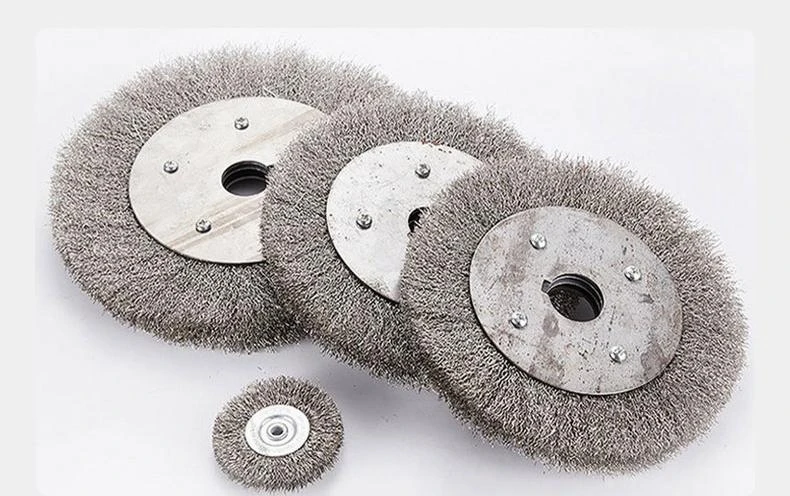
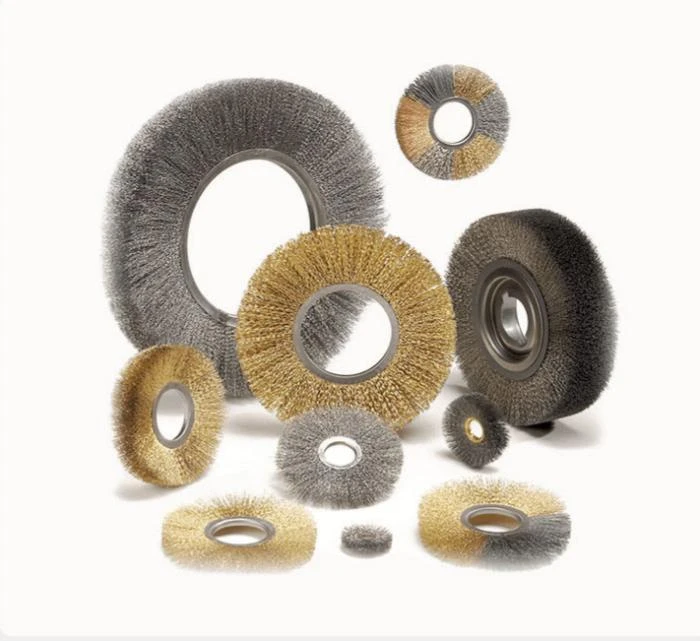
The wheel brush sector consists mainly of three major material forms: carbon steel, stainless steel, and plastic or synthetic filament.
- Carbon Steel: The most widely used for heavy-duty applications due to high strength and low price. However, it can contaminate non-ferrous metals and will rust if not handled properly.
- Stainless Steel: Necessary for aluminum and stainless steel substrates to avoid iron particle contamination. For specialized needs, explore our stainless steel polishing brush range.
- Plastic/Synthetic: These filaments, often impregnated with abrasive material, are softer than metal. They are ideal for cleaning without scratching.
Filament Grade Categories and Their Applications
| Wire Diameter | Temper Grade | Typical Use | Aggressiveness |
| 0.008″ – 0.012″ | Soft | Light cleaning, polishing | Low |
| 0.014″ – 0.020″ | Medium | General deburring, paint removal | Medium |
| 0.023″ – 0.035″ | Stiff | Heavy rust removal, weld cleaning | High |
| 0.040″+ | Extra Stiff | Scale removal | Very High |
Carbon Steel Wire Grades
Wire with a soft temper bends easily for light contamination, while wire with a medium temper performs most general industrial purposes such as cleaning welds or deburring edges. Heavy mill scale or thick rust requires stiff and extra stiff wires, as they will cut rather than sweep when the wire hits the material.
Stainless Steel Wire Options
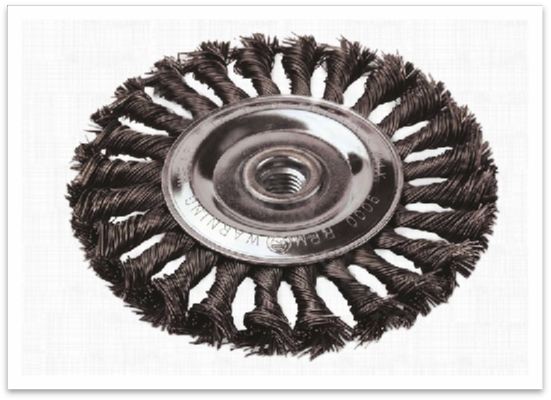
There are three types of stainless steel wire available: 302, 304, and 316 alloy grades. Generally, stainless steel wire is stiffer or more rigid when compared to carbon steel wire of the same diameter (gauge). Therefore, the correct grade should be used for marine and/or food processing applications to minimize the risk of ferrous contamination.
Plastic and Synthetic Filaments
Polypropylene and nylon filament sweep and scrub instead of cutting. They are sometimes used in plastic wire galvanized steel based wheel brush configurations. Light material removal is also common in applications for Drill Polishing Brush where a portable tool is employed to clean without the possibility of gouging. Abrasive-impregnated nylon provides grit to allow for light material removal in this manner.
Selection of Filament Specification
The material of the substrate and type of contaminants determine the filament choice.
- Rusty Carbon Steel: A stiff carbon steel Wire Wheel Brush with a filament diameter between 0.023″ – 0.035″ will be adequate. You may want to reference our instructional guide how grinder brush wheel removes rust effectively metal for further information regarding advanced techniques.
- Welding and Repairing Aluminum: The use of stainless steel wire in diameters between 0.014 inches and 0.020 inches offers sufficient abrasive or cutting action for polishing the oxidized surface of any automatic welding or repaired aluminum component.
- Elimination of Surface Flash/Burrs From Plastic: Soft nylon filaments can easily remove excessive flash and/or burring from plastic components without damaging their surface.
Common Application Scenarios
Industrial buyers often find themselves making decisions on which Wire Wheel Brush to select when performing different types of work—Maintenance, Fabrication, and Finishing. In these examples, there may be differing degrees of importance placed upon price versus the requirements of precision. To help you in your search process, utilize resources such as the best grinder brush wheel for drill comparison guide to further refine the configuration options to improve your workflow.
Selection Considerations for Industrial Buyers
Beyond filament grade, several factors affect performance:
- Diameter and Arbor Size: Must match the grinder or drill being used.
- Max RPM Rating: Exceeding this causes wire breakage and safety hazards.
- Trim Length: Longer wire offers more flexibility; shorter wire increases stiffness.
- Fill Density: Higher density improves lifespan but may reduce cutting aggressiveness.
Consistency is vital. Sourcing a high-quality wheel polishing brush ensures that batch-to-batch performance remains stable, minimizing production downtime.
FAQs
What wire diameter should be used for removing paint without damaging the base metal?
Medium temper carbon steel wire in 0.014″ to 0.020″ diameter removes most paints effectively while minimizing base metal removal on steel substrates.
Can stainless steel wire wheel brushes be used on carbon steel surfaces?
Yes, but they are less aggressive than carbon steel wire of the same diameter and more expensive, making them cost-ineffective unless contamination prevention is required.
How does filament grade affect brush lifespan in production environments?
Stiffer wire grades wear faster due to wire breakage under load, while softer grades last longer but may require more passes to achieve results.