Industrial HVAC systems consistently depend on clean condenser tubes to maintain stable heat transfer and energy efficiency. A Condenser Tube Cleaning Brush plays a central role in this process, especially in environments where fouling develops over time. From field observations, most efficiency losses in chillers are directly linked to tube surface contamination rather than equipment failure itself.
Understanding how a Condenser Tube Cleaning Brush is structured, what materials it uses, and why its design matters helps maintenance teams select the right tool for long-term system reliability. This article explains its construction, performance logic, and industrial selection principles with a focus on spiral-based designs.
Why Condenser Tube Cleaning Brushes Are Essential in HVAC Systems
A Condenser Tube Cleaning Brush is widely used in HVAC maintenance because condenser tubes gradually accumulate scale, sludge, and biological deposits. Even a thin layer of fouling significantly reduces thermal conductivity.
In most industrial cases, facility engineers observe:
- Rising energy consumption over time
- Reduced cooling efficiency
- Increased compressor workload
A properly selected Tube Cleaning Brush restores heat exchange efficiency and stabilizes system output. In large HVAC plants, this maintenance step often delivers faster ROI compared to chemical-only cleaning methods.
Structure and Working Principle of a Condenser Tube Cleaning Brush
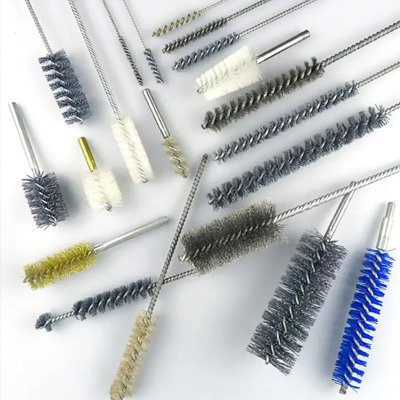
A Condenser Tube Cleaning Brush is designed to maintain full contact with internal tube surfaces. Its spiral structure ensures continuous abrasion along the tube wall.
Core Structural Components
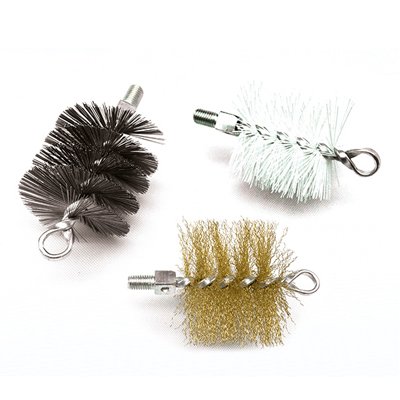
A typical pipe cleaning brush includes:
- Central twisted wire core
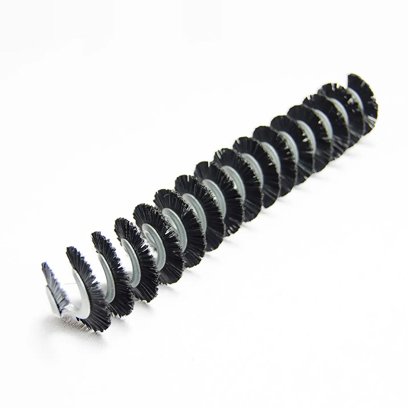
- Spiral-shaped bristle arrangement
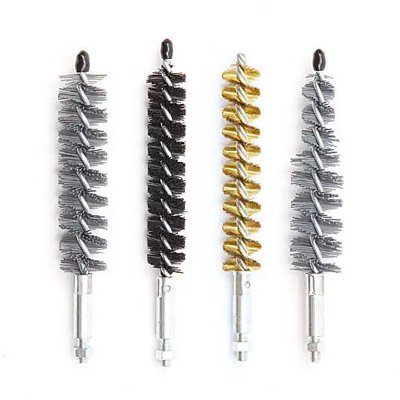
- Custom fill materials (nylon, brass, stainless steel)
- Flexible shaft connection point
The spiral geometry allows the brush to adapt to slight tube irregularities, making it more effective than straight-line brushing tools.
Materials Used in Condenser Tube Cleaning Brush Manufacturing
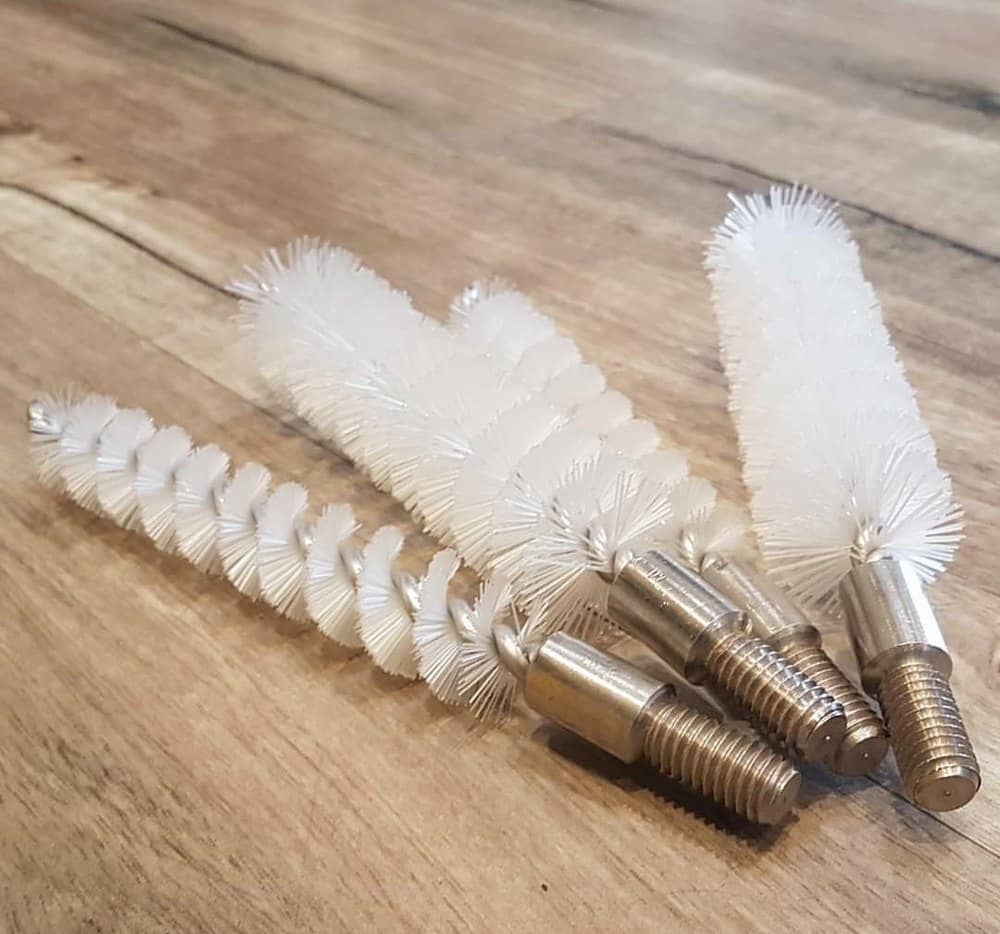
Material selection directly impacts cleaning efficiency and tube safety. In practice, engineers choose brush fill based on fouling severity and tube hardness.
Common Material Comparison
| Tube Material | Recommended Brush Fill | Application Environment |
|---|---|---|
| Copper | Nylon / Brass | Standard HVAC condensers |
| Stainless Steel | Stainless steel wire | Heavy industrial chillers |
| Titanium | Nylon / Polypropylene | Seawater systems |
| Cupronickel | Brass / Stainless wire | Marine HVAC systems |
A well-designed spiral brush must balance cleaning strength with surface protection. Overly aggressive materials often damage tube walls, especially in soft-metal systems.
Key Design Advantages of Spiral Condenser Tube Cleaning Brush
The spiral design remains the most widely used structure in industrial tube maintenance.
1. Full Surface Contact Cleaning
The spiral motion ensures 360-degree internal contact, improving deposit removal efficiency compared to flat brush designs.
2. Improved Operational Control
Technicians prefer spiral designs because they reduce uneven cleaning pressure and prevent localized tube damage.
3. Adaptability Across Systems
A Condenser Tube Cleaning Brush can be customized for HVAC, refrigeration, and power plant systems with minimal design changes.
Performance Benefits in Real HVAC Applications
Field maintenance data shows clear operational improvements after using a Condenser Tube Cleaning Brush:
- Heat transfer efficiency increases significantly
- Energy consumption decreases by 10–15%
- Compressor load stabilizes
- Maintenance intervals extend
These benefits are especially visible in large-scale HVAC systems where fouling develops faster due to continuous operation.
In comparison, traditional pipe cleaning brush alternatives often require more frequent replacement or multiple cleaning cycles.
Selection Guide for Industrial Use
Choosing the correct Tube Cleaning Brush requires evaluating multiple factors.
Key Selection Criteria
- Tube inner diameter
- Fouling type and severity
- Material compatibility
- Cleaning frequency
- Drive method (manual or rotary)
Recommended Practice
Engineers often select a brush 1–2mm larger than tube ID to ensure full contact without excessive friction.
Maintenance Practices and Operational Tips
To maximize the lifespan of a Condenser Tube Cleaning Brush, technicians typically follow structured practices:
- Clean tubes at scheduled intervals
- Avoid excessive rotation speed
- Replace worn brushes early
- Document tube condition after cleaning
Proper technique ensures consistent performance and prevents tube damage.
Conclusion
A Condenser Tube Cleaning Brush is not just a cleaning tool but a critical maintenance component in HVAC and industrial systems. Its spiral structure, material engineering, and application-specific design directly influence system efficiency, energy consumption, and equipment lifespan. Proper selection and usage ensure long-term operational stability and reduced maintenance cost.
FAQ
Q1: What is the main function of a Condenser Tube Cleaning Brush?
It removes internal fouling from condenser tubes, restoring heat transfer efficiency and reducing HVAC system energy consumption in industrial environments.
Q2: Why use a spiral design in Tube Cleaning Brush systems?
Spiral designs ensure full 360-degree contact inside tubes, improving cleaning consistency and reducing uneven wear during industrial maintenance operations.
Q3: How often should a Condenser Tube Cleaning Brush be used?
Cleaning frequency depends on system conditions, typically every 6–12 months for HVAC systems and more frequently in high-fouling environments.