Every efficiently processed potato is supported by high-precision, designed cleaning equipment. The Potato Peeling Brush Roller exhibits decades of refinements in Agricultural Processing Equipment technology; however, many buying process professionals select these critical parts without having a thorough understanding of what causes them to function.
To break down a roller brush, there are three different areas of operation which are reliant on each other; those areas being the bristles which touch the produce, the core which holds and organizes those bristles, and the shaft which transmits rotational force from the motor to the brush roller. Each of these three areas affects the effectiveness of cleaning, gentle handling of product, and how long they are likely to last. When these three areas correspond with the required specifications for operation, the results will testify to this fact by producing cleaner vegetables, less waste, and lower maintenance costs.
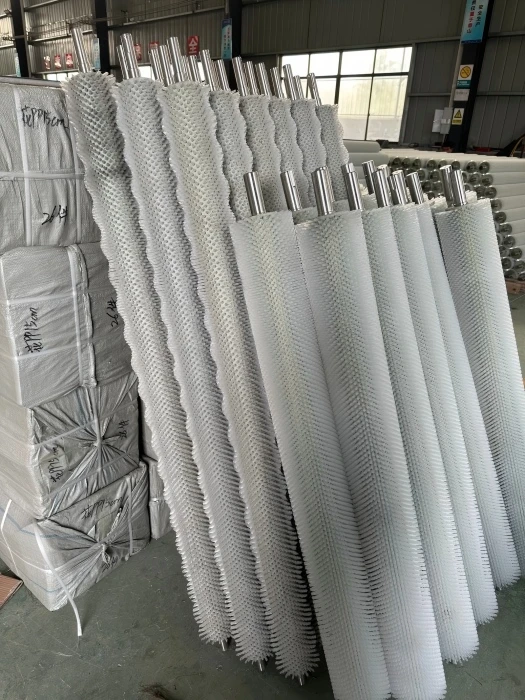
The equipment used by food processes is now required to do two things, remove soil aggressively, and handle produce gently. An anatomical investigation of the roller brush system will give enough understanding of how all components interact so that only engineering can define what systems will meet both demands, whether you are upgrading an existing production line or are designing a completely new one.
The Bristle System: Where Cleaning Happens
Wave-Pattern Bristle Architecture
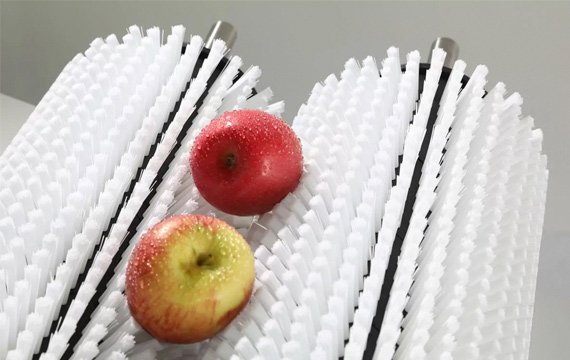
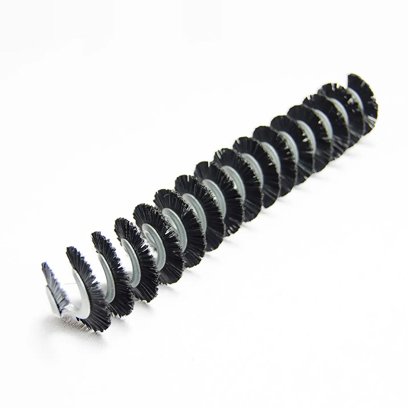
The defining aspect of new potato peeling brush designs is their use of a wave-like arrangement of bristles, rather than using a straight line with flat surfaces. This creates contact zones between the bristles and the surface of each potato that can move adjust to adapt to the uneven surface of each potato during use.
This design philosophy is focused on solving one of the most basic problems with potatoes – they have very difficult to imagine shapes. Potatoes also have a lot of areas on them (eyes, crevices, curved surfaces) which straight bristles can’t reach. Wave-shaped bristles will also be able to penetrate harder to reach places because they can bend and flex as they move around (like a spring). When the bristles are pushed against the produce surface, they take up mechanical energy, and after the bristles move ‘beyond’ the contact point, the bristles release that energy to create continuous thrusting force to help rotate vegetables for complete 360-degree coverage.
The biomechanical advantage becomes apparent in processing outcomes:
- Deep crevice penetration dislodging stubborn soil deposits
- Gentle elastic contact preventing skin damage
- Natural produce rotation eliminating manual repositioning
- Consistent cleaning regardless of potato size variation
Bristle Material Selection
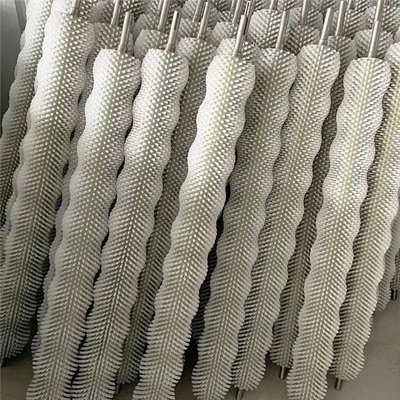
Material choice fundamentally determines bristle performance characteristics. Food processing applications demand materials meeting strict hygiene standards while delivering mechanical durability.
| Material | Stiffness | Abrasion Resistance | Food Safety | Best Applications |
| Nylon 6 | Medium | Good | FDA Compliant | General washing |
| Nylon 6/12 | Medium-High | Excellent | FDA Compliant | Peeling operations |
| Polypropylene | Low-Medium | Moderate | FDA Compliant | Delicate produce |
| Natural Tampico | Low | Moderate | Food Safe | Polishing/finishing |
| Abrasive Nylon | High | Superior | FDA Compliant | Heavy peeling |
The relationship between bristle material and processing outcomes deserves careful consideration. Operations seeking deeper understanding of material trade-offs will find valuable guidance in resources covering best material for vegetable brush selection, where nylon and natural fiber characteristics receive detailed comparison.
Bristle Density and Trim Length
Two specifications critically influence cleaning aggressiveness: bristle density (filaments per unit area) and trim length (exposed bristle height above the core surface).
Density considerations:
- Higher density increases soil capture capacity
- Lower density improves water drainage and self-cleaning
- Optimal ranges typically fall between 60-120 tufts per square inch
Trim length principles:
- Longer bristles offer greater flexibility and gentler contact
- Shorter bristles provide aggressive scrubbing for heavy soil loads
- Standard ranges span 15mm to 40mm depending on application severity
Core Construction: The Foundation
Core Materials and Manufacturing
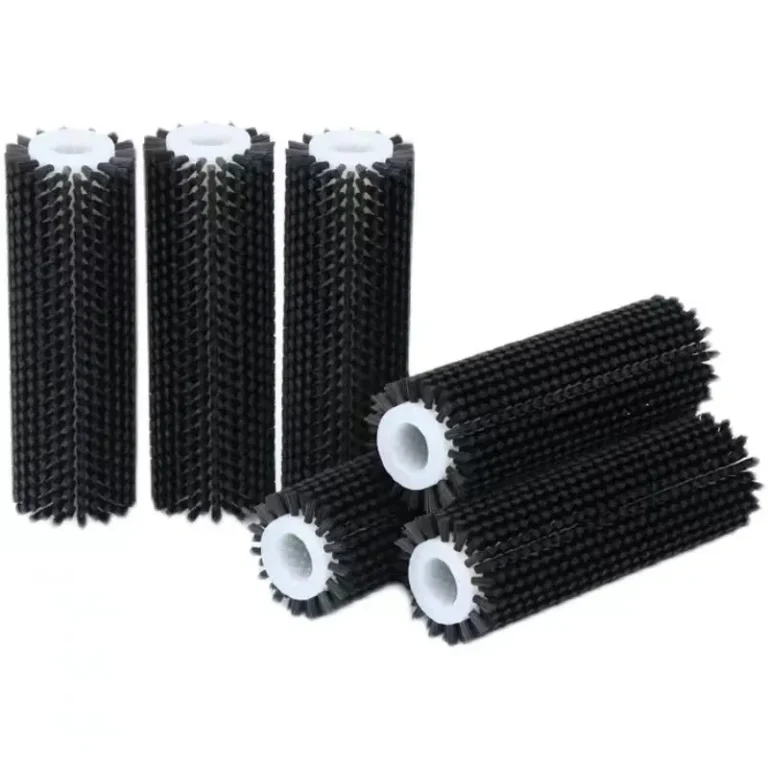
The core serves as the structural foundation anchoring bristles while maintaining dimensional stability under operational stresses. A tufted cylinder brush relies on core integrity for consistent performance throughout its service life.
Modern cores utilize several construction approaches:
- Solid polymer cores: Extruded plastic providing excellent moisture resistance and dimensional stability
- Wound metal cores: Steel or aluminum tubes offering superior rigidity for high-speed applications
- Composite structures: Combining polymer sleeves over metal tubes for optimized weight-to-strength ratios
Core diameter specifications directly impact brush characteristics. Larger cores reduce bristle flexibility by shortening the effective bristle length, while smaller cores maximize bristle working height but may sacrifice structural rigidity.
Tuft Retention Mechanisms
How bristles attach to cores determines long-term durability. Premium vegetable cleaning brush rollers employ several retention methods:
- Staple-set construction: U-shaped wire staples anchor folded bristle bundles into drilled core holes
- Epoxy-set systems: Adhesive bonding securing bristles within precision-drilled cavities
- Fused construction: Thermal bonding creating molecular-level bristle-to-core attachment
Each method presents trade-offs. Staple-set construction allows field repair but may permit moisture intrusion. Epoxy systems offer superior hygiene but require complete replacement upon bristle wear. Fused construction delivers maximum durability but demands precise manufacturing control.
Shaft Integration: Transmitting Power
Shaft Specifications and Tolerances
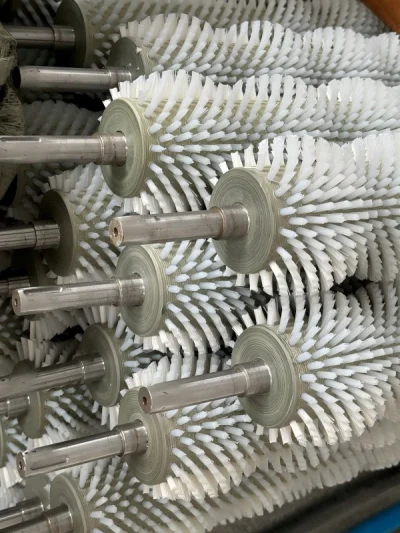
The shaft transforms motor output into cleaning action. Proper specification ensures efficient power transmission while minimizing vibration and premature bearing wear.
Critical shaft parameters include:
- Diameter matching: Shaft outside diameter must precisely match core inside diameter, typically within ±0.1mm tolerance
- Material selection: Stainless steel (304 or 316 grade) predominates in food processing for corrosion resistance
- Surface finish: Smooth finishes (Ra ≤ 1.6μm) prevent core wear and facilitate cleaning
Drive Connection Options
Shaft terminations must interface with processing equipment drive systems. Common configurations include:
- Keyed connections for positive torque transmission
- Set-screw mounting for adjustable positioning
- Splined interfaces for high-torque applications
- Quick-release mechanisms enabling rapid brush changes
Matching drive connections to existing equipment prevents costly modifications while ensuring reliable operation.
Dimensional Specification Framework
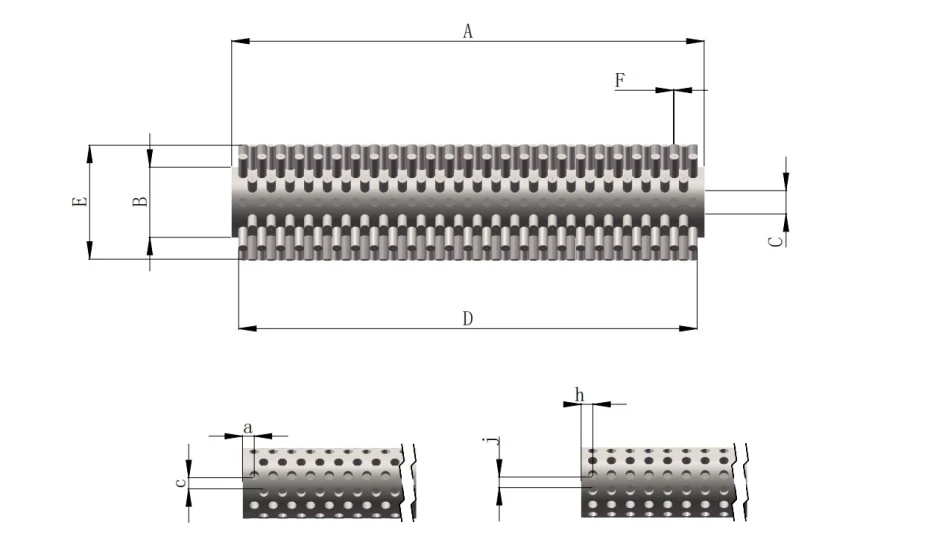
Proper Vegetable Cleaning Brush specification requires understanding standard dimensional parameters:
| Parameter | Description | Typical Range |
| Overall Brush Length | Total length including shaft extensions | 200mm – 2000mm |
| Core Inner Diameter | Shaft bore dimension | 20mm – 80mm |
| Core Diameter | Outer diameter of core body | 40mm – 150mm |
| Brush Outer Diameter | Maximum bristle reach diameter | 80mm – 300mm |
| Brush Face Length | Active bristle coverage zone | 150mm – 1800mm |
| Filament Specification | Material type and diameter | 0.3mm – 1.2mm |
These parameters interact systematically. Increasing brush outer diameter while maintaining core diameter lengthens effective bristle height, increasing flexibility but potentially reducing scrubbing aggressiveness. Processing operations must balance these relationships against specific produce requirements.
For guidance on matching specifications to operational needs, comprehensive resources addressing how to choose a vegetable cleaning brush provide valuable decision frameworks for business applications.
Performance Optimization Considerations
Rotational Speed Relationships
Brush effectiveness depends heavily on rotational velocity matching produce characteristics:
- Low speeds (50-150 RPM): Gentle washing for delicate-skinned varieties
- Medium speeds (150-300 RPM): Standard peeling operations
- High speeds (300-500 RPM): Aggressive soil removal for field-dirty produce
Excessive speed generates heat through bristle friction, potentially damaging produce surfaces. Conservative speed selection extending brush life while maintaining quality outcomes represents sound operational practice.
Wear Patterns and Replacement Indicators
Experienced operators recognize wear indicators signaling replacement needs:
- Bristle height reduction exceeding 20% from original specification
- Visible bristle fusion or melting indicating thermal damage
- Tuft loss creating bare spots in cleaning coverage
- Core cracking or delamination compromising structural integrity
Proactive replacement before complete failure prevents produce quality incidents and unplanned downtime.
FAQ
Q1: How can I ensure the core inner diameter fits my specific Potato Peeling Brush Roller peeling machine?
Suppliers provide custom machining for the core inner diameter. By providing your exact shaft measurements, the brush can be manufactured with precise tolerances and necessary keyways.
Q2: What is the benefit of a staggered tuft pattern on a Potato Peeling Brush Roller?
A staggered pattern eliminates “dead spots” on the brush face, ensuring a more consistent peeling effect and preventing produces from getting stuck between bristle rows.
Q3: Can these brushes be ordered in bulk for large-scale food processing plants?
Yes, wholesale options are available. Bulk ordering ensures that all brushes in a multi-roller system have identical bristle stiffness and dimensions for uniform production.