Cleaning deep holes and long internal passages poses a major challenge. Residue builds up inside tubes and pipes over time. This contamination restricts flow and causes expensive downtime. A spiral brush reaches these hard-to-access locations reliably. Cleaning experts agree that no other tool cleans internal surfaces so well.
o understand why these tools are so effective, we must look at the specific problems they solve. Standard cleaning methods often fail inside long and narrow passages. Pressure washing cannot reach every hidden corner. Chemical soaking also fails to dissolve tough, stubborn deposits. Instead, a spiral brush maintains direct contact with the internal walls. This mechanical action scrubs away scale, rust, and carbon buildup effectively. Many industries rely on these tools for deep hole cleaning:
- Oil & natural gas (drilling pipe & tubing)
- Manufacturing automobiles (cylinder bore & fuel lines)
- Maintaining heat exchangers
- Servicing hydraulic systems
- Food and beverage processing (sanitary tubing)
The core advantage lies in the unique geometry of the tool. The test tube cleaning brush design permits bristles to stay in continuous contact with the bore wall, no matter if the passage is curved or irregular. Flat and straight brushes simply cannot perform as well in this regard.
Spiral Brushes Commonly Used to Clean Internally
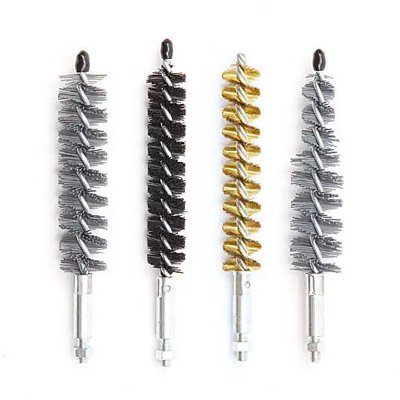
Different brush types should be used to clean out deep holes. In addition to wire type and diameter, the stiffness of the bristles will make a big difference as to which type you choose. The following describes three commonly used versions.
| Brush Type | Wire Type | Usage | Corrosion Resistance Rating | Surface Impact Rating | Typical Application |
| Heavy-Duty Rigid Steel | High-Carbon Steel | Extreme | Hard Metals (Iron/Steel) | Maximum cutting power for stubborn scale | Descaling heavy industrial pipes & weld slag removal |
| Industrial Stainless Steel | 302/316 Stainless | High | Most Metals / Anti-corrosive | Rust-resistant; prevents “after-rust” on parts | Chemical processing tubes & food-grade sanitary piping |
| Soft Brass / Copper | Phosphor Bronze / Copper | Gentle | Brass / Aluminum / Plastic | Non-sparking and non-marring (no scratches) | Delicate threaded fittings |
Stainless steel remains the industry standard for general durability. Conversely, in volatile environments where a single spark could be catastrophic, Copper or Brass brushes are the mandatory safety choice.
Choosing the Right Wire Material
H4: Stainless Steel Wire
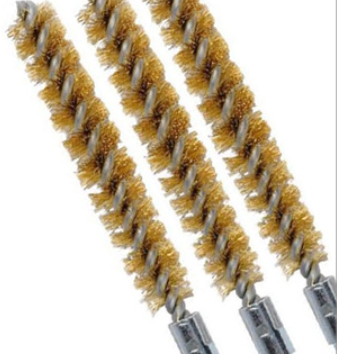
The best material for most internal cleaning operations is stainless steel. A spiral brush made of this material offers high wear resistance, good corrosion resistance, and the ability to withstand high temperatures, along with aggressive cutting action to remove heavy deposits. Tools like the Stainless Steel Wire Tube Internal Cleaning Brush are commonly used in boiler maintenance and servicing heat exchangers that have scaled up with calcium deposits and other minerals over time due to improper maintenance and lack of cleaning.
Stiff-bristled versions work better for heavier applications, such as removing weld spatter and thick rust layers from large-diameter pipes, compared to standard internal cleaning versions.
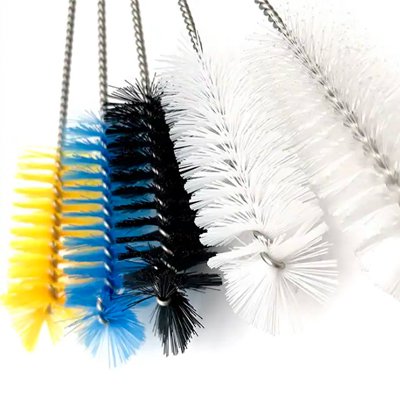
Copper Wire
The Copper Wire Pipe Spiral Brush is ideal for cleaning sensitive metal surfaces like brass, aluminum, and copper tubing without causing scratches. Its non-sparking property makes it safe for use in flammable environments. For B2B buyers, this brush ensures product integrity, reduces rejection rates, and offers customizable options for bulk orders.
H2: How a Spiral Brush Performs in Deep Hole Applications
A test tube brush‘s helical winding will create a self-centering effect. It will allow the bristles to apply equal pressure all the way around the circumference of the spiral, thus providing uniform cleaning. This consistency is especially important in deep holes; if uniform cleaning is not achieved, deposits will form on the walls of the hole and speed up corrosion as well as restrict flow.
Field operators emphasize that tool sizing matters just as much as wire selection. A small brush cannot reach the walls effectively. An oversized brush might jam and wear out its bristles quickly. Read our article on choosing spiral brush diameters for more details. That guide offers practical rules for matching the brush to your bore.
Effective Deep Hole Cleaning with Spiral Brushes
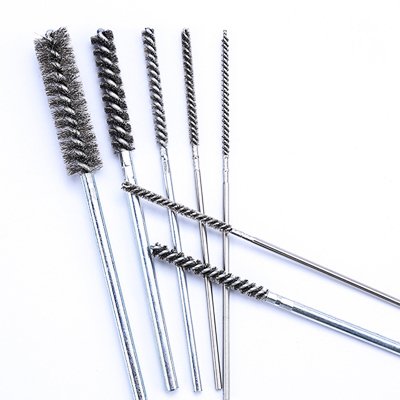
There are practical ways to maximize your usage of a spiral brush. The following are some of the best practices that have been researched and documented:
Before determining what size to use, determine the bore size, so the selected brush has slightly larger bristles than the inner diameter of the hole.
Select a compatible drive method (hand drill, flexible shaft, or CNC spindle) depending on your application.
Use a suitable lubricant or cleaning solution to minimize friction and flush out any debris that has been loosened during the process.
Regularly inspect the condition of the brush for any wear on the bristles, and replace it before its performance decreases.
These steps help extend your spiral brush’s life and ensure consistent cleaning quality across production runs.
Related Applications Worth Exploring
Spiral brushes clean tubes in both industrial and commercial plants. Each environment has its own set of cleaning standards. For instance, cleaning a large industrial pipe differs greatly from cleaning a sterile medical tube.
Lab work requires extreme precision when cleaning narrow glassware. You can learn the best ways to use test tube brushes for these tasks. We recommend comparing nylon and natural bristles to find the right tool for your lab.
Frequently Asked Questions
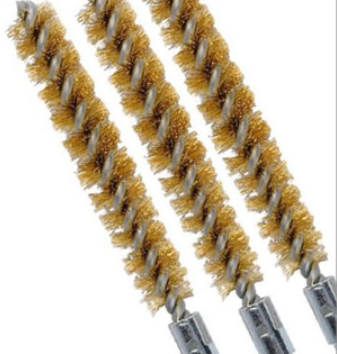
Can spiral cleaning brushes be designed to fit non-standard bore sizes?
Yes, many manufacturers have the capability to make cleaning brushes with a variety of diameters, lengths, and wire types that will meet the needs of industrial customers who have specific bore dimensions or are looking for a particular type of cleaning solution.
When should internal cleaning brushes be changed?
Replacement frequency is dependent upon the type of material being cleaned and how heavily the tool is used. Periodically inspect the bristles for visible signs of wear or bending, or check for a decrease in brush performance to determine whether or not it is time for a replacement.
Can copper wire spiral brushes be safely used in areas that have explosive hazards?
Non-sparking properties of copper make Copper Wire Pipe Spiral Brush suitable options when doing cleaning tasks in hazardous environments with flammable gases or dust.