How Rotary Conveyor Brushes Solve Belt Buildup Problems
Belt buildup is one of those problems that starts small and grows into a real headache. Consider a conveyor line running 16 hours a day, moving crushed stone, fertilizer, or sugar. At first, it is just a light dusting on the return side. Over time, however, the dust turns into layers. Eventually, rollers start to seize. Then someone has to shut the whole line down just to shovel out what should never have been there. Every hour of unplanned downtime in a bulk handling plant costs money, and a significant portion of that downtime traces back to material that was not removed at the discharge point.
How a Conveyor Belt Brush Works
A rotary conveyor belt brush spins against the direction of belt travel at the head pulley, physically sweeping residual material off the belt surface before it can travel down the return run. These brushes typically operate at speeds from 144 to 900 RPM, with diameters ranging from 200 to 600 mm, using bristles made from nylon, polypropylene, steel wire, or SBR rubber. The result is that carryback drops by 70 to 90 percent in applications where moisture, fine particle size, or belt texture makes traditional scrapers ineffective.
In practice, a conveyor belt brush removes belt buildup by rotating bristles against the return side of the belt, dislodging fine particles, sticky residues, and trapped debris that blade scrapers miss. It works best as a secondary or tertiary cleaner. Moreover, the motorized brush keeps the belt surface consistently clean, cutting cleanup labor, reducing roller wear, and helping conveyors stay online longer.
Factors That Affect Brush Selection
The right brush for any given conveyor depends on more than belt width. For instance, bristle material, brush diameter, RPM, mounting position, and the type of debris all play important roles. A nylon brush that works perfectly on a dry limestone belt will load up and smear wet clay across the same surface. Therefore, understanding the specific operating conditions is essential before making a selection.
What This Article Covers
This article walks through how conveyor belt brushes work, what types are available, which industries use them, and how to match the specifications to your actual operating conditions. By the end, you will have a clear framework for selecting the right brush for your application.
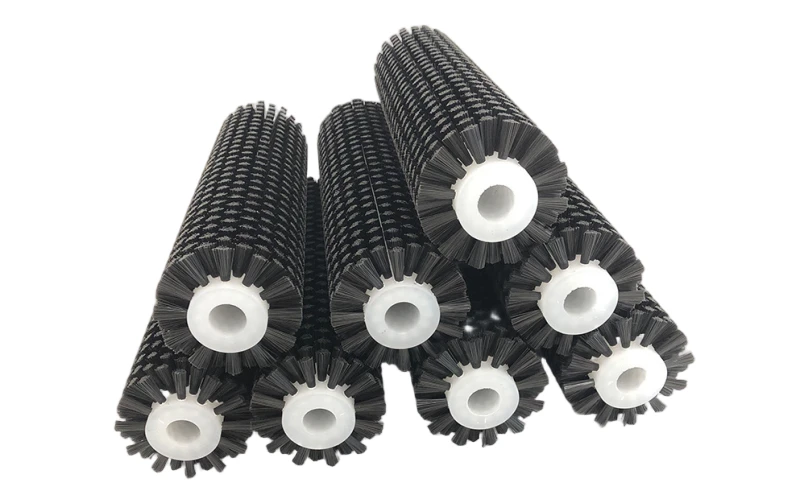
What Is a Conveyor Belt Brush and How Does It Work
What Is a Conveyor Belt Brush
A conveyor belt brush is a motorized or self-driven cylindrical brush that rotates against the conveyor belt at the head pulley or return side. Its function is to sweep residual material—such as dust, fines, and sticky buildup—off the belt surface through direct bristle contact. When used alongside primary scrapers, this brush helps achieve near-complete carryback removal.
Typically, a conveyor belt cleaning brush mounts near the discharge point of the conveyor, just after the head pulley. During operation, the brush spins in the opposite direction of belt travel, creating a counter-rotating action that scrubs the belt surface. As a result, residual material is flicked into the discharge chute rather than carried underneath on the return run.
Brush Construction and Core Design
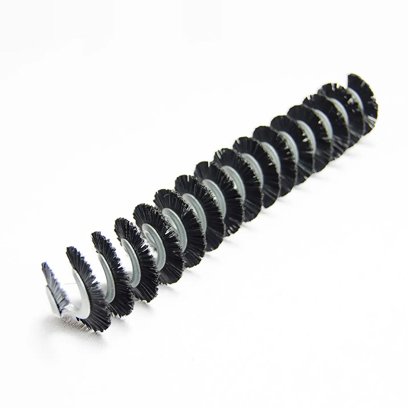
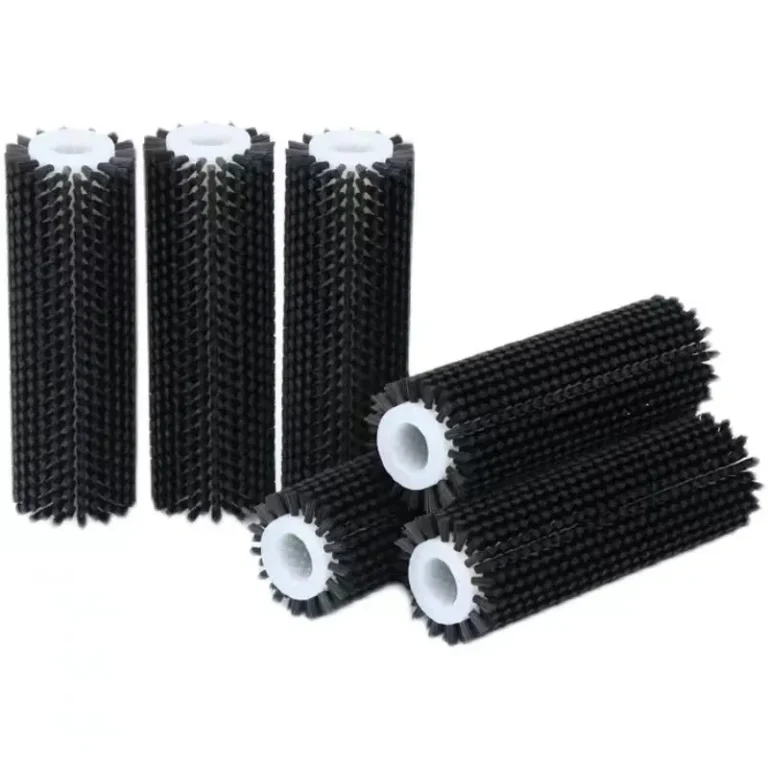
The brush core is a steel or stainless steel shaft fitted with bristle segments. These segments typically come in 100 mm wide modules, which makes replacement simpler. For example, if one section wears faster because of uneven belt contact, you can swap out that segment instead of replacing the whole brush. Most industrial brushes run at 144 to 280 RPM, although some high-speed designs reach 900 RPM for applications with fine, dry dust.
How Bristle Material Affects Performance
Bristle material is the decision that drives performance. Polypropylene handles wet environments and moderate-impact cleaning. Nylon, on the other hand, provides stiffness for aggressive debris removal on rubber belts. For abrasive materials like sand and aggregate, SBR rubber fingers work effectively. Meanwhile, stainless steel wire bristles handle high-temperature applications in foundries and metal processing. The table below shows common bristle options and where each one fits.
| Bristle Material | Stiffness | Best For | Temperature Limit |
|---|---|---|---|
| Polypropylene | Soft to Medium | Food processing, packaging, wet environments | 100°C |
| Nylon 6/66 | Medium to Stiff | Mining, aggregates, general industrial | 100°C |
| SBR Rubber | Medium | Sand, fertilizers, abrasive fines | 82°C |
| Stainless Steel Wire | Very Stiff | High-temp, foundries, heavy scale | 300°C+ |
| Natural Fiber Blend | Medium | Grain handling, textiles | 80°C |
| Belt Material | Recommended Bristle | Stiffness | Key Industries |
|---|---|---|---|
| Rubber (heavy-duty) | Nylon | Medium to Stiff | Mining, aggregates, cement |
| PVC | Polypropylene | Soft to Medium | Food processing, packaging |
| PU (Polyurethane) | Soft Nylon | Soft | Electronics, pharmaceuticals |
| Fabric/Canvas | Natural Fiber Blend | Medium | Grain, textiles |
| Metal Mesh | Stainless Steel Wire | Very Stiff | High-temperature, foundry |
Power requirements are modest. A 0.75 kW motor handles most belt widths up to 1,200 mm. Wider belts, from 1,500 to 2,100 mm, need 1.5 to 2.2 kW. The mount can be positioned on either side of the conveyor, and most frames come in painted carbon steel or 304 stainless steel for corrosive environments.
What makes a brush different from a scraper is the way it contacts the belt. A scraper blade presses flat against the belt surface. That works well on smooth belts with dry material. But a cleated, chevron, or grooved belt defeats a flat blade. The blade rides over the recessed areas, leaving material behind. A brush, with thousands of flexible bristle tips, reaches into those contours. That is why a cylinder cleaning brush is often the only option that works on textured belts.
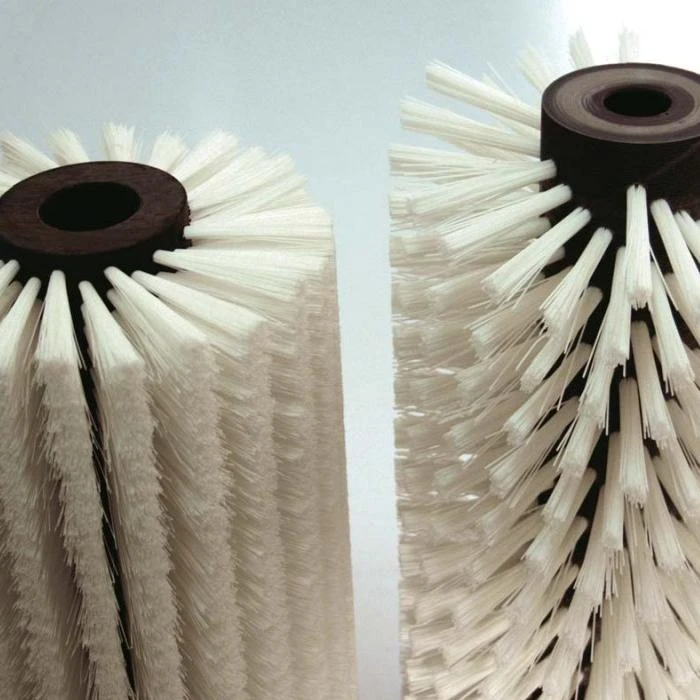
Why Belt Buildup Is a Critical Problem
Why Belt Buildup Is More Than a Housekeeping Issue
Belt buildup is not just a housekeeping issue. In fact, it accelerates roller and idler wear, causes belt mistracking, creates fire hazards from accumulated fines around pulleys, and forces repeated unplanned shutdowns for manual cleanup. Over a year of operation, carryback-related costs can exceed the price of the cleaning equipment many times over.
How Carryback Starts and Spreads
Carryback begins when material does not fully discharge at the head pulley. Typically, moisture is the most common trigger, as wet particles adhere to the belt surface through surface tension. Fine material—even when dry—works its way into belt textures, splices, and microscopic surface irregularities. Meanwhile, sticky materials like wet clay, brown sugar, or fertilizer compounds resist the normal trajectory of discharge and stay on the belt.
Once material starts riding the return run, problems cascade quickly. The first components to fail are usually the return rollers, as material builds up on their faces and creates uneven diameters. This unevenness then pulls the belt to one side, and mistracking follows. Workers may tighten the tension or adjust the tracking frame, but if the root cause is dirty rollers, those adjustments never hold.
The Domino Effect of Buildup
Buildup under the conveyor is the next symptom to appear. Fine material drops off the return side and piles up around tail pulleys, take-up frames, and floor areas. In facilities handling combustible dust—such as wood processing or grain operations—this accumulation becomes a serious fire and explosion hazard. Moreover, the cleanup cost alone can run into tens of thousands of dollars annually for a single large conveyor.
A conveyor belt cleaning brush tackles the problem at the source. By removing material before it reaches the return rollers, it breaks the chain of events that leads to tracking issues and floor accumulation. Field data from fertilizer and cement plants show carryback reductions of 70 to 90 percent when a motorized brush is added as a secondary cleaner after a primary scraper.
The economics are straightforward. A conveyor that hauls 500 tons per hour with just 0.1 percent carryback leaves 500 kg of material on the return side every hour. Over a 16-hour shift, that is 8 tons of material to clean up manually or absorb through equipment wear. A roller brush system that cuts that figure by 80 percent pays for itself in reduced cleanup labor, fewer roller replacements, and less downtime within the first year.
Types of Conveyor Belt Cleaning Brushes
Conveyor belt brushes fall into three main categories: motorized rotary brushes for heavy continuous cleaning, self-driven brushes that use belt momentum for light to medium applications, and strip brushes for edge cleaning and curved profiles. Each type fits a different operating scenario.
Motorized Rotary Brushes
Motorized rotary brushes are the standard for industrial belt cleaning. A dedicated electric motor drives the brush shaft through a gear reducer, delivering consistent RPM regardless of belt speed. This independence from belt speed matters when conveyors run at variable speeds or stop and start frequently. The brush keeps spinning and cleaning even when the belt pauses momentarily.
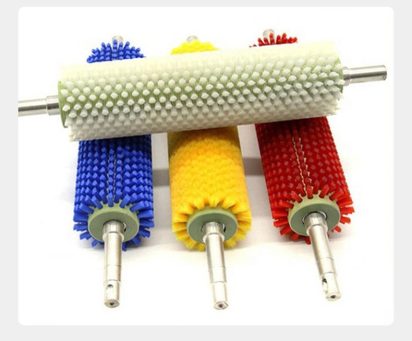
These brushes mount on the return side near the head pulley. Standard specifications from major manufacturers show brush diameters from 200 to 300 mm, with 305 mm being common for medium to heavy applications. The motor typically sits on one end of the shaft, and the unit bolts to the conveyor stringer with adjustable mounting brackets.
Segmented construction dominates the market. Each brush segment measures roughly 100 mm wide and slides onto a keyed shaft. This modular approach cuts maintenance time. A worn section in the middle of the brush can be replaced in 20 to 30 minutes without removing the entire assembly. When plant personnel know a custom cleaning brush has been properly matched to their belt material, segmented designs also let them experiment with different bristle materials in different zones of the same brush.
Self-Driven Brushes
Self-driven brushes do not need a motor. A hold-down roller presses against the moving belt, and the friction drives the brush in the opposite direction. This design eliminates electrical wiring, motor starters, and VFDs. Installation is simpler, and ongoing energy costs are zero.
The trade-off is that cleaning force depends on belt speed. When the belt slows down, the brush slows down. When the belt stops, the brush stops. For applications with light, dry carryback and consistent belt speed, this works. For variable-speed lines or sticky material that needs consistent high-RPM brushing, a motorized system is the better choice.
Strip Brushes
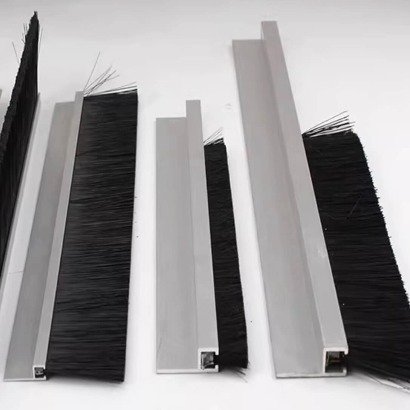
Strip brushes serve a different role than full rotary brushes. They mount along belt edges, across the belt face, or around curved sections of the conveyor path. Their job is to contain material at transfer points, clean belt edges, and prevent spillage along the return run.
Flexible strip brushes conform to irregular surfaces. When a conveyor path includes curves, angled transitions, or uneven belt profiles, rigid cleaning tools cannot maintain consistent contact. A strip brush bends to follow the surface, sweeping material off without gouging the belt. For operations looking into different conveyor belt cleaning brush types, strip brushes fill the gap between full rotary systems and passive scrapers.
How to Choose the Right Brush for Your Belt
The four factors that determine brush performance are bristle material, brush diameter, contact pressure, and mounting position. Matching these to belt type, belt speed, material characteristics, and operating temperature produces reliable cleaning. Getting any one of them wrong leads to either poor cleaning or accelerated belt wear.
Belt Material Compatibility
Different belt surfaces react to bristle contact in different ways. The table below provides a starting point for matching bristle types to common belt materials. Every application should be tested. Sticky residues sometimes demand a stiffer brush than the matrix suggests, while thin or aging belts may need a softer approach.
Rubber belts in mining and aggregate plants handle nylon bristles well. The belt surface is thick and durable, and the aggressive bristle action needed to dislodge compacted fines does not cause noticeable wear. PVC belts in food plants need a lighter touch. Polypropylene bristles clean effectively without abrading the belt, and they resist moisture absorption that could lead to bacterial growth.
Bristle Pattern: Spiral vs. Straight
The arrangement of bristles around the brush core changes how the brush handles debris. Spiral-wound brushes self-clean as they rotate. Debris that enters the gaps between bristle rows gets pushed out by the helical pattern as the brush spins. This design works well with sticky materials like wet sugar, clay, and fertilizer compounds.
Straight bristle rows deliver more scrubbing force per rotation. Every row hits the belt simultaneously across the full width, creating higher instantaneous contact pressure. The downside is that straight rows trap debris between them, requiring periodic manual cleaning. For dry, free-flowing materials, both patterns work. For anything sticky, the spiral pattern reduces maintenance.
RPM and Belt Speed
Brush RPM needs to be matched to belt speed for effective cleaning. The industry range of 144 to 280 RPM covers most applications at typical belt speeds of 1.5 to 3.5 meters per second. Faster is not always better. Excessive RPM can generate heat, wear bristles faster, and fling material outside the discharge chute rather than into it.
Variable frequency drives allow operators to tune brush speed to changing conditions. A line that handles dry limestone in the morning and damp limestone after rain can adjust the brush RPM upward when moisture increases carryback. This flexibility is one reason motorized systems tend to outperform self-driven brushes in plants with variable material conditions.
Contact Pressure and Mounting
Contact pressure is the hardest variable to get right and the easiest one to neglect. Too little pressure and the brush skims over the belt surface without actually removing material. Too much pressure and the bristles bend over, losing their scrubbing action while wearing faster and loading the motor higher.
Most industrial systems use adjustable jack-screw tensioners or spring-loaded mounts that let operators set and hold the correct contact depth. The general rule is that bristle tips should penetrate just enough to touch the belt surface fully across its width. Penetration depth rarely exceeds 2 to 3 mm for nylon and polypropylene bristles on flat belts. Once set correctly, contact pressure should be checked weekly as part of routine maintenance.
Industry Applications and Best Practices
Conveyor belt brushes are used in mining, cement, fertilizer, food processing, wood products, recycling, and power generation. Each industry has specific material challenges that influence brush selection and installation strategy.
Mining and Aggregates
Mining conveyors move large volumes of abrasive material at high speeds. Primary scrapers remove the bulk of carryback, but fine dust and damp fines still cling to the belt. A nylon or SBR rubber brush mounted as a secondary cleaner handles this residual layer. Belt widths in mining range from 600 to 2,100 mm, and brush systems scale accordingly. Motor sizes of 1 to 2.2 kW are typical.
The operating environment is harsh. Dust, vibration, and wide temperature swings are normal. Stainless steel frames hold up better than painted carbon steel in these conditions, and IP55 or IP66 motor enclosures protect against dust ingress.
Cement and Fertilizer
Cement plants and fertilizer facilities share a common challenge: fine, hygroscopic powders that cake on belt surfaces when exposed to moisture. Cement dust sets up almost like concrete if left on return rollers. Fertilizer compounds like NPK attract moisture from the air and form a sticky paste that scrapers cannot remove cleanly.
A motorized rotary brush combined with a primary scraper is the standard solution. The brush spins at 250 to 400 RPM, fast enough to fling damp material into the chute before it has time to compact. Brushes that reduce belt carryback in these environments show ROI within months through fewer cleanup shifts and longer roller life. Polypropylene bristles resist chemical attack from fertilizer salts better than nylon in long-term service.
Food Processing
Food-grade conveyor brushes use bristles that meet FDA and EU food contact standards. Polypropylene and soft nylon are the main options. Brush cores and mounting frames are typically 304 or 316 stainless steel for corrosion resistance and cleanability.
Hygiene is the primary driver. Product residue left on a belt can harbor bacteria, cross-contaminate products, and trigger audit failures. Brushes run continuously during production, keeping belt surfaces clean between CIP (clean-in-place) cycles. In meat and dairy plants, brushes also help remove fat and protein residues that harden if left to cool on the belt.
Wood Processing and Recycling
Wood dust, chips, and sawdust create a different problem. The material is dry and light, so it does not stick the way cement dust does. But it is combustible. Accumulated wood dust around pulleys and under conveyors is a serious fire risk. The rotating action of a brush can also generate static electricity, so proper grounding of the brush assembly is mandatory in these environments.
Recycling facilities, including material recovery facilities and construction debris lines, face unpredictable material streams. Brushes here need to handle everything from glass cullet to plastic film without frequent clogging. Spiral brush patterns help prevent film and fiber from wrapping around the shaft.
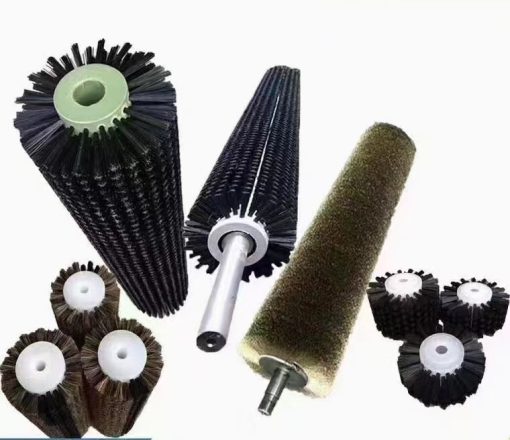
Maintenance Tips for Long-Term Performance
A well-maintained conveyor belt brush runs reliably for 8,000 to 12,000 hours before bristle replacement. Weekly inspections of contact pressure, brush alignment, and motor current draw catch problems before they turn into belt damage or carryback spikes.
Weekly Inspection Routine
Spend 10 minutes per brush per week on three checks. First, verify contact pressure. Look at the bristle tips where they meet the belt. If you see a clear wear pattern across the full width, pressure is uniform. If one edge shows more wear than the center, the brush is tilted and needs realignment.
Second, check for buildup on the brush itself. Polypropylene and nylon bristles resist material loading, but sticky substances can still accumulate between bristle rows. A spiral brush should self-clean during rotation. If it is not, inspect the rotation direction and confirm the brush is spinning against the belt travel.
Third, monitor motor current. Most plants do not log motor amps on cleaning brushes, but they should. A gradual increase in current draw often means bristle tips are wearing down and the operator has over-tightened the tensioner to compensate. The bristles are now pressing flat instead of contacting at the tips, increasing friction without improving cleaning.
Bristle Replacement Timing
Bristle wear is inevitable. The question is when to replace them. Signs that replacement is overdue include uneven bristle length across the brush width, flattened bristle tips that no longer spring back, and visible carryback returning to the belt surface despite correct contact pressure.
Most industrial brushes use segmented construction, so replacement is a matter of sliding worn segments off the shaft and sliding new ones on. The whole operation takes 20 to 30 minutes for a single segment. Keeping spare segments in inventory reduces the temptation to run brushes past their useful life.
Replace all segments at the same time if wear is uniform. If one zone wears faster due to uneven belt loading, replace only that segment and investigate why the belt contact is uneven. It could be a tracking issue, a misaligned mounting frame, or a crowned pulley creating a high spot on the belt.
Storage and Handling
Bristles can take a permanent set if stored under pressure. Stack brush segments flat with nothing resting on the bristles. Keep them in a dry area. Nylon absorbs moisture from the air, which causes slight swelling and softening that reverses once the brush dries out during operation. This is normal and does not affect cleaning performance, but saturated bristles should not be stored in contact with carbon steel surfaces.
Summary
The Problem: Belt Buildup Is Predictable and Preventable
Belt buildup is a predictable problem with a straightforward solution. When a conveyor belt brush is mounted as a secondary or tertiary cleaner, it removes the fine particles, sticky residues, and textured-belt carryback that primary scrapers leave behind. The key, however, lies in matching the brush to the belt: bristle material, diameter, RPM, and contact pressure all need to align with the specific material and operating conditions of the line.
The ROI of Proper Brush Specification
Plants that invest in properly specified brushes see measurable results. For instance, they experience carryback reductions of 70 to 90 percent, fewer roller replacements, less manual cleanup labor, and longer intervals between unplanned shutdowns. As a result, the equipment pays for itself quickly in high-throughput operations. Conversely, when specs are wrong, the brush either fails to clean or wears the belt prematurely, and neither outcome helps the maintenance budget.
The Standard Configuration That Works
Across most industrial applications, a motorized rotary brush with segmented construction, adjustable tensioning, and a bristle material selected for the specific belt and material combination is the standard configuration that delivers reliable results. Moreover, weekly inspections and timely segment replacement keep it working that way over the long term.
FAQ
How long does a conveyor belt brush last before bristles need replacement?
Bristle life ranges from 8,000 to 12,000 operating hours under normal conditions. Variables include belt speed, material abrasiveness, contact pressure, and operating temperature. Brushes handling abrasive materials like sand or aggregate wear faster. Weekly inspection of bristle length and tip condition provides a more accurate replacement timeline than relying on manufacturer estimates alone.
Can a conveyor belt brush replace a primary scraper?
No. A brush is designed for fine particle removal and surface finishing, not for removing the bulk of carryback. In a well-designed system, a primary scraper handles 70 to 80 percent of carryback volume. The brush handles the remaining 20 to 30 percent that consists of fines, dust, and material trapped in belt textures. Using a brush as the sole cleaner on a heavy-duty belt loads the bristles beyond their design capacity and produces poor results.
What happens if the brush is mounted to rotate in the same direction as the belt?
Rotating the brush with the belt instead of against it reduces cleaning effectiveness significantly. Counter-rotation creates a scrubbing action where bristle tips push against the oncoming belt surface, maximizing contact force. Same-direction rotation reduces relative speed between the bristle tips and the belt surface, turning the brush into more of a polisher than a cleaner. It may still remove loose dust, but it will not dislodge adhered particles.