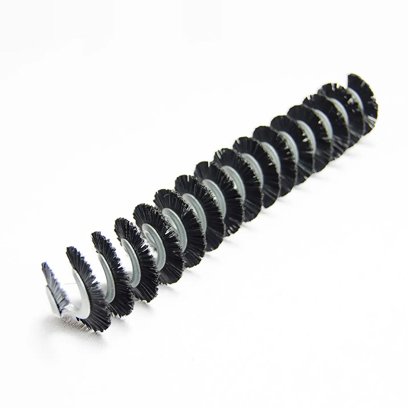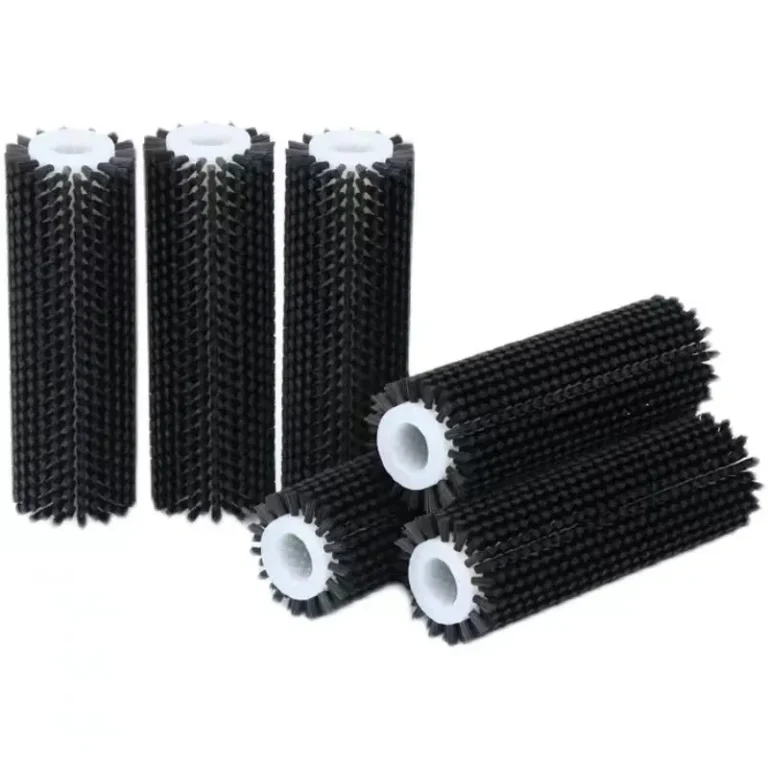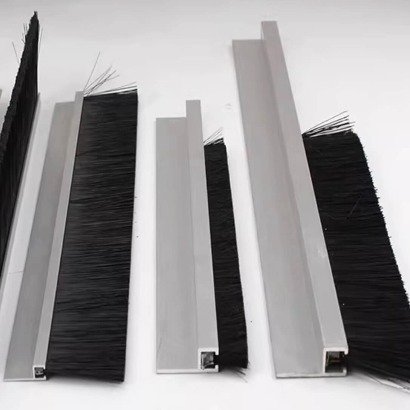
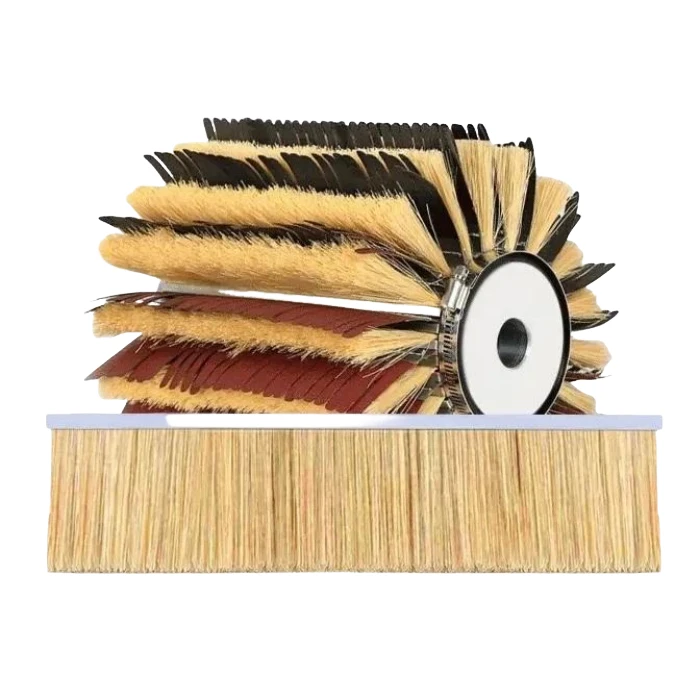
Edge rounding is one of the most persistent quality control challenges in high-volume woodworking and furniture manufacturing. When operators run profiled moldings, cabinet door panels, or decorative carvings through automated sanding lines, conventional flat sanding discs and belts tend to apply inconsistent pressure along edges and contours. As a result, sharp design lines gradually soften. This compromises the crisp geometry that premium furniture buyers expect. In industries where clean, defined edges signal craftsmanship and attention to detail, this unintended corner wear becomes a direct threat. It undermines product value. It also damages brand reputation. Fortunately, sandpaper sanding strip brushes offer a proven solution. They deliver controlled, conformable abrasion that preserves edge integrity while maintaining a consistent surface finish.
Why Production Scale Magnifies the Problem
The problem intensifies as production lines scale up. A single moulder or CNC router may process thousands of linear feet of profiled stock per shift. Without a sanding solution that contours precisely to complex geometries, manufacturers face a difficult trade-off. They must either slow down the line for manual touch-ups or accept higher rejection rates. However, neither option supports competitive throughput. Consequently, profit margins suffer.
How Sandpaper Sanding Strip Brushes Solve Edge Rounding
Sandpaper sanding strip brushes solve the edge rounding problem through their unique construction. They combine flexible abrasive strips with a resilient filament backing. This backing is typically made from sisal, Tampico, or nylon. The hybrid construction allows the brush to conform to irregular surfaces, grooves, and recesses. Moreover, it does not concentrate excessive force on corners.
The filaments provide controlled support. They keep abrasive grit in contact with the workpiece surface. At the same time, they gently yield at the edges. Therefore, they prevent the unintended radius that flat sanders create. For this reason, brush-based sanding has become the preferred choice for profile-intensive woodworking operations.
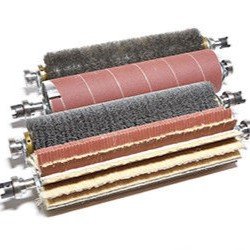
Modern wood finishing demands tools that balance aggression with precision. The transition from manual hand sanding to automated brush sanding has been one of the most significant advances in industrial surface preparation over the past two decades. Where operators once relied on orbital sanders and hours of manual labor to achieve acceptable finishes on shaped components, today’s production managers can specify abrasive sanding strips for wood polishing that mount directly onto CNC machining centers, wide-belt sanders, and dedicated profile sanding machines. Understanding how these tools work, why their material composition matters, and how to integrate them into existing workflows is essential for any operation looking to reduce rework, increase throughput, and deliver consistently sharp-edged products.
What Are Sandpaper Sanding Strip Brushes and How Do They Work?
Sandpaper sanding strip brushes are industrial abrasive tools that integrate coated abrasive cloth strips into a cylindrical or wheel-shaped brush body supported by flexible filaments. The abrasive strips perform the actual material removal and surface refinement, while the filament backing controls pressure distribution and enables the brush to conform to profiles, recesses, and irregular geometries. This combination delivers consistent sanding action without rounding sharp edges.
Construction and Material Composition
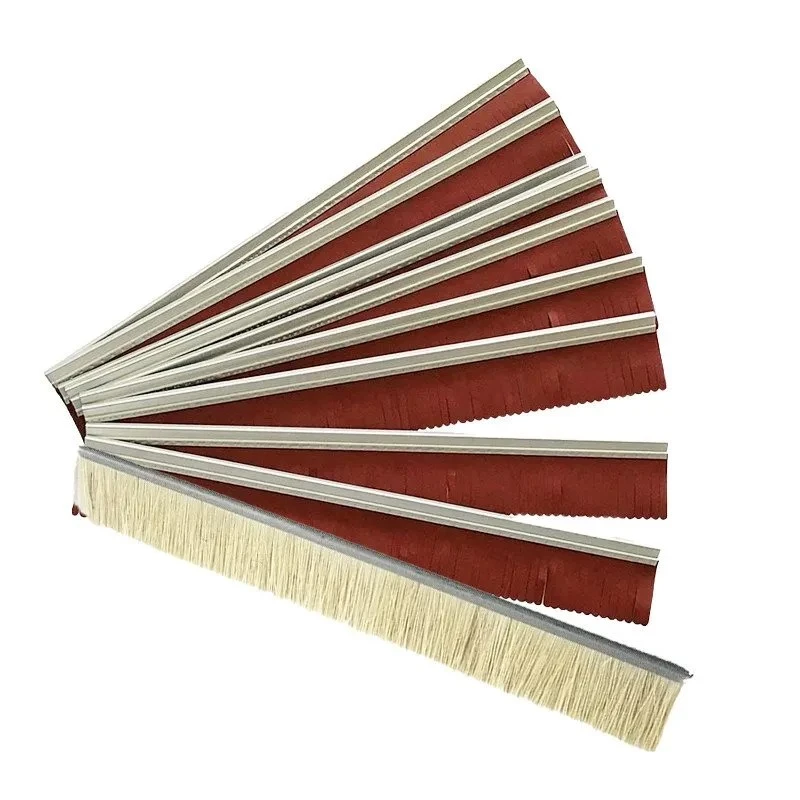
A typical sanding strip brush assembly consists of three functional layers. The core is a rigid shaft or hub, usually manufactured from steel, aluminum, or high-strength engineering plastic, which mounts onto the sanding machine spindle. Around this core, rows of support filaments extend outward, creating a flexible yet structured bristle field. Embedded within or alongside these filaments are the abrasive strips themselves, cut from industrial sandpaper or abrasive cloth and oriented radially or in a spiral pattern.
The abrasive media used in these brushes include aluminum oxide for general-purpose wood sanding, silicon carbide for harder materials and finer finishes, and zirconia alumina for heavy stock removal applications. Grit sizes typically range from 40 for aggressive material removal to 400 or finer for sealer sanding and final surface preparation. The support filaments vary by application: natural sisal fiber offers a balance of stiffness and controlled flexibility, Tampico fiber provides softer support for delicate contours, and synthetic nylon delivers extended durability in high-speed production environments.
How the Dual-Layer Mechanism Prevents Edge Rounding
The key to edge preservation lies in the mechanical behavior of the filament backing. When the abrasive brush encounters a flat surface, the filaments compress uniformly. This presses the sanding strips against the workpiece with consistent force.
When the same brush meets a sharp corner or edge, the filaments on the outboard side deflect away. This allows only the inboard abrasives to maintain contact. As a result, flat areas receive full sanding intensity. Edges, however, experience less abrasive force proportionally.
Why Rigid Abrasives Fail
Traditional sanding belts and discs apply rigid backing pressure evenly across their entire contact patch. A 90-degree corner under a flat sanding belt will inevitably experience concentrated abrasion at its apex. This occurs where the belt wraps around the edge. Over successive passes, this erodes the sharp geometry into a radius. Consequently, crisp edges become rounded and lose their definition.
The Flexible Alternative
The flexible filament architecture of sanding strip brushes eliminates this concentration effect. For this reason, they are the preferred choice for manufacturers who require crisp, well-defined profiles. Common applications include routed cabinet doors, raised panels, and decorative millwork. Therefore, investing in brush-based sanding technology directly improves product quality and reduces rework.
Why Sisal Sandpaper Polishing Roller Brushes Prevent Edge Rounding
The sisal sandpaper polishing roller brush is specifically engineered to maintain edge sharpness because sisal fibers provide a unique combination of structural support and controlled deflection. Sisal’s natural stiffness keeps abrasive strips engaged with the workpiece surface, while its inherent flexibility allows the filaments to yield at edges, preventing the abrasive from dwelling on corners long enough to create unwanted radii.
The Mechanical Properties of Sisal Fiber
Sisal fiber, extracted from the leaves of the Agave sisalana plant, possesses mechanical characteristics that make it exceptionally well-suited for abrasive brush manufacturing. It exhibits high tensile strength, typically ranging from 400 to 700 MPa, combined with moderate stiffness that provides reliable backing support without being overly rigid. The fiber’s natural surface texture also contributes mild abrasive action during polishing, assisting in preliminary fiber lifting and surface cleaning before the sandpaper strips engage.
Unlike synthetic filaments that may soften or deform under the frictional heat generated during high-speed sanding, sisal maintains its structural integrity at operating temperatures commonly encountered in industrial wood processing. This thermal stability ensures that the sisal roller brush delivers consistent pressure distribution throughout extended production runs, eliminating the drift in surface quality that often occurs as nylon-based alternatives heat up and lose rigidity.
Pressure Distribution Dynamics
The architecture of a sisal sandpaper polishing roller brush creates a graduated pressure profile across its contact zone. At the center of the brush face, where bristle density is highest and filaments are perpendicular to the workpiece, abrasive force reaches its maximum. Moving outward toward the brush edges, filament density decreases and the angle of attack shifts, naturally tapering the applied pressure. When this tapered pressure zone encounters a workpiece edge, the outermost filaments deflect with minimal resistance, leaving the corner largely untouched by abrasive action.
| Pressure Zone | Filament Behavior | Abrasive Contact | Edge Effect |
|---|---|---|---|
| Brush center | Full compression, perpendicular contact | Maximum surface engagement | Flat surface receives full sanding intensity |
| Mid-radius | Partial compression, slight angle | Moderate engagement | Transition zone, pressure gradually decreases |
| Outer edge | High deflection, grazing contact | Minimal engagement at corners | Sharp edges preserved, no radius formed |
This graduated pressure profile is not achievable with rigid-backed abrasives or with unsupported sanding strips. The sisal fiber matrix acts as a tunable suspension system that can be customized by adjusting filament density, trim length, and fiber grade to match specific workpiece geometries and edge sensitivity requirements.
Key Applications of Abrasive Sanding Strips for Wood Polishing
Abrasive sanding strips for wood polishing serve diverse roles across the woodworking industry, from raw lumber preparation to final finish sanding. They are particularly valuable in applications involving profiled surfaces, recessed panels, and detailed carvings where maintaining edge definition is critical to product quality.
Furniture and Cabinetry Manufacturing
In furniture production, the white-wood sanding stage determines the baseline surface quality that all subsequent finishing steps build upon. Cabinet door frames with routed profiles, raised panel inserts with beveled edges, and decorative legs with turned details all require sanding solutions that can reach into grooves and across contours without softening the crisp transitions that define their visual appeal. Sandpaper sanding strip brushes mounted on automated conveyor-fed machines process these components at line speed, achieving consistent results that would require multiple operators using hand tools.
The sealer sanding stage between finish coats benefits equally from this technology. A fine-grit sanding strip brush applied to a sealed surface removes minor imperfections and levels the sealer coat without cutting through to bare wood at edges. This precision reduces the number of finish coats required and minimizes costly rework on assembled pieces.
Flooring and Millwork Production
Engineered hardwood flooring and solid wood planks present unique sanding challenges due to their large surface area and the critical nature of edge-to-edge fit. Micro-beveled edges, a popular design feature that creates a subtle V-groove between adjacent planks, require sanding tools that can process the entire board surface while preserving the bevel geometry. Sanding strip brushes achieve this by conforming to the board surface and micro-beveling simultaneously, applying uniform abrasion without collapsing the bevel profile.
For architectural millwork such as crown molding, baseboards, and door casings, the profile consistency across thousands of linear feet depends on sanding tools that maintain their shape and cutting characteristics over time. The sisal roller configuration is widely specified in these applications because the sisal backing fibers wear gradually and predictably, allowing production schedulers to plan tool changes around measurable performance metrics rather than reacting to sudden quality drops.
CNC Machining Center Integration
Modern CNC routers and machining centers increasingly incorporate automated tool-changing systems that can swap between cutting tools and sanding brushes within a single program cycle. This integration enables manufacturers to machine, sand, and finish a component in one fixturing setup, eliminating part handling between operations and the associated risk of damage or dimensional drift. Abrasive sanding strips for wood polishing in disc brush format are particularly well-suited to this application, as their compact profile fits standard tool holders and their omnidirectional cutting action works regardless of spindle orientation.
How to Select the Right Sisal Roller Brush for Your Production Line
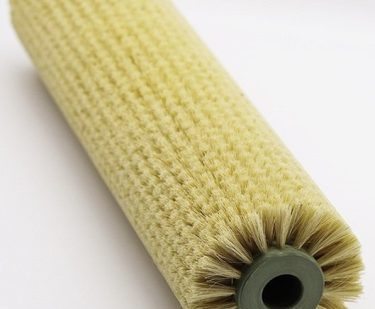
Selecting the optimal sisal roller brush requires evaluating four primary factors: workpiece material and geometry, desired surface finish grade, machine compatibility, and production volume. Each factor influences the choice of grit size, filament density, brush diameter, and mounting configuration.
Matching Grit to Material and Stage
The relationship between wood species hardness and grit selection follows established industrial practice but requires nuance when brushes enter the equation. Because sanding strip brushes apply lower peak pressure than rigid sanding tools, operators often find they can use one grit level coarser than they would with belt sanding to achieve equivalent stock removal rates, while still obtaining a finer surface finish due to the brush’s multi-point contact pattern.
| Production Stage | Softwoods (Pine, Cedar) | Hardwoods (Oak, Maple) | Composite Panels (MDF, Plywood) |
|---|---|---|---|
| Rough sanding/stock removal | 80-100 grit | 60-80 grit | 80-100 grit |
| Intermediate smoothing | 120-150 grit | 100-120 grit | 120-150 grit |
| White-wood finishing | 180-220 grit | 150-180 grit | 180-220 grit |
| Sealer sanding | 240-320 grit | 220-280 grit | 240-320 grit |
Evaluating Filament Density and Trim Length
Filament density, measured by the number of support bristles per square centimeter of brush face area, directly affects both sanding aggressiveness and edge preservation. Higher-density brushes provide more backing support, which increases material removal rates but also increases the risk of edge rounding if not properly matched to the workpiece. For sharp-edged profiles, a medium-density configuration with longer trim length allows greater filament deflection at corners without sacrificing surface coverage on flat areas.
Trim length, the exposed length of filament from the hub surface to the abrasive strip contact point, controls the brush’s ability to reach into recesses. Longer trim lengths increase reach but reduce effective sanding pressure. For deep-profile components such as raised panel doors with pronounced contours, trim lengths of 50mm to 80mm are common, while flat panel sanding typically uses 25mm to 40mm trim lengths.
Machine Compatibility Parameters
Before specifying a sisal roller brush, verify three critical compatibility dimensions. Refer to our sisal roller brush selection guide for detailed specifications. The arbor or shaft diameter must match the machine spindle; standard industrial sizes range from 25.4mm to 50mm, with metric and imperial options available. The overall brush diameter must fit within the machine’s working envelope while providing the desired surface speed at the machine’s operating RPM. The brush width must cover the workpiece dimensions in a single pass or align with the machine’s oscillation stroke for wider applications. Maximum operating speed is typically rated at 2800 to 3000 RPM for sisal-backed configurations, though specific ratings vary by manufacturer and should be confirmed before installation.
Comparing Sanding Strip Brushes with Traditional Abrasive Methods
Sanding strip brushes offer distinct advantages over traditional sanding belts, discs, and manual methods when processing shaped or profiled wood components. The primary differentiation lies in their ability to conform to irregular geometries while preserving edge definition, a capability that rigid-backed abrasives fundamentally lack.
Performance Comparison Table
| Criterion | Sanding Strip Brushes | Wide-Belt Sanders | Orbital / Disc Sanders | Manual Hand Sanding |
|---|---|---|---|---|
| Edge preservation on profiles | Excellent; filaments deflect at corners | Poor, rigid backing rounds edges | Moderate; operator skill dependent | Variable; labor-intensive |
| Recess and groove penetration | Excellent; filaments reach into profiles | Very limited; flat contact only | Limited; tool geometry restricts access | Good with specialized blocks |
| Surface finish consistency | High; uniform multi-point contact | High on flat surfaces; poor on shapes | Moderate; subject to operator variation | Inconsistent between operators |
| Production throughput | High; automated, in-line capable | Very high on flat stock | Low to moderate | Very low |
| Consumable cost per part | Low; long brush life, strip replacements | Moderate; belt replacement frequency | Moderate; disc/pad replacement | Low material cost, high labor cost |
| Dust management | Good; open structure allows extraction | Excellent with integrated extraction | Varies by equipment | Poor without separate extraction |
| Learning curve for operators | Low; machine-controlled parameters | Moderate; setup and tracking adjustments | High; skill-dependent results | High; extensive training required |
Cost Analysis Over Production Lifecycle
While the initial purchase cost of a sanding strip brush assembly may exceed that of an equivalent-width sanding belt, the total cost of ownership picture favors brushes for profile sanding applications. A single roller brush with replaceable abrasive strips can process hundreds of thousands of linear feet before requiring strip replacement, compared to belts that may need changing every few thousand feet depending on material and grit. When rework costs from edge rounding defects, labor for manual touch-ups, and production downtime for abrasive changes are factored in, brush-based sanding systems typically achieve payback within the first quarter of production for medium- to high-volume operations.
Best Practices for Maximizing Brush Lifespan and Surface Quality
Extending the service life of sandpaper sanding strip brushes while maintaining consistent surface quality requires attention to operating parameters, storage conditions, and preventative maintenance. Following established best practices can double or triple brush lifespan in demanding production environments.
Operating Parameter Optimization
Rotation speed and feed rate form the fundamental operating equation for brush sanding. Running a brush above its rated RPM accelerates filament fatigue and can cause abrasive strip separation from the backing at elevated temperatures. Conversely, operating too slowly reduces sanding efficiency and may cause surface burning as the abrasive dwells on the workpiece without sufficient cutting action. The optimal surface speed range for most wood sanding strip brushes falls between 15 and 25 meters per second, which translates to approximately 1800 to 2800 RPM for a 150mm diameter brush.
Feed rate must be calibrated to allow each point on the workpiece sufficient contact time with the abrasive. For automated lines, typical feed rates range from 6 to 18 meters per minute depending on stock removal requirements and brush configuration. A simple verification method involves marking a pencil line across the workpiece width before sanding; complete removal of the line in a single pass confirms adequate contact time.
Storage and Handling Guidelines
Sanding strip brushes are precision consumables that require appropriate storage to maintain their performance characteristics. Brushes should be stored horizontally or hung by their hubs to prevent filament deformation from prolonged pressure on one side. Storage environments should maintain moderate humidity levels between 40% and 60% relative humidity; excessive moisture can swell natural sisal fibers and alter their mechanical properties, while extremely dry conditions may cause embrittlement. Temperature extremes should be avoided, with storage temperatures ideally maintained between 10°C and 35°C.
Preventative Maintenance Schedule
A structured inspection routine catches early signs of wear before they impact product quality. Operators should check the abrasive strip condition at the start of each shift, looking for uneven wear patterns that may indicate misalignment, improper pressure settings, or filament fatigue. The outermost 10mm of each abrasive strip serves as the primary wear indicator; when this section is consumed to the point where it no longer makes reliable contact with the workpiece, strip replacement is due. Filament integrity should be assessed weekly, with attention to any bristles showing signs of permanent set, cracking, or chemical degradation from finishing materials.
Conclusion
The challenge of preventing edge rounding in industrial wood processing has driven the evolution of abrasive technology from rigid sanding plates to the sophisticated flexible brush systems available today. These sanding brushes represent the current state of the art in profile sanding, combining the material removal capability of coated abrasives with the contour-following flexibility of engineered filament backings. Their ability to preserve sharp edge geometry while delivering consistent surface finishes makes them indispensable across furniture manufacturing, flooring production, and architectural millwork operations.
For production managers and purchasing professionals evaluating sanding solutions, the sisal-backed polishing roller configuration offers a proven balance of durability, edge control, and cost efficiency. The natural properties of sisal fiber provide the ideal support matrix for abrasive strips, creating a tool that works with the geometry of the part rather than against it. When properly specified for grit, density, and machine compatibility, these brushes reduce rework rates, lower per-part processing costs, and help manufacturers deliver the crisp, well-defined products that distinguish premium woodworking from commodity production.
As automated manufacturing continues to advance, the integration of these abrasive brush systems with CNC machining centers, robotic cells, and smart factory monitoring systems will further improve process control and quality assurance in wood surface preparation. The fundamental principle remains unchanged: matching the flexibility of the tool to the complexity of the workpiece is the surest path to consistent, high-quality results.