Selecting the right sealing solution for garage doors requires careful consideration of materials, dimensions, and operational requirements. Brush garage door seals provide superior flexibility compared to rigid alternatives, making them ideal for commercial facilities with demanding usage patterns.
Standard off-the-shelf products often fail to address specific installation challenges. Custom brush seals allow businesses to specify exact dimensions, filament materials, and mounting configurations that match their unique requirements. This tailored approach ensures optimal performance and extended service life.
Understanding available materials and specifications empowers facility managers and procurement professionals to make informed decisions. The following sections examine key considerations for customizing brush garage door seals that deliver reliable long-term performance.
Why Custom Solutions Matter
Commercial garage doors vary significantly in size, operating frequency, and environmental exposure. A brush seal designed for light residential use typically underperforms in industrial settings where doors cycle hundreds of times daily.
Custom specifications address several common challenges:
- Non-standard door dimensions requiring precise fit
- Extreme temperature environments demanding specialized materials
- High-traffic facilities needing enhanced durability
- Unique mounting requirements for specific door types
Material Options for Brush Filaments
The filament material determines how a strip brush performs under specific conditions. Each material offers distinct advantages depending on the application environment.
Nylon Filaments
Nylon seal brush products represent the most versatile option for garage door applications. Nylon offers excellent recovery after deflection, maintaining sealing effectiveness over thousands of cycles.
Key characteristics of nylon filaments include:
- Superior abrasion resistance for high-traffic environments
- Good performance across moderate temperature ranges
- Excellent flexibility and memory retention
- Available in various diameters for different sealing requirements
Nylon works particularly well in commercial garages where doors experience frequent operation and moderate environmental exposure.
Polypropylene Filaments
Polypropylene bristles brush products excel in environments with chemical exposure or moisture concerns. This material resists acids, alkalis, and most solvents better than nylon alternatives.
Facilities handling vehicles with fluid leaks or those requiring frequent washdowns often prefer polypropylene construction. The material also performs well in outdoor applications where UV exposure presents concerns.
Specialty Materials
Certain applications require specialized filament materials:
- Natural fibers: Suitable for static-sensitive environments
- Stainless steel wire: Provides extreme durability for heavy industrial use
- Combination fills: Mixed materials address multiple performance requirements
Key Specifications for Custom Orders
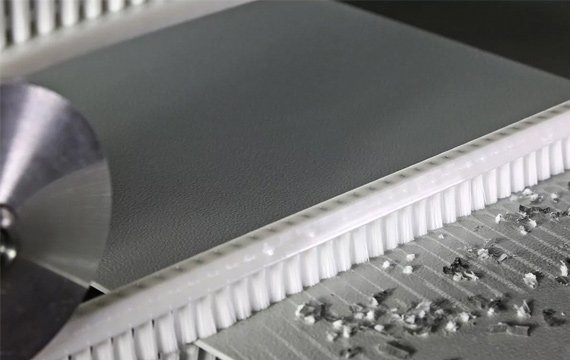
When ordering custom brush garage door seals, several specifications require precise definition. Understanding these parameters ensures the finished product meets exact requirements.
Dimensional Specifications
The following table outlines critical dimensions for custom brush seal orders:
| Specification | Description | Common Range |
|---|---|---|
| Overall Length | Total seal length | 1m – 3m (custom available) |
| Backing Height | Metal channel height | 5mm – 25mm |
| Backing Width | Channel thickness | 3mm – 10mm |
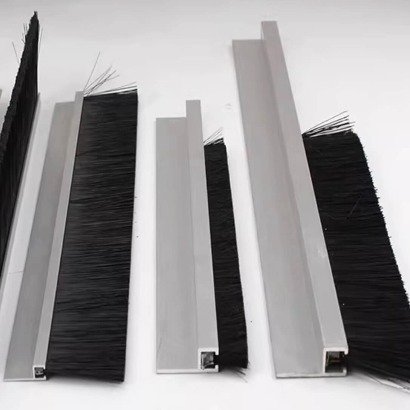
| Bristle Height (Industrial/Roll-up/High-speed Doors) | Exposed bristle length for H-type & F-type | 35mm, 50mm, 100mm |
| Bristle Height (Revolving Doors) | Total brush height for T-type | 25mm, 35mm, 45mm, 55mm |
| Filament Diameter | Individual bristle thickness | 0.15mm – 1.0mm |
These specifications directly impact sealing effectiveness and operational performance. Proper measurement before ordering prevents costly mistakes and installation delays.
Backing Channel Options
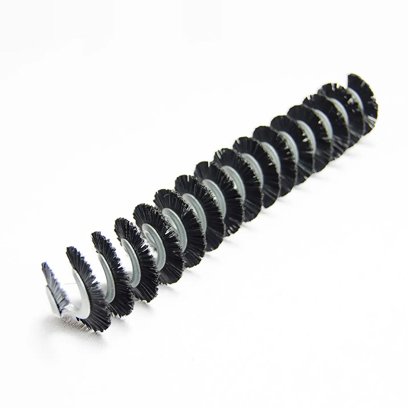
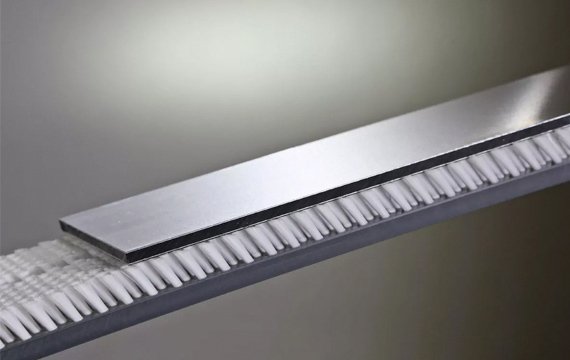
The backing channel provides structural support and mounting capability for garage door brush seals. Common materials include:
- Aluminum: Lightweight with good corrosion resistance
- Stainless steel: Maximum durability for demanding environments
- Galvanized steel: Cost-effective with moderate corrosion protection
- Plastic: Suitable for light-duty applications
Channel profiles vary based on mounting requirements. Standard options include straight channels for screw mounting and specialized profiles for track insertion.
Filament Density Considerations
Bristle density affects both sealing capability and operational resistance. Higher density provides better environmental blocking but increases friction against door surfaces.
Specifications typically express density as filaments per linear inch or percentage fill. Applications requiring maximum air sealing benefit from dense configurations, while those prioritizing smooth operation may prefer moderate density.
Application-Specific Configurations
Different garage door types require specific brush seal configurations for optimal performance.
Roll-Up Door Applications
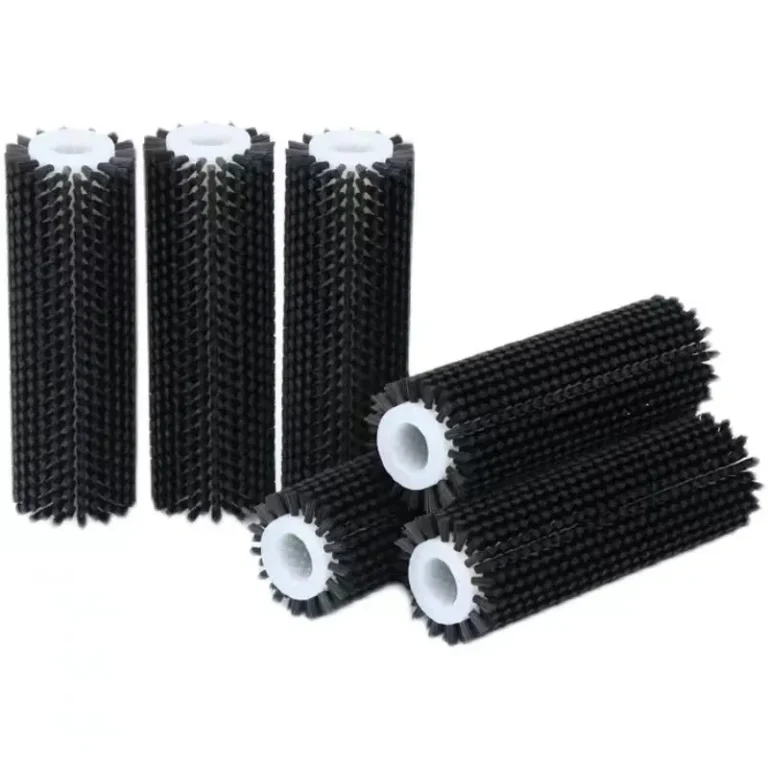
Roll-up doors present unique challenges due to their curved operation. Brush seals must accommodate the door radius while maintaining consistent contact. Side-mounted strip brush installations typically work best for these applications.
For comprehensive information on roll-up installations, reviewing Industrial Applications of Brush Door Seals provides valuable insights into commercial configurations.
Sectional Door Applications
Sectional garage doors require seals that accommodate panel movement during operation. Bottom seals experience the most wear and typically need denser filament configurations for durability.
High-Speed Door Applications
Rapid-cycling doors demand materials with excellent recovery characteristics. Nylon seal brush products generally outperform alternatives in these demanding applications due to superior memory retention.
Benefits of Proper Specification
Well-specified custom brush garage door seals deliver measurable benefits across multiple performance areas.
Energy efficiency improvements often justify the investment in quality sealing solutions. Properly sealed garage doors reduce heating and cooling costs while maintaining comfortable interior conditions.
Additional benefits include:
- Extended equipment life through reduced contamination
- Improved worker comfort in adjacent spaces
- Enhanced pest exclusion capabilities
- Reduced maintenance requirements compared to inferior products
Ordering Custom Brush Seals
Successful custom orders require clear communication of specifications and application requirements. Key information to prepare includes:
- Precise dimensional measurements for all required specifications
- Operating environment details including temperature and chemical exposure
- Expected usage frequency and cycle requirements
- Mounting method preferences and constraints
- Quantity requirements and delivery timeline
Working with experienced suppliers ensures proper material selection and dimensional accuracy. Sample testing before large orders helps verify performance meets expectations.
FAQ
Do brush seals interfere with door movement?
Correctly installed brush seals allow smooth door operation without causing sticking or resistance. If movement becomes difficult, checking alignment and verifying appropriate bristle length resolves most issues.
Can brush seals provide soundproofing benefits?
Dense nylon or specialized filament seals effectively reduce noise transmission between spaces. For environments requiring maximum acoustic control, higher-density configurations deliver superior sound-dampening results.
Can samples be provided before placing bulk orders?
Yes, we provide samples for evaluation before bulk purchases. This allows verification of material performance and dimensional accuracy for specific application requirements.