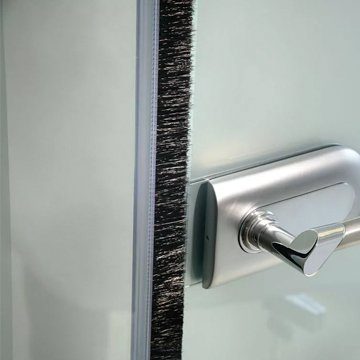
Industrial facilities demand sealing solutions that perform reliably under challenging conditions. Unlike residential applications where aesthetics might take priority, industrial environments require garage door brush seals that withstand heavy use, extreme temperatures, and constant exposure to dust, debris, and mechanical stress.
Choosing the wrong product leads to premature failure, ongoing maintenance headaches, and compromised facility performance. Conversely, selecting the appropriate door seal brush for specific operational requirements delivers years of trouble-free service while protecting energy efficiency, cleanliness standards, and equipment integrity.
This guide provides practical insights for facility managers, maintenance professionals, and procurement specialists seeking optimal sealing solutions for industrial garage doors.
Understanding Industrial Sealing Requirements
Industrial applications present unique challenges that standard sealing products cannot adequately address. Before evaluating specific products, understanding the operational environment helps narrow appropriate options.
Environmental Factors to Consider
Several environmental conditions influence which garage door brush seals perform best:
- Temperature extremes: Facilities in regions with harsh winters or hot summers need materials that maintain flexibility across wide temperature ranges
- Chemical exposure: Manufacturing environments involving oils, solvents, or cleaning agents require chemically resistant bristle materials
- Moisture levels: Food processing, car washes, and coastal facilities face elevated humidity and direct water contact
- Dust and particulate matter: Woodworking shops, grain facilities, and mining operations generate heavy airborne debris
- UV exposure: Doors facing direct sunlight require UV-stabilized materials to prevent degradation
Operational Demands
Beyond environmental factors, operational patterns significantly affect product selection:
- Daily door cycle frequency
- Speed of door operation
- Loading dock traffic intensity
- Forklift and equipment proximity
- Required seal lifespan expectations
Facilities operating doors hundreds of times daily need significantly more durable strip brush products than those with occasional use patterns.
Key Selection Criteria for Garage Door Brush Seals
With environmental and operational factors identified, attention turns to specific product characteristics. Several technical specifications determine whether a particular door seal brush suits the intended application.
Bristle Material Selection
The bristle material fundamentally determines product performance and longevity. Each material type offers distinct advantages:
| Material | Temperature Range | Key Strengths | Best Applications |
|---|---|---|---|
| Nylon 6 | -40°F to 250°F | Excellent wear resistance, flexibility General | Industrial, warehouses |
| Nylon 6/12 | -40°F to 300°F | Superior moisture resistance | Food processing, humid environments |
| Polypropylene | -20°F to 200°F | Chemical resistance, low cost | Chemical plants, wash bays |
| Stainless Steel | -100°F to 900°F | Extreme durability, high-temp tolerance | Foundries, heat treatment facilities |
| Horse Hair | 0°F to 180°F | Static dissipation, gentle contact | Electronics, painting operations |
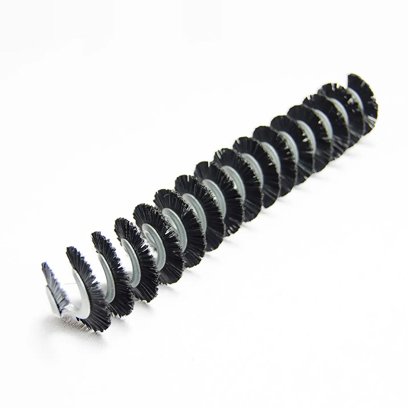
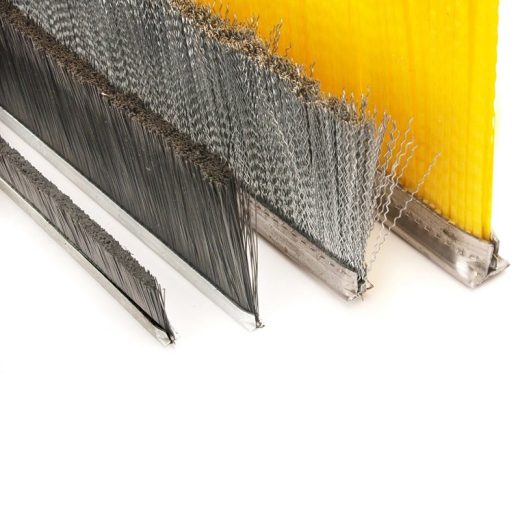
For most industrial garage door applications, nylon-based bristles deliver the optimal combination of durability, flexibility, and value. The flexible strip brush options provide excellent adaptability for doors with irregular surfaces or varying gap widths.
Bristle Density and Trim Length
Two specifications significantly impact sealing effectiveness:
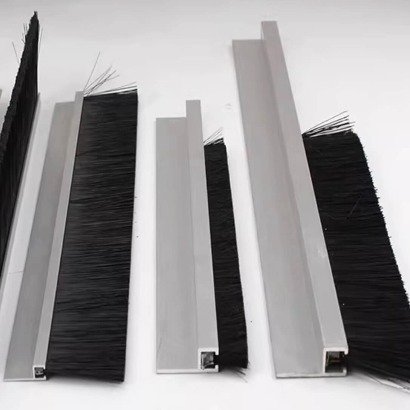
Bristle Density: Higher filament counts per inch create tighter seals against air infiltration and pest entry. Industrial applications typically require densities of 50% fill or greater for effective sealing. Premium garage door brush seals feature densities reaching 80% or higher.
Trim Length: The exposed bristle length must match the gap being sealed. Measuring accurately at multiple points along the door reveals whether gaps remain consistent or vary. For varying gaps, selecting a trim length that accommodates the largest gap while providing adequate compression at narrower points ensures complete coverage.
Channel and Backing Options
The mounting channel anchors bristles securely and enables reliable installation. Industrial applications benefit from different channel materials:
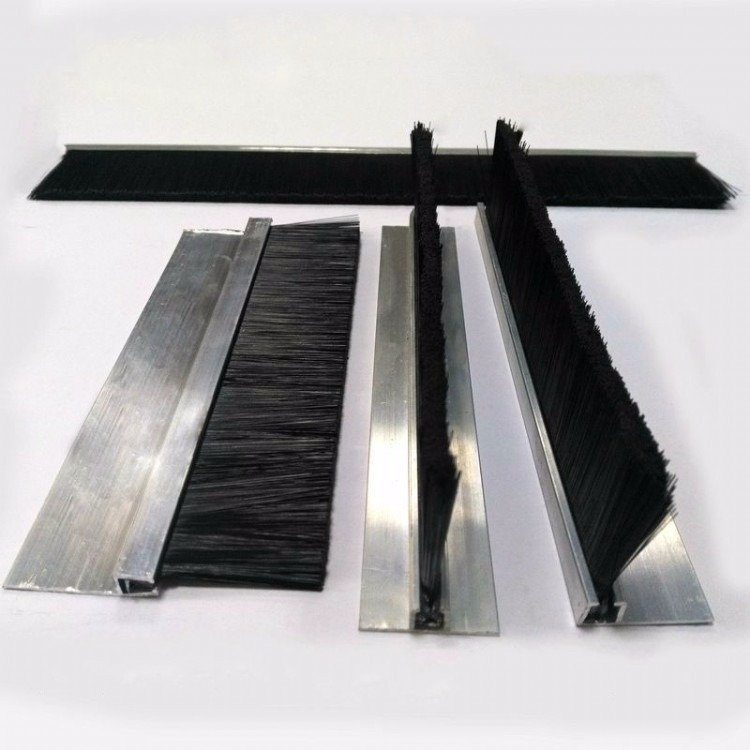
- Aluminum channels: Lightweight, corrosion-resistant, suitable for most environments
- Stainless steel channels: Maximum durability for harsh conditions or heavy impact risk
- Galvanized steel channels: Cost-effective corrosion protection for standard applications
For applications requiring enhanced sealing performance, double strip brush configurations provide superior coverage by positioning bristles on both sides of the mounting channel.
Matching Products to Specific Applications
Different industrial environments demand different solutions. Understanding which product configurations work best for specific applications streamlines the selection process.
Warehouse and Distribution Centers
These facilities typically operate multiple overhead doors with high daily cycle counts. Key requirements include:
- Durable nylon bristles rated for 100,000+ cycles
- Standard aluminum channels for cost efficiency
- Medium-density fill for balanced sealing and smooth operation
- Black or gray bristle colors to minimize visible soiling
The focus should emphasize energy efficiency and pest control. Industry observations show that roll up door seal brush installations in commercial garages have demonstrated significant improvements in both areas.
Manufacturing Facilities
Manufacturing environments present more demanding conditions requiring careful consideration:
- Chemical-resistant materials for areas with oil or solvent exposure
- Higher-density bristles for contamination control
- Stainless steel channels in corrosive environments
- Consideration of static dissipation for electronics or explosive atmospheres
Food Processing Plants
Food safety regulations impose additional requirements that facility managers must address:
- FDA-compliant bristle materials
- Antimicrobial treatment options
- Stainless steel channels for sanitary maintenance
- High-density configurations to prevent pest entry
- Detectable materials where required by safety protocols
Sizing and Measurement Guidelines
Accurate measurement prevents costly ordering errors and ensures proper fit. Many experienced facility managers have learned that taking extra time during measurement saves significant frustration later.
How to Measure Correctly
Follow this measurement process for reliable results:
- Close the door completely to its normal operating position
- Measure the gap width between the door surface and the frame at multiple points
- Record the largest gap measurement
- Add 20-30% to the largest gap for optimal bristle compression
- Measure the total linear length needed for all sides requiring sealing
Common Sizing Mistakes to Avoid
Several errors frequently lead to unsatisfactory results with door seal brush products:
- Measuring with door open: Gap dimensions change significantly between open and closed positions
- Single-point measurement: Assuming consistent gaps when they typically vary across the door
- Ignoring building movement: Older structures may shift seasonally, requiring slightly longer bristles
Evaluating Supplier Quality
Not all garage door brush seals deliver equivalent performance despite similar specifications. When evaluating potential suppliers, experienced procurement specialists typically consider these factors:
- Manufacturing consistency and quality control processes
- Material certifications and testing documentation
- Custom sizing capabilities for non-standard applications
- Technical support availability
- Sample availability for evaluation before volume orders
Exploring comprehensive strip brush product lines from established manufacturers provides access to diverse options suitable for varied industrial requirements.
Conclusion
Selecting appropriate garage door brush seals for industrial applications requires systematic evaluation of environmental conditions, operational demands, and specific product characteristics. Taking time to measure accurately, match materials to environmental conditions, and source from quality suppliers ensures industrial door sealing systems perform reliably for years of demanding service.
FAQ
What materials are best for industrial strip brush seals?
Nylon remains the preferred choice for most industrial applications due to its durability and flexibility. Stainless steel bristles serve extreme temperature environments, while polypropylene offers chemical resistance.
How do double strip brushes differ from single configurations?
Double strip brushes feature bristles on both sides of the channel, creating bidirectional sealing. This design provides superior coverage and longer service life in demanding environments.
Can flexible strip brushes conform to uneven surfaces?
Yes, flexible backing allows brushes to follow contours and accommodate gap variations. This adaptability makes them ideal for older facilities with uneven door frames.