When it comes to selecting the right brush for industrial cleaning and sealing, it can be mind-boggling because of all the specifications and options available. However, if you know some of the key criteria to consider, making your selection will be dramatically easier, resulting in improved performance over time.
A suitable nylon strip brush produces reliable results, leads to fewer maintenance needs, and produces a high return on investment. On the other hand, choosing incorrect specifications for these brushes can lead to earlier than expected failure, poor sealing, or cleaning. These problems typically cost you much more than just the difference in the price of the two brush styles.
Why Nylon Dominates Industrial Brush Applications
Among available bristle materials, nylon has earned its reputation as the go-to choice for most sealing and cleaning tasks. The material’s unique properties make it exceptionally versatile across diverse industrial environments.
Superior Resilience and Memory
Nylon wire brushes recover from compression and/or twisting, making them extremely useful in sealing applications because they maintain a consistent contact between brush bristles, no matter how many times they are moved and/or vibrated, and how much force is applied to them. In addition, unlike natural fibre brushes, which lose their rigidity over time, nylon fibre (bristle) brushes will continue to perform at the same level as when they were new for many years after purchase.
Broad Temperature Range
Different nylon grades accommodate varying temperature requirements:
- Nylon 6: Performs well up to 80°C, suitable for standard indoor applications
- Nylon 6.6: Handles temperatures up to 100°C, ideal for moderate heat environments
- Nylon 6.12: Operates effectively up to 120°C for high-temperature applications
This temperature versatility eliminates the need for material substitution across many facility locations, simplifying procurement and inventory management.
Chemical and Moisture Resistance
Industrial environments often expose brushes to cleaning chemicals, oils, solvents, and moisture. Nylon’s inherent chemical resistance allows it to withstand these exposures without degradation, making it particularly valuable in food processing, pharmaceutical, and chemical manufacturing facilities.
Critical Selection Factors
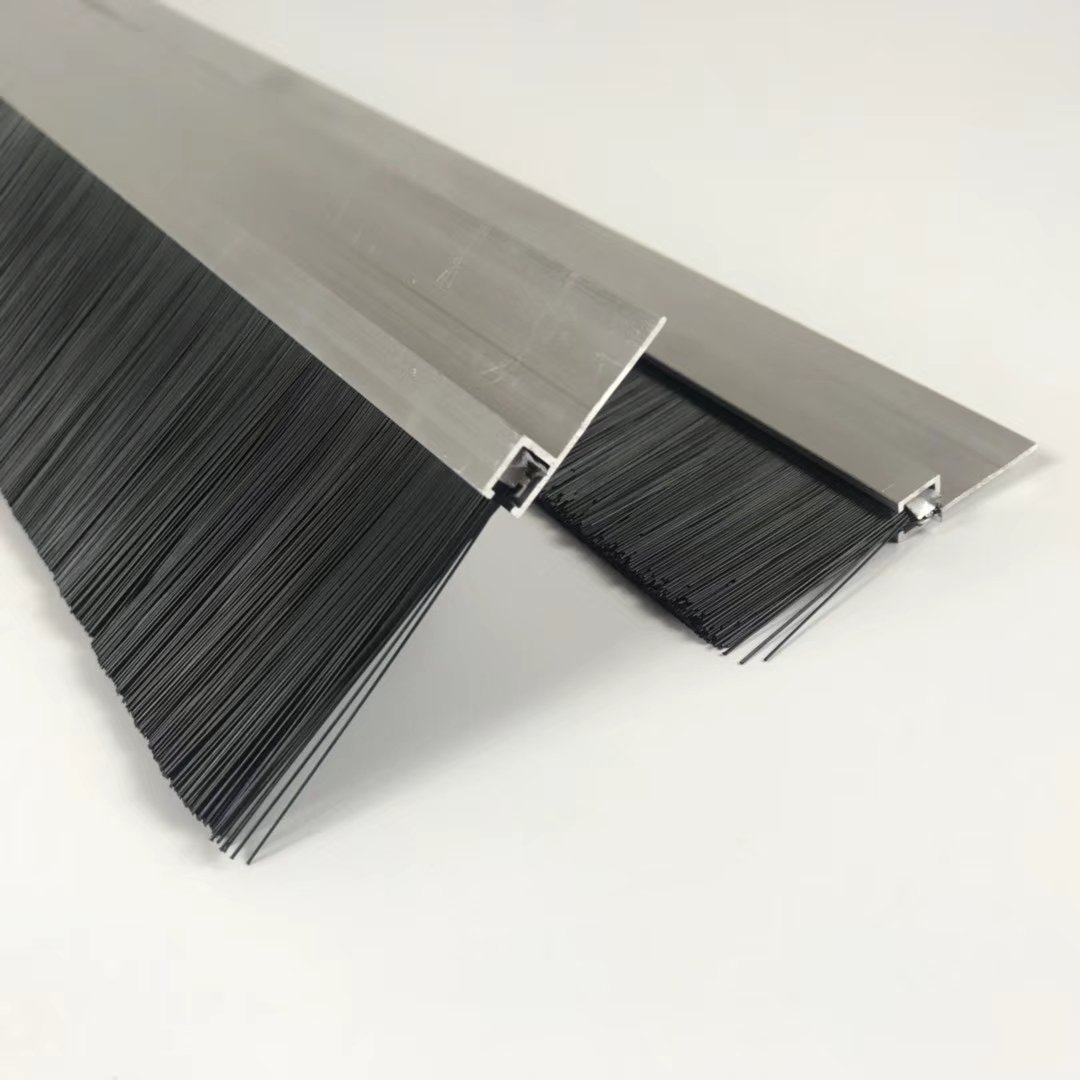
Several interconnected factors determine whether a particular nylon strip brush will perform optimally in its intended application. Evaluating these systematically prevents costly specification errors.
Bristle Diameter Selection
Bristle diameter directly impacts both stiffness and flexibility. The following table outlines typical applications for different diameter ranges:
| Bristle Diameter | Stiffness Level | Best Applications | Sealing Capability |
|---|---|---|---|
| 0.10-0.20mm | Very Flexible | Fine dust sealing, delicate surfaces | Light gaps only |
| 0.20-0.30mm | Moderate | General door sealing, light cleaning | Standard gaps |
| 0.30-0.50mm | Medium-Stiff | Conveyor cleaning, weather sealing | Moderate gaps |
| 0.50-0.70mm | Stiff | Heavy debris removal, scrubbing | Large gaps |
Facilities dealing with fine particles typically achieve better results with thinner bristles, while heavy-duty cleaning applications require thicker, more aggressive filaments.
Fill Density Considerations
- Fill density—the concentration of bristles per linear inch—determines how tightly brushes seal and how aggressively they clean.
- Higher density creates superior barriers for seal brushes but may reduce flexibility.
- Lower density allows greater airflow and surface conformity but potentially compromises sealing effectiveness.
Most applications that require both sealing and cleaning functions will benefit from using brushes with mid-density (medium) fill specifications as a way to balance these two conflicting performance needs.
Trim Length Optimization
Trim length affects how brushes conform to surfaces and accommodate movement. Key considerations include:
- Short Trim (10-20mm): Provides maximum stiffness for aggressive cleaning but limited flexibility
- Medium Trim (20-40mm): Balances conformity with sufficient cleaning action
- Long Trim (40-60mm+): Offers excellent surface conformity for sealing irregular gaps
Door bottom sealing typically benefits from longer trim lengths that accommodate floor irregularities, while side sealing applications often perform better with shorter, stiffer bristles.
Understanding Backing Channel Options
The backing channel serves as the brush mounting foundation and significantly influences installation ease and long-term stability.
Metal Backing Materials
Metal channels provide superior durability and precise dimensional control:
- Galvanized Steel: Cost-effective choice for dry, indoor environments
- Stainless Steel (304/316): Essential for food processing, outdoor exposure, or corrosive conditions
- Aluminum: Lightweight alternative for weight-sensitive applications
Profile Configurations
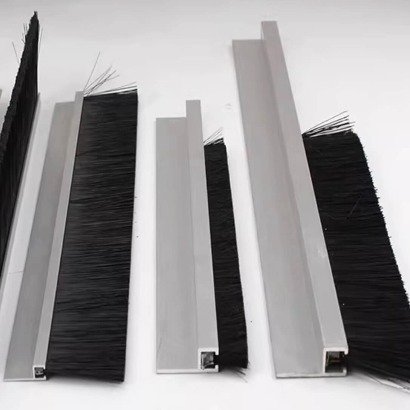
Common backing profiles include:
- F-profile for channel mounting
- H-profile for center mounting
- Angle profiles for corner installations
Custom shapes for specialized applications
Selecting appropriate backing profiles simplifies installation and ensures secure, long-lasting attachment. For comprehensive guidance on material selection for door and window applications, the resource on seal strip brushes material selection provides detailed recommendations.
Conclusion
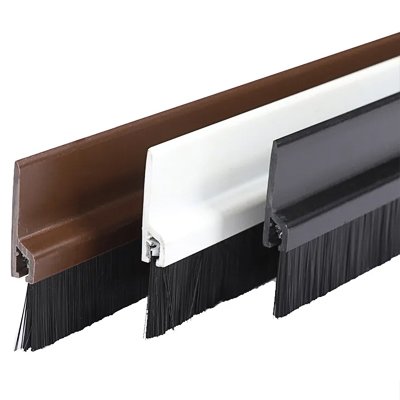
The process of choosing a nylon strip brush should be methodical and involve careful consideration of bristle specifications, as well as the type of backing material, and the type of application being performed.
By evaluating these three elements you can ensure maximum efficiency, increased product life, and overall value. Working with a manufacturer that has experience in industrial sealing and cleaning will make it easier to get through the selection process quickly and efficiently.
The right match will provide you with a consistent level of performance while providing lower long-term maintenance costs in some cases by reducing issues associated with unreliable strip brush products used in difficult operating environments.
FAQ
Is it possible for businesses to have a manufacturer work with them in order to create a custom-made nylon strip brush that meets their precise needs in an industrial setting?
Yes, we can manufacture to your specs: bristle diameter, fill density, trim length, backing material, and profile. Providing specifications and intended use will enable us to give you an accurate price quote.
What is the common lead time for bulk industrial brush orders?
Normal shipping times for standard products range from one week to two weeks with custom specifications ranging from three weeks to five weeks to be completed (length of time depends on the complexity of the product as well as what time of year they are ordering and on what schedule).