In the realm of modern manufacturing, the quality of a product’s surface finish often dictates its market value and functional longevity. Achieving a defect-free surface requires more than just machinery; it demands highly specialized tools designed for friction, abrasion, and precision. This is where professional industrial brushware becomes indispensable. From the automotive assembly line to high-end furniture workshops, these brushes serve as the bridge between a raw component and a retail-ready masterpiece.
The Strategic Importance of Surface Prep and Finishing
Surface finishing is rarely a single-step process. It typically involves a sequence of cleaning, deburring, and polishing. Each phase requires a different level of aggression and filament flexibility. Industry observations suggest that manufacturers often struggle with “over-finishing”—where the wrong brush removes too much material—or “under-finishing,” which leaves microscopic burrs that can lead to mechanical failure.
Utilizing the correct industrial brushware ensures that the mechanical properties of the workpiece remain intact while achieving the desired aesthetic or functional texture. Whether the goal is to create a mirror-like shine on stainless steel or to prepare a wooden panel for staining, the selection of the brush is the most critical variable in the production equation.
Achieving Excellence in Wood and Furniture Polishing
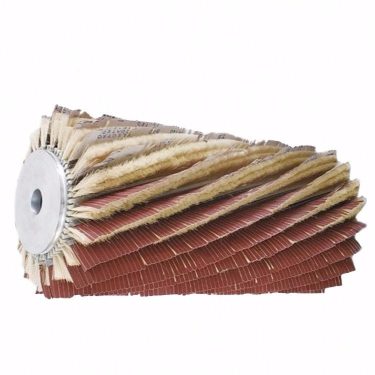
Woodworking presents unique challenges due to the natural variations in grain density. A standard abrasive tool might gouge softer grain while ignoring harder knots. A dedicated wood polishing brush solves this by providing a flexible interface that follows the contours of the wood without destroying its natural character.
Precision Tools for Fine Woodwork
For those in the cabinetry or high-end decor industry, the choice of equipment determines the final “hand-feel” of the product. It is often recommended to consult a best wood polishing brush guide to understand how different grit levels affect open-grain versus closed-grain species.
Consistency is the hallmark of quality. When dealing with intricate carvings or flat panels, a specialized furniture polishing brush can reach into recesses that traditional sanding belts simply cannot touch. This versatility reduces manual labor costs and ensures that every piece leaving the factory meets a uniform standard of excellence.
Industrial Deburring and Heavy-Duty Abrasive Cleaning
Moving from aesthetics to structural integrity, deburring is perhaps the most vital application for brushes in metalworking. Sharp edges and burrs created during machining or casting are not only safety hazards but also points of potential stress fractures.
The Role of Abrasive Filaments
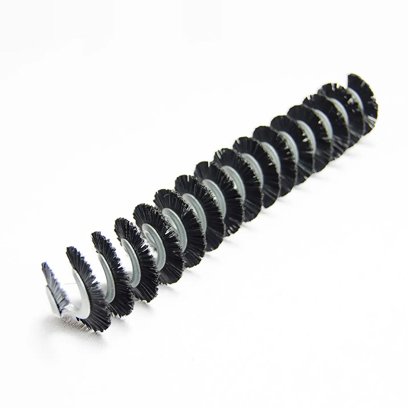
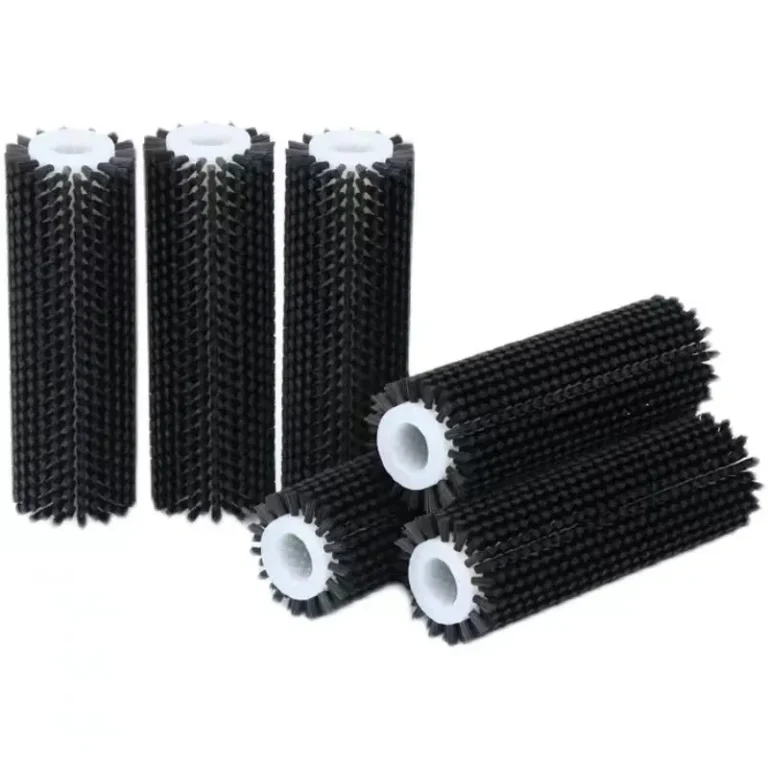
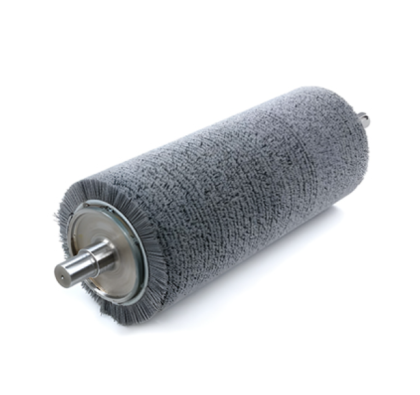
In high-volume production environments, an abrasive cylinder brush is frequently employed to automate the deburring of cylindrical parts or flat sheets. These brushes are infused with silicon carbide or ceramic grains, allowing them to act as flexible files. Unlike rigid grinding wheels, an abrasive roller brush can provide a consistent finish across uneven surfaces, ensuring that the edges are rounded without altering the critical dimensions of the part.
Maintaining Hygiene and Surface Integrity
Before any coating or welding can take place, the substrate must be free of oxides, oils, and dust. A high-performance surface cleaning brush is designed to strip away contaminants without scarring the base metal. This is particularly important in industries where coating adhesion is non-negotiable, such as aerospace or automotive manufacturing.
Technical Specifications: Choosing the Right Filament
To help procurement managers and engineers make informed decisions, the following table summarizes common filament types used in industrial brushware and their primary applications:
| Filament Type | Best Used For | Surface Compatibility | Aggression Level |
| Abrasive Nylon | Deburring & Polishing | Metal, Wood, Plastic | Medium to High |
| Natural Sisal | High-Gloss Polishing | Metal, Fine Wood | Low |
| Stainless Steel | Heavy Cleaning & Scaling | Steel, Aluminum | Very High |
| Horsehair/Tampico | Dusting & Fine Polishing | Furniture, Textiles | Very Low |
Key Benefits of Integrating Professional Brushes into Production
Integrating high-quality brushes into an automated or semi-automated workflow provides several measurable advantages:
- Consistency: Unlike manual sanding, mechanical brushes provide the same pressure and contact time across every workpiece.
- Heat Dissipation: The structure of a brush allows for airflow, which prevents “burning” of the workpiece, a common issue with solid abrasive wheels.
- Versatility: By changing the filament diameter or material, the same machine can often switch from heavy cleaning to light polishing.
Final Considerations for B2B Procurement
Selecting the right supplier is as important as selecting the right brush. Experienced operators look for brushes that offer “full density” and “high retention”—meaning the filaments stay in the hub even under high centrifugal force. This reliability minimizes downtime and protects the safety of the workforce.
FAQ
Q1: How do I determine the correct grit size for a wood polishing application?
A: It depends on the wood species and the desired finish. Generally, starting with a 120-grit filament and moving to 240-grit for final polishing ensures a smooth, stain-ready surface.
Q2: Can an abrasive cylinder brush be used on both ferrous and non-ferrous metals?
A: Yes, provided the filament material is compatible. For example, stainless steel filaments should be used on stainless parts to avoid cross-contamination and rust issues later.
Q3: What is the average lifespan of an industrial surface cleaning brush in a high-volume factory?
A: Lifespan varies by RPM and pressure. However, premium brushes are designed for hundreds of hours of continuous use before the filament wear affects performance significantly.