Surface treatment of metal is one of the most persistent headaches in manufacturing. Burrs, rust, weld discoloration, and uneven finishes on parts slow down production and increase rejection rates while driving up rework costs. A proper choice of disc brush will effectively eliminate all these problems — many times replacing several manual steps with a single automated pass. This article looks at five distinct metal surface problems that disk brushes solve. In each part, it gives the reason for the problem, explains why it is important, and states which brush type works best. For a wider look at where disk brushes are used in industry outside of metalwork, the overview of industrial uses of a disk brush gives more information.
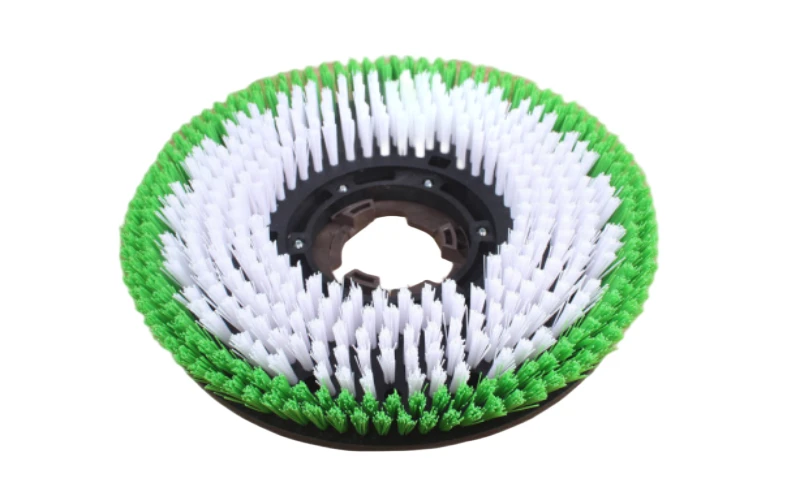
Five Metal Surface Problems a Disk Brush Solves
1. Burr Removal After Cutting and Stamping
Burrs are left by every cutting, stamping, and punching operation. They are sharp, raised edges that compromise part safety, assembly fit, and dimensional accuracy. Manual deburring is a slow process that also tends to result in inconsistent outcomes from one operator to another.
A disc brush is mounted on a rotary machine to remove burrs uniformly across entire part surfaces in seconds. Abrasive nylon filaments allow for conformity to complex part geometries and reach edges and contours that rigid grinding tools miss entirely.
The best deburring systems usually feature:
- Standard steel and aluminum parts are processed with medium-grit abrasive filaments.
- Fine-grit options are used for precision parts with tight tolerances.
- High-density fill patterns ensure constant edge contact.
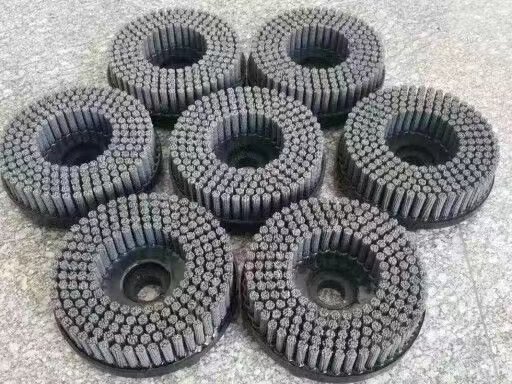
This abrasive wire disk brush can do many deburring jobs effectively; it has flexible bristle action and good rates of material removal.
2. Rust, Mill Scale, and Oxidation Removal
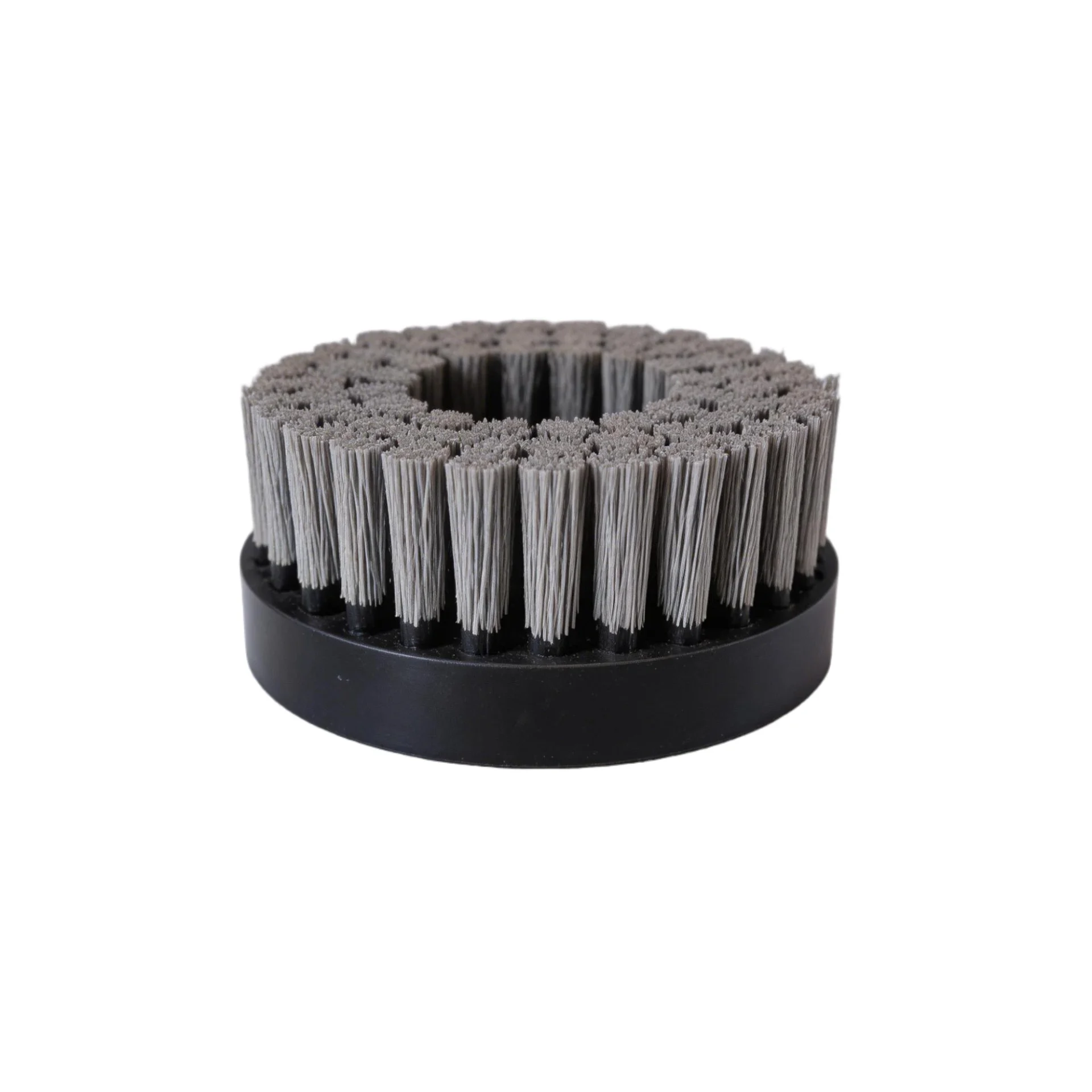
Scale coats raw steel when it arrives from the mills. Surface rust develops on stored metal. Either condition rules out proper welding, coating adhesion, or visual quality. Traditional wire wheels and sandblasting methods do the job but at the cost of creating excessive dust and noise and irregularities in the surface profile.
An abrasive disc brush with aggressive grit strips rust and scale from the material very fast but leaves a better surface texture for the next finishing process. The rotary action of the brush ensures uniform material removal without gouging or making deep scratches that would require more work in subsequent finishing steps.
The silicon carbide grinding disc brush is an excellent tool for this application. Its hardness and sharp grain structure make silicon carbide much more efficient than aluminum oxide at cutting heavy oxidation on carbon steel, stainless steel, and cast iron surfaces.
3. Weld Cleaning and Heat Tint Removal
The appearance and corrosion resistance of a weld are marred by spatter, discoloration, and heat-affected zones left behind after the welding operation. The passive chromium oxide layer, which protects against rust, is restored by removing heat tint on stainless steel.
A surface cleaning brush in disk format is used to clean efficiently weld seams without removing excessive base material. Part geometry is preserved while the result is a clean finish that is resistant to corrosion. Grinding would be more aggressive than disc brush cleaning; therefore, the disk brush result is visually clean.
Recommended parameters for weld cleaning:
- Bristle aggressiveness should be matched to the base metal (stainless steel needs finer abrasives than carbon steel)
- RPM should be set within the range specified by the brush manufacturer to avoid premature wear of bristles
- Use uniform feed rates to avoid uneven removal of heat tint.
4. Surface Preparation Before Coating or Painting
Coatings, paints, and adhesives need a particular surface profile to bond effectively. If it is too smooth, then the coating peels; if it is too rough, then the coverage becomes uneven. A disc brush makes a surface texture that can be controlled and repeated to promote optimal adhesion.
This preparation step matters most in:
- Automotive component painting lines
- Structural steel powder coating operations
- Aerospace bonding and primer applications
- Industrial equipment recoating and refurbishment
5. Final Polishing and Aesthetic Finishing
After deburring, cleaning, and preparation, many metal products require a final aesthetic finishing step to attain the appearance specified by the customer. This applies to decorative hardware, kitchen equipment, architectural panels, and consumer products where a refined surface is in demand.
A dedicated disc metal polishing brush will deliver uniform satin, brushed, or mirror-adjacent finishes according to bristle type and grit selection. Soft filaments and fine grits will give smooth, reflective results. Many manufacturers who handle both aggressive surface treatment and final polishing maintain separate disc brush setups for each stage. A workflow explored further in the industrial disk brush selection guide.
Table 1: Surface Problem-to-Brush Matching
| Surface Problem | Root Cause | Recommended Disk Brush Type | Bristle Material |
| Burrs and sharp edges | Cutting, stamping, punching | Abrasive wire disc brush | Abrasive nylon |
| Rust and mill scale | Oxidation, storage, raw material | Silicon carbide grinding brush | Silicon carbide grit |
| Weld spatter and heat tint | Welding operations | Surface cleaning disc brush | Stainless steel or abrasive nylon |
| Poor coating adhesion | Insufficient surface profile | abrasive wire PVC disc brush | Abrasive nylon on PVC base |
| Dull or rough final appearance | Prior processing marks | metal polishing brush | Soft nylon or natural fiber |
This table will tell the procurement department what brush type they need to specify for each metal surface problem that comes up in production.
Why Disc Brushes Outperform Conventional Ways
Many shops are still using hand sanding, wire wheel grinding, and chemical treatments, but manual processes dominate. Disc brushes consistently outperform these methods in three key areas:
- Speed: An automated disc brush station can process parts in seconds rather than minutes. This increases the overall throughput of the operation significantly.
- Consistency: A rotary scrub brush will deliver the same pressure and coverage on every part. This will help eliminate variations in quality that are dependent on the operator.
- Versatility: Changing bristle type or grit turns the same machine from a heavy-duty deburring station into a fine polishing setup.
The same benefits reach far beyond metalwork. Units that also keep up factory floors often find out that the floor scrub brush versions of disc designs share the same engineering principles—stiff bristles for aggressive cleaning, softer fills for more sensitive surfaces. The guide on using a rotary scrub brush on different surfaces takes these similarities and works them out in practical detail.
Explore the full disk brush product range to compare bristle materials, base plate options, and diameter specifications side by side before making bulk orders.
Frequently Asked Questions
Can one disk brushes do deburring and polishing on metal parts?
Not really. Deburring needs aggressive abrasive filaments, and polishing needs soft bristles. Most applications demand separate brushes for each stage to achieve much better and more consistent surface results.
How frequently do disk brushes need to be replaced in metal fabrication shops?
It varies with production level and material hardness. Typically, brushes are checked between shifts and replaced once the bristle length dips below 60 percent.
Which abrasive grit is ideal for stainless steel surface preparation?
Silicon carbide. This grit grinds stainless steel cleanly without clogging into the surface, which helps maintain the natural corrosion resistance of the metal.