Spiral brush, as an industrial brush, is favored by the market for its unique manufacturing process and wide application fields. This article will explore the importance of the manufacturing process of spiral brushes and their material selection.
The manufacturing process of spiral brushes
The manufacturing process of spiral brushes is mainly divided into the following steps:
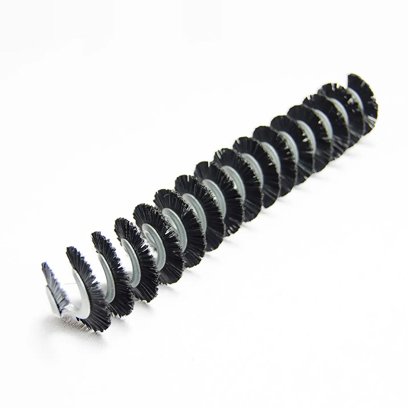
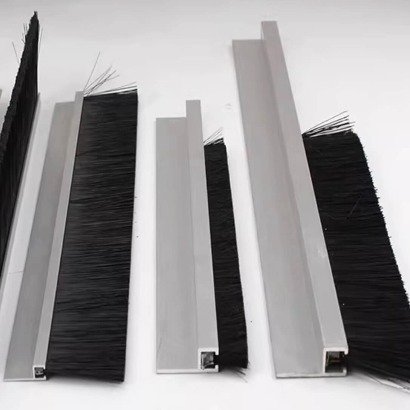
Brush wire embedding: First, the brush wire is embedded in the galvanized iron bar or stainless steel bar. This step is the basis for the production of spiral brush.
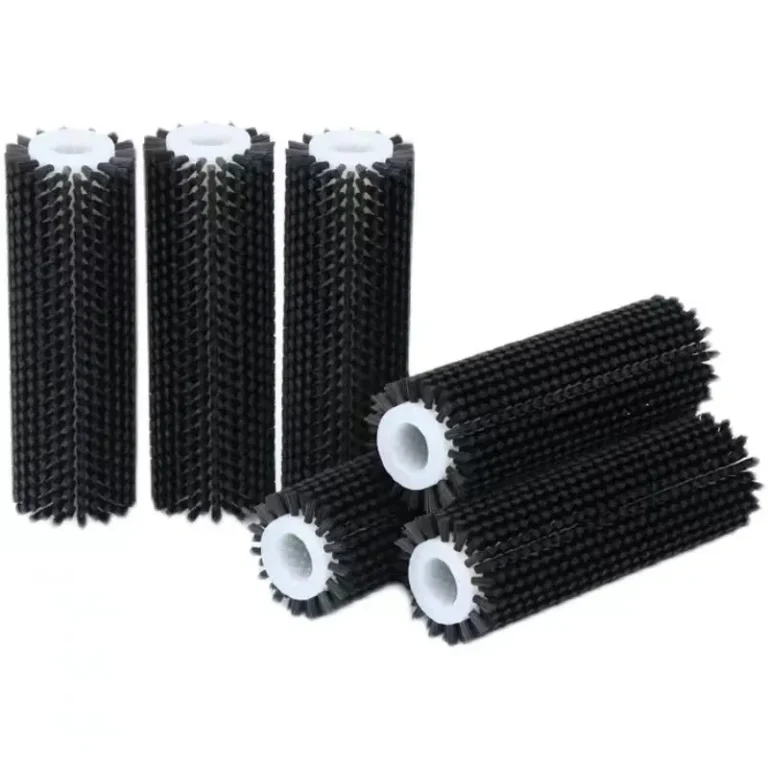
Machine winding: Subsequently, the embedded brush wire is wound into a spiral shape by a machine to form a brush roller. This technology is a new method for making brush rollers introduced from abroad.
Density control: Spiral brushes can solve the density problem that ordinary brush rollers cannot achieve because it can plant brush wires on plastic or other brush attachments to achieve a high-density effect.
Spot welding fixation: Maintain good density on a seamless round shaft and spot weld it on the round shaft to form a spiral brush roller with high brush density and not easy to lose wire, also known as a winding brush roller.
Gap design: Some spiral brushes are designed with a certain gap. This is a special design that takes into account that debris may fall into the brush wire during operation and cannot be cleaned.
Material selection
The material selection of spiral brushes has a direct impact on their performance and application areas:
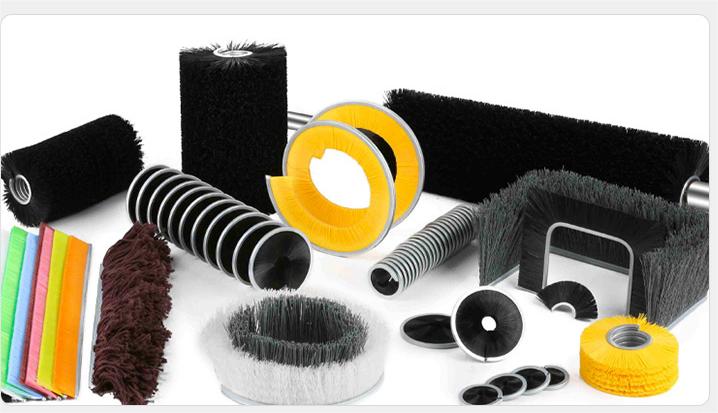
Metal wire: Metal wire spiral brushes are mainly used in industries such as steel and coating, and are favored for their wear resistance and strength.
Nylon wire: Nylon wire spiral brushes are mainly used in cleaning, furniture wood polishing, color-coated coil rust removal and other industries, and are widely used for their good polishing and cleaning effects.
Stainless steel wire: Stainless steel wire for spiral has the characteristics of corrosion resistance, high and low temperature resistance, and is suitable for small springs under corrosive or high and low temperature working conditions.
Silicon bronze wire and tin bronze wire: These materials have high corrosion resistance and anti-magnetic properties, and are used for elastic components for machinery or instruments.
Beryllium bronze wire: It has high wear resistance, corrosion resistance, anti-magnetic and conductive properties, and is used for precision elastic components for machinery or instruments.
Choosing the right material is crucial to the performance of spiral brushes. Different materials have different physical and chemical properties, which determine their applicability in specific applications. For example, stainless steel wire is suitable for cleaning work in humid or chemical environments due to its corrosion resistance, while nylon wire is suitable for polishing and cleaning due to its softness and wear resistance.
In summary, the production process and material selection of spiral brush are key factors to ensure their high efficiency and durability in industrial applications. With the advancement of technology and the development of new materials, the application field of spiral brush will be further expanded.