Why Material Choice Matters for Your Brush Plate
If you have ever worked with a CNC lathe or industrial machine, you are aware that an incorrect brush plate can malfunction after just a few weeks or sometimes even days. As the filaments become brittle and backs warp, your machine could be completely covered in chips and coolant—things that the brush was supposed to do. The difference between a season’s worth of use out of the brush vs. a year’s worth often comes down to one decision: PVC or nylon?
Choosing an appropriate brush plate has to do not only with how well you will clean, but also with what chemical makeup, what temperature, and what type of mechanical stress is happening in your environment. A PVC plate brush may work wonderfully in one application, but a nylon brush plate may work much better in a different application. Understanding these differences will aid your maintenance team in preventing early failure and minimising the amount of time you lose due to unplanned maintenance.
For a complete overview of available configurations, visit our plate brush product collection.
Chemical Resistance: A Side-by-Side Comparison
In industrial settings, brushes routinely contact cutting fluids, coolants, degreasers, and other chemicals. The filament and backing material must resist degradation from these substances to maintain performance.
PVC Plate Brush: Chemical Resistance Profile
PVC (polyvinyl chloride) offers excellent resistance to a broad range of chemicals commonly found in machining environments. Operators using a PVC plate brush often note that it holds up well against:
- Water-based coolants and emulsions
- Mineral oils and synthetic lubricants
- Diluted acids and alkalis
- Salt solutions and mild solvents
However, PVC has limitations. It can swell or soften when exposed to strong solvents like acetone, MEK, or concentrated aromatic hydrocarbons. For applications involving these aggressive chemicals, alternative materials may be required.
Nylon Brush Plate: Chemical Resistance Profile
Nylon—particularly Nylon 6.6—offers a different chemical resistance profile. A nylon brush plate performs exceptionally well against:
- Aliphatic hydrocarbons (gasoline, diesel, kerosene)
- Oils and greases
- Alkaline solutions
- Many organic solvents
Nylon is generally less resistant to strong mineral acids compared to PVC. In applications involving sulfuric or nitric acid, PVC often proves the better choice. Nylon also absorbs more moisture than PVC, which can affect dimensional stability in consistently wet environments.
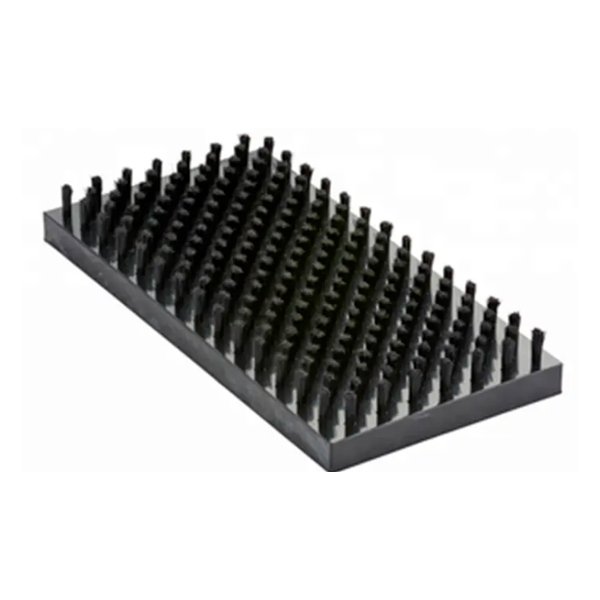
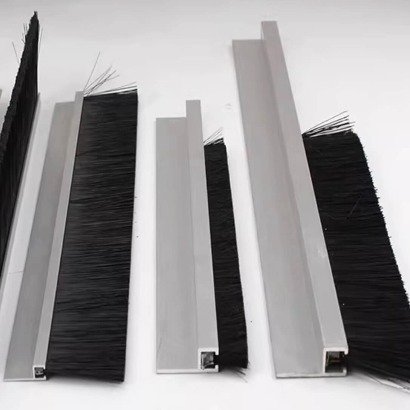
For a detailed example of how material selection affects sealing performance, see our nylon strip brush with PVC backing for CNC machine panel sealing product page.
Temperature Tolerance and Durability
Temperature resistance often determines how long a brush plate maintains its shape and cleaning effectiveness.
| Property | PVC Plate Brush | Nylon Brush Plate |
| Maximum Continuous Temperature | 70–80°C (160–175°F) | 100–120°C (212–250°F) |
| Intermittent Peak Temperature | Up to 120°C (248°F) | Up to 150–180°C (300–355°F) |
| Low-Temperature Flexibility | Remains flexible down to -20°C | Retains flexibility down to -30°C |
| Abrasion Resistance | Good | Excellent |
| UV Resistance | Moderate (can degrade with prolonged exposure) | Good (especially with UV-stabilized grades) |
Experience shows that a PVC plate brush performs reliably in standard machining environments where temperatures stay moderate. In applications involving heat-generating processes or high-speed friction, a nylon brush plate typically offers longer service life due to its higher thermal stability.
Application Suitability: Where Each Material Excels
When to Choose a PVC Plate Brush
The PVC plate brush is often the preferred choice for:
- Wet machining environments where water-based coolants are used
- Food processing and pharmaceutical applications (certain PVC grades are FDA-compliant)
- Chemical wash-down areas where resistance to mild acids and alkalis is needed
- Cost-conscious operations where PVC offers a favorable price-to-performance ratio
The backing material of a PVC plate brush resists corrosion from moisture and common industrial fluids, making it a solid choice for applications where the brush remains in contact with coolant or wash water.
When to Choose a Nylon Brush Plate
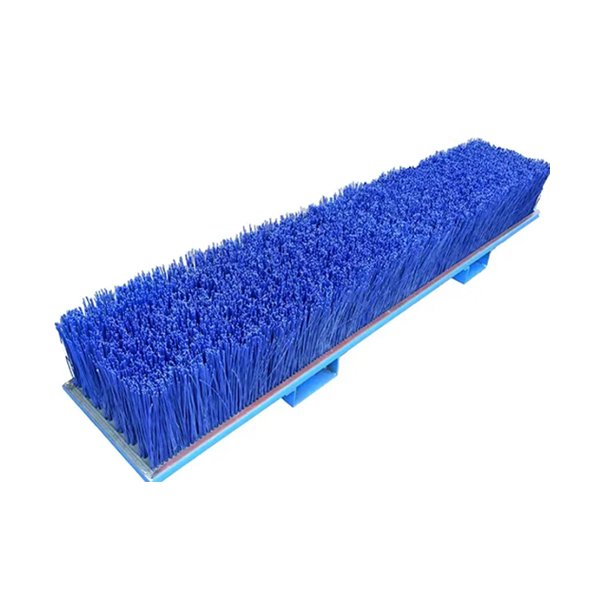
A nylon brush plate becomes the better option when:
- Higher temperatures are present (near ovens, dryers, or high-speed operations)
- Abrasive wear is a concern—nylon filaments outlast PVC under heavy friction
- Solvent exposure is frequent—nylon resists many organic solvents that attack PVC
- Mechanical stress is high—nylon offers superior tensile strength and bend recovery
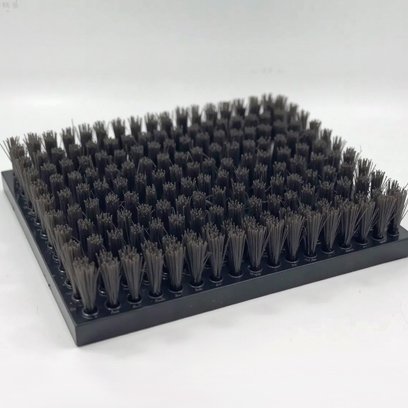
For applications requiring both sealing and cleaning, a tufted panel brush with nylon filaments provides the durability needed for demanding production environments.
Installation and Maintenance Considerations
Regardless of material choice, proper installation extends the life of any brush plate. The plate brush: an essential tool for CNC lathes guide highlights how correct mounting prevents premature wear.
Key installation practices include:
- Ensuring the mounting surface is clean and flat
- Using appropriate fasteners for the backing material (PVC can crack if over-tightened)
- Verifying filament contact is consistent across the entire brush length
- Avoiding sharp bends or kinks that stress the backing
For ongoing maintenance, routine inspection makes a significant difference. When filaments become frayed, matted, or brittle, replacement is necessary. A well-maintained strip brush or plate brush preserves machine cleanliness and protects sensitive components from debris.
To understand how proper brushing contributes to overall equipment reliability, read brush plate: expert of CNC lathe, ensuring a clean working environment.
Making the Right Selection for Your Facility
Selecting between a PVC plate brush and a nylon brush plate comes down to answering a few questions about the operating environment:
- What chemicals does the brush contact? Review Safety Data Sheets (SDS) for coolants and cleaners.
- What is the operating temperature? Consider both normal conditions and peak spikes.
- How abrasive is the debris? Hard metal chips accelerate wear on softer filaments.
- What are the sanitation requirements? Food-grade applications may dictate material choice.
- What is the expected service life? Higher initial cost for nylon may pay off in reduced replacement frequency.
For many general-purpose CNC applications, a PVC plate brush offers a cost-effective solution with adequate chemical resistance. For demanding environments involving solvents, high heat, or heavy abrasion, the nylon brush plate justifies its higher upfront cost through extended service life.
Frequently Asked Questions
Q1: How do I know if my current brush plate is failing due to chemical exposure?
Seek out filament stiffening, brittleness and/or swelling. If you see signs of backing warping or discoloration, then you have probably been chemically attacked. You might want to switch to a material that has better chemical resistance to resolve the problem.
Q2: Can you use an Absorber Plate Brush (ABS) for high-temperature drying applications?
Continuous exposure to temperatures above 80°C (175°F) will cause PVC to start to soften. A nylon brush plate with higher thermal stability should be used in drying tunnels and high-heat areas in order to prevent early failure of the brush plate.
Q3: What is the difference between a standard plate brush and a tufted panel brush?
A regular plate brush mounts tufts of hair on a fixed support for the purpose of sweeping or cleaning. A tufted panel brush utilizes a denser quantity of hairs that are more securely fastened to the back of the brush and are meant primarily for filling in gaps and having material stay inside or on the surface of panels on moving machinery.