Finding a compatible helical brush when there are so many styles available can be an intimidating task. Different wire types, core diameters, filament densities, and the Application Environment affect the compatibility of the products you choose. Procurement professionals and engineers can save time and money on unproductive work using a solid understanding of these products before making any purchases.
This guide breaks down the key decision factors and matches common applications to the right brush style.
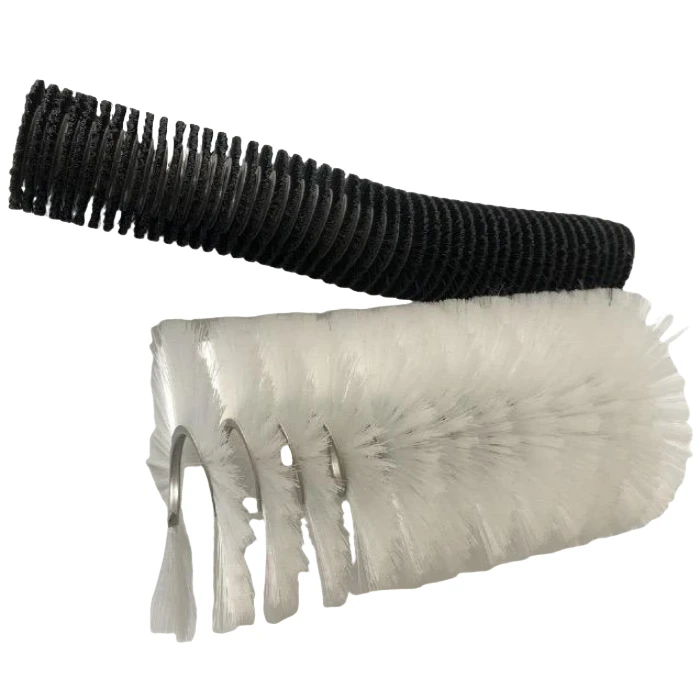
What Makes a Helical Brush Unique
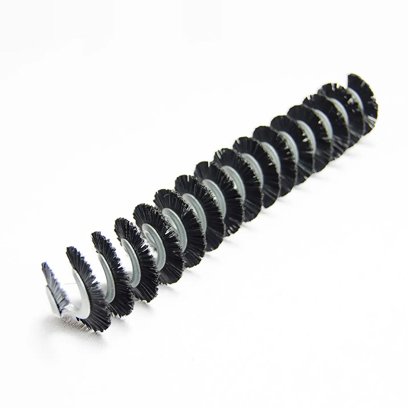
A helical brush has filaments in a spiral wrap around a central wire core. This shape provides full 360 degrees of contact with the surface to be cleaned, polished, or deburred internally on a tube, pipe, or cylindrical part.
The coil brush design distributes uniform, consistent pressure on the whole working length, which creates a coiled brush are a more suitable for use on automated manufacturing production lines to produce aesthetically uniform products than by a strip/flat-style brush.
According to buyer reviews, spiral construction of kits means easy customization including changing pitch, fill density and trimming length depending on the size of bore or & conveyor width requested.
Choose your Helical Brush
Brush Filament Material
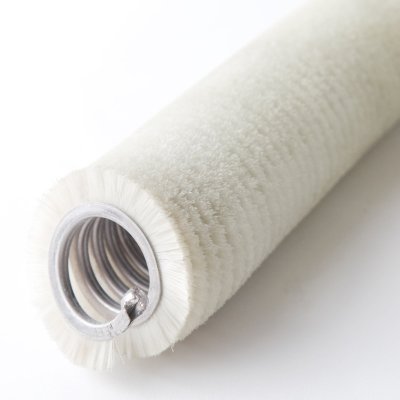
The type of filament used affects how aggressive the bristles of the brush will be. Some common material types include:
- Steel Wire — best suited for heavy-duty deburring, rust removal and scale cleaning from harder metals.
- Stainless steel wire — suited for food-grade or corrosion-sensitive environments.
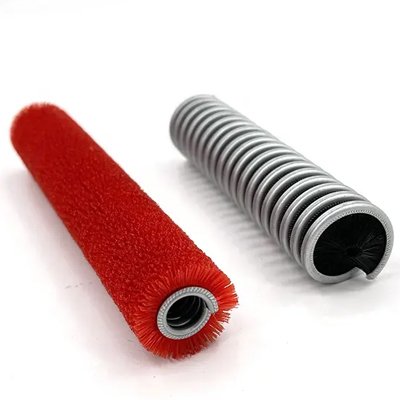
- Uses for Nylon (Abrasive Nylon) — Suitable for light cleaning and polishing / suitable for uses where the risk of damaging the surface must be avoided. An example is a nylon outward spring brush specifically designed to generate a gentle conditioning effect on the surface of the substrate.
- Natural fibres — typically used as dust removal or for delicate coatings.
Core Wire & Diameter
A core wire supports filaments and determines a brushes rigidity. Thicker cores support greater rotational speed and weight levels. Buyers should match core wire diameter with the equipment spindle or mounting system to reduce vibrational problems.
Application Environment
Brush selection can be affected by temperature, moisture, chemical exposure, and/or rotational speed. A brush used inside of a high-temperature oven will need to be made from different materials than one used for wet cleaning on a food processing line.
Common Applications & Suitable Brush Types
The table below lists some of the most commonly used industrial applications along with their respective filaments and the types of brushes that generally perform well for each application.
| Application | Filament | Brush Style | Key Consideration |
| Tube internal cleaning | Stainless steel wire | Standard helical brush | Match OD to tube bore |
| 360 chain cleaning | Nylon or steel wire | Spring-type coil brush | Needs 360° wrap-around contact |
| Wire rope cleaning | Steel wire | Tight-pitch helical brush | Must conform to rope diameter |
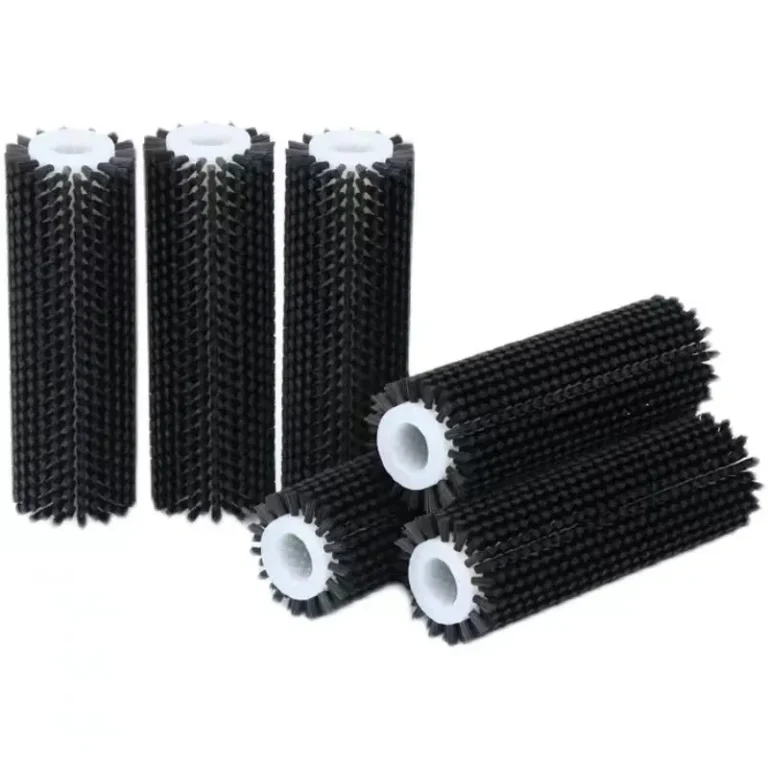
| Conveyor roller cleaning | Abrasive nylon | Long-format coil brush | Consistent trim length critical |
| Air-filtered media cleaning | Soft nylon | Spring-type brush | Low aggression, high uniformity |
The design of the 360 chain brush is a significant time-saver in the maintenance operation as it wraps completely around the chain to clean all surfaces of the chain in one operation. Likewise, as related to the maintenance of a wire or cable, there has to be a dedicated wire rope cleaning brush that is shaped to the wire-lay pattern of the wire rope and allows for the complete removal of contaminants and debris from inside, between or across the surface of the wire rope.
Helpful Hints to Ensure Your Decision is Correct
Every industrial buyer usually follows a process to help them make a decision and will use this list as a guide.
- Identify the surface you wish to treat (type of material, shape and condition of material — rust, grease/oil on surface, coated objects).
- Identify the area you will be treating (bore diameter, rope width, conveyor roller length).
- Identify the conditions that the surface will be treated (speed of the process/environment; temperature of surface, wet/dry).
- Identify the type of filament to be used by determining how aggressive you want to be.
- Request samples before committing to bulk quantities.
When sourcing multiple types of brushes for various stations, buyers can take advantage of examining all the coil brush varieties in one complete product line that includes standard helical designs and specialty configurations (e.g., spring brushes) to create a cost-saving solution.
When to Consider a Spring Brush Design
There are times when a typical helical brush would lack sufficient flexibility; these have been addressed with the use of spring brush designs—these have an open-coil core whereby they can compress and expand as needed to match the shape of the substrate. Spring brush designs are particularly advantageous where chain cleaning systems are used, as they can wrap around individual link sizes of different dimensions.
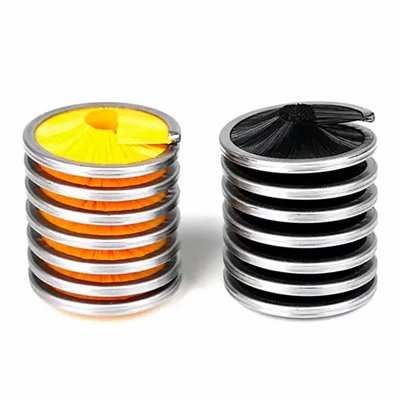
An example of a flexible design that outperforms rigid designs is a spring brush chain cleaning solution for high volume industrial chains or motorcycle chain maintenance.
Conclusion
Ultimately, it’s about selecting a helical brush for a job, rather than the helical brush for the job. People who know their surface, environment and requirements will get better results and have longer-lasting brushes. If you’re not sure what to choose, working with a manufacturer that provides customization services is your best option for finding a good fit.
FAQ
Are there customizations available for helical brushes in specific diameters?
Absolutely! Most manufacturers can provide custom options for your machine’s bore and/or tube size to include custom core diameter, filament length and/or pitch adjustments to ensure a proper fit.
What is the minimum order quantity (MOQ) for bulk orders of helical brushes?
MOQs vary based on customization of the helical brush order. For standard sized helical brush bulk orders, MOQs generally start at 50 to 100 pieces. For fully customized helical brush orders, MOQs are often 200 pieces or greater.
Which industries use helical brushes most often?
The automotive, food production, metal production and mining industries use helical brushes most often. These industries utilize helical brushes to perform major tasks like internal cleaning, deburring, and surface conditioning.