The performance of the material used for the brushes that create modern cleaning equipment is critical to their function. High-quality floor scrub brushes enhance the effectiveness of cleaning while minimizing maintenance costs and downtime for cleaning equipment. In an industrial environment, selecting the appropriate brush material can significantly impact durability, abrasion resistance, water/chemical absorption properties, and chemical compatibility.
Different types of brushes will be required across the cleaning spectrum based on specific cleaning requirements. Certain surfaces require softer bristles to avoid damaging them, while other surfaces will require firmer bristles in order to accomplish hard-core cleaning tasks such as cleaning grease, dirt, and other residuals. When making the decision regarding which type of brush to purchase for your commercial or industrial cleaning projects, it is important to understand the advantages and capabilities of PP, nylon, POM, as well as ABS materials.
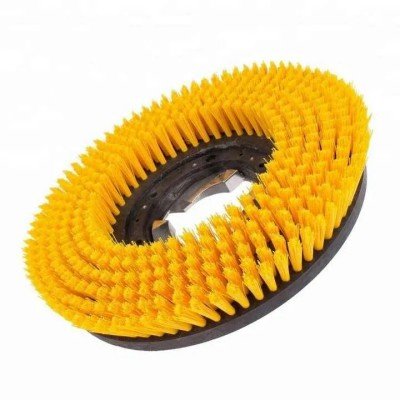
Importance of Brush Material in Industrial Cleaning
Many customers begin by selecting a brush based on its shape or compatibility with their equipment. However, skilled cleaning equipment dealers will frequently observe that brush material selection can significantly affect how well the brush performs over long periods of time.
- A properly selected floor scrub brush can:
- Extend equipment service life
- Improve cleaning consistency
- Reduce filament deformation
- Lower replacement frequency
- Handle moisture and chemicals more effectively
For example, industrial warehouses typically need stronger materials than retail stores due to the increased amount of friction on floors and the amount of debris that will collect on the floor.
Common Floor Scrub Brush Materials
Polypropylene – Less Expensive and Versatile
Polypropylene is one of the most common materials used in the cleaning industry by a large number of manufacturers to produce brushes used for medium duty cleaning applications, providing a reasonable balance between flexibility and cost.
PP brushes have the following benefits:
- Excellent resistance to chemicals
- Possess low absorption capacities for water
- Provide a lightweight construction
- Offer competitive pricing on production of goods
PP is used extensively in many general-purpose cleaning environments including: shopping malls, parking garages, public sidewalks and light industrial plants.
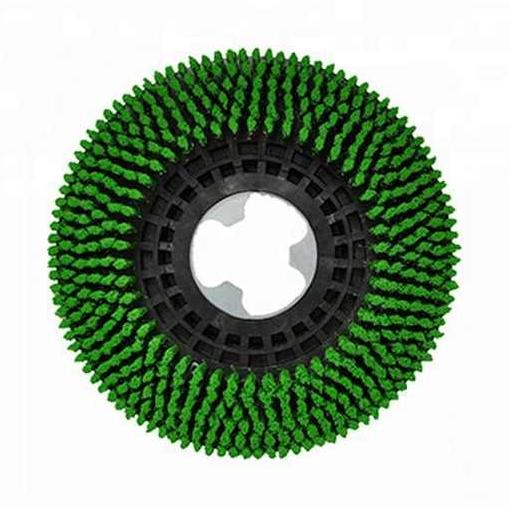
A large number of conventional disk sweeper brush models utilize bristles manufactured from PP for the stability of sweeping performance while not adding any noticeable weight to the machine.
Nylon – Exceptional Durability for Heavy-Duty Cleaning
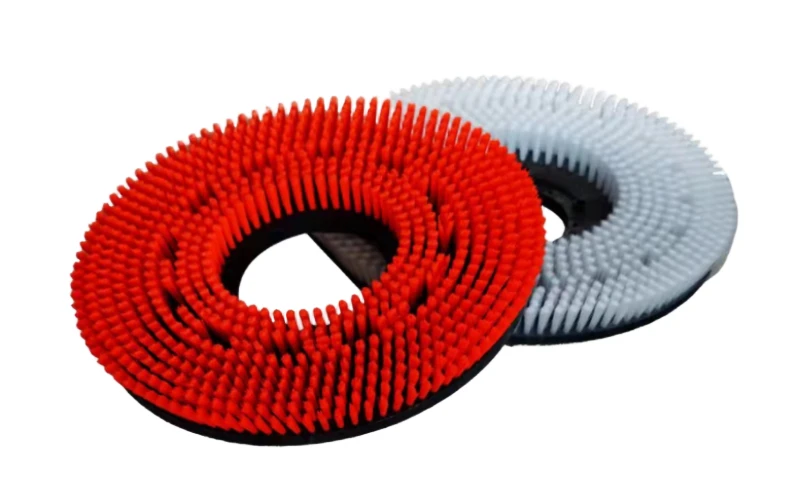
In many cases, nylon is preferred for heavy-duty cleaning needs. It has much higher abrasive resistance compared to PP and recovers from repeated flexing better than most other types of bristle strips.
The performance of professional nylon disc brushes on specific types of surfaces, such as:
- Rough concrete
- Oil-slicked shop floors
- Industrial warehousing areas
- Logistical operations
is superior to that of most other brands of brush material. In addition, nylon continues to perform well under wet conditions, making it a great match for use with both automatic scrubber machines and heavy-duty rotary scrub brush systems.
Most of the time you will tend to see industrial buyers looking for reliable cleaning efficiency that use nylon as their first choice due to the longer running times associated with using nylon.
When shopping for cleaning methods, you will also notice that rotary scrub brushes can be an effective way to help you decide on the best stiffness of filament that will offer you optimal cleaning power for a variety of floor conditions.
Plastic: POM (Polyoxymethylene) – High Precision & Durable
POM has great dimensional stability and mechanical strength; however, compared to PP or nylon POM is typically more costly; however, when used in any highly specialised application POM has superior longevity compared to nylon or PP.
If you need to create a POM brush to fit into a cleaning system, then you want a brush with the following attributes:
- Strong Rotational Stability
- Consistent Filament Shape
- Low Deformation When Subjected to Pressure
- Excellent Long-Term Performance for Industrial Applications
A factory’s automated cleaning system operates continuously, which means that manufacturers typically choose to use POM clean room brushes to eliminate performance degradation because of adverse conditions. In a practical sense, POM is the ideal material for precision cleaning where brush wear might otherwise affect the quality of cleaning.
ABS – Durability As A Support Material
Typically not specified for the manufacture of bristle filament, many manufacturers choose to utilize ABS for the manufacture of brush backs, plates and other structural components.
ABS provides:
- Significant resistance to impact
- Stability in the structural integrity of the materials that they are manufactured from
- Good processing flexibility
- Quality machine compatibility
Numerous commercial floor scrub brushes utilize ABS backing plates due to their ability to remain stable and rigid when subjected to the high-speed rotational forces.
Comparison of Common Brush Materials
| Material | Main Advantage | Best Application | Durability Level |
|---|---|---|---|
| PP | Affordable and chemical-resistant | General cleaning | Medium |
| Nylon | Excellent wear resistance | Heavy-duty scrubbing | High |
| POM | Precision stability | Automated industrial cleaning | Very High |
| ABS | Structural durability | Brush base components | High |
Choosing the Correct Floor Scrubber Brush
Many factors to take into consideration when choosing an appropriate floor scrub brush include your environment, how many sq ft need to be cleaned, and if you have automated equipment. Most experienced distributors will assess your needs & suggest the best materials that will serve your needs based on your unique application.
Think About The Kind Of Floor You Are Cleaning
A soft floor surface such as carpet will require a softer bristle cleaning brush than the harder surface of a rough concrete slab.
Examples:
- Epoxy Floors: Nylon or Polypropylene Brushes (softer bristles)
- Concrete Floors: Nylon (durable bristles)
- Tile Floor Surfaces: Polypropylene Brushes (medium stiffness)
- Industrial Steel Floors: Reinforced POM Brushes
Evaluate Chemical Exposure
When performing industrial cleaning, you typically use detergents, oils, or chemicals. Both nylon and polypropylene usually deal with moisture very well; however, some chemicals may require specific types of material that are chemically resistant.
When choosing a rotary scrub brush, be sure that the brush selected has sufficient chemical resistance for the cleaning product that will be used.
Look for the Right Balance Between Cost and Life Expectation
Many consumers will choose the cheapest product available; however, generally high quality materials will cost less in the long run because there will be fewer replacements over time.
For large-scale operations, investing in higher quality brushes for high-use cleaning areas will help ensure efficiency over time. A nylon disc brush may be more costly initially; however, many facilities experience less downtime due to their investment in a quality nylon disc brush.
Maintenance Suggestions for Full Life of Brushes
To help prolong their usage, proper maintenance can increase the longevity of the brush. Cleaning equipment suppliers often recommend: rinsing brushes post-chemical cleaning and avoiding high-pressure application during use.
Regularly inspect the wear on your brush filaments and store them in a dry environment. Regularly maintaining your tools can ensure an even clean and consistent contact with the surface.
For businesses that need to enhance the efficiency of their everyday cleaning, consider following tips using scrubbing floor brush effectively cleaning for routine maintenance practices.
Conclusion
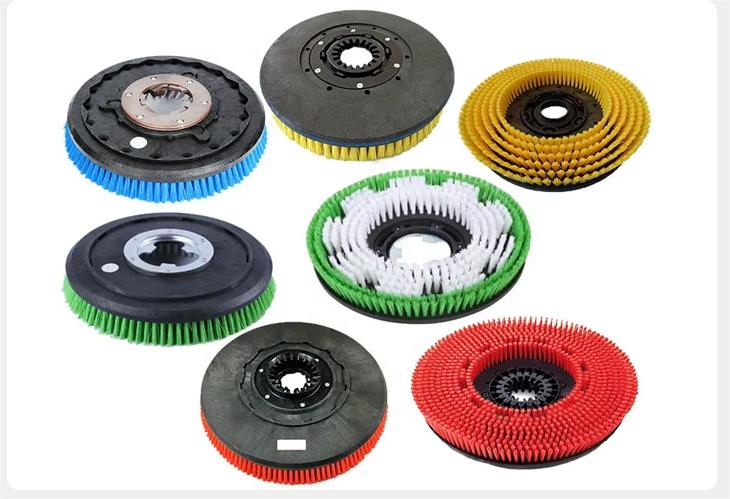
Selecting the right materials for your brushes is essential to ensuring effective cleaning, efficient operations, and long-lasting equipment. Polypropylene (PP) is an affordable option for general purpose applications; nylon is ideal for high-abrasion applications, POM (Polyoxymethylene) is suited for precision industrial cleaning, and acrylonitrile butadiene styrene (ABS) increases structural integrity.
For both commercial and industrial end-users, making the right choice of floor scrub brush material will lead to lower maintenance costs and improved cleaning performance across various surfaces and working environments.
FAQs
Which material is best for industrial floor cleaning machines?
Nylon usually performs best in industrial environments because it offers strong wear resistance, moisture stability, and longer operational life under continuous cleaning conditions.
How often should a floor scrub brush be replaced?
Replacement depends on usage frequency, floor roughness, and cleaning pressure. Industrial facilities typically inspect brushes monthly to avoid reduced cleaning efficiency.
Can one disk sweeper brush work on multiple floor types?
Yes, but performance varies. Medium-stiffness brushes handle mixed environments better, while specialized surfaces often require customized filament materials for optimal cleaning results.