In the field of industrial manufacturing, off-the-shelf components generally do not provide adequate performance for many types of specialized machines. This holds true for CNC machine sealing applications, conveyor belt cleaning applications, and surface finishing applications. The precision of a given plate brush will greatly impact the efficiency and service life of the entire system it’s used on. Furthermore, engineering specification standards are rarely “one-size-fits-all”; thus, as designs continue to evolve and become more customized, the need for custom-made products has emerged as an essential component for modern industrial plants that are seeking ways to remain competitive within their industry.
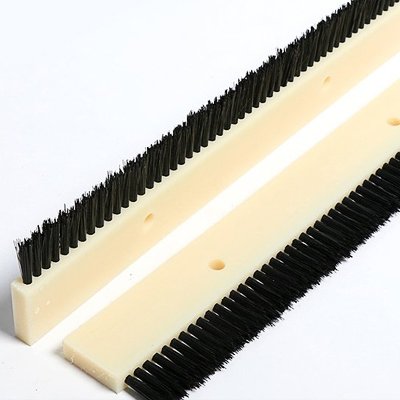
Why Precision Engineering Demands a Custom plate Brush
A customized Plate Brush‘s value is by adapting to geometrical and environmental challenges. A standard brush will give basic coverage but a custom-engineered brush provides every filament with the opportunity to engage with the target surface with the right amount of pressure and angle.
A brush plate professional will create an ideal set of components for any given application, rather than simply replacing an existing set of components. The custom-created components can enable a facility’s engineers to specify how dense the tufts will be, how flexible the backing material will be, and what level of chemical resistance the bristle material has. Each of these features can have a major importance when designing for an environment that requires precise tolerances because even the smallest gap in sealing can allow for debris to contaminate an area or create problems with mechanical failure.
Defining Dimensional Parameters for Optimal Performance
Engineering a high-quality brush requires a deep dive into dimensional variables. Based on technical blueprints, several key measurements must be synchronized:
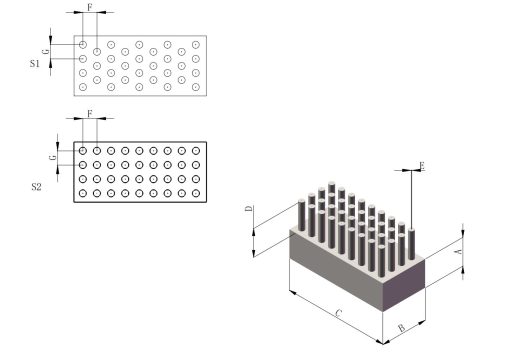
- Base Dimensions (A, B, C): The height, width, and length of the substrate must fit perfectly within the machine’s housing to prevent vibration or displacement.
- Bristle Specifications (D, E): The visible bristle length and the diameter of each filament dictate the “flick action” and scrubbing power.
- Tuft Pattern (F, G): The spacing between holes determines the overall density, which is vital for effective sealing.
H2: The Technical Advantages of the tufted plate Brush Construction
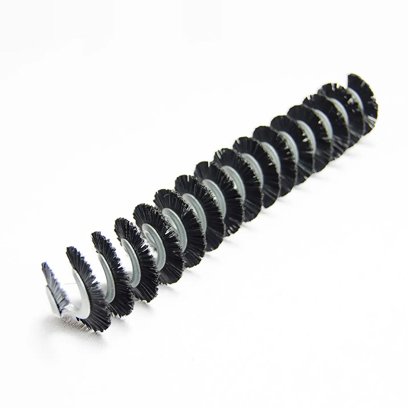
The tufted plate Brush is a preferred choice for heavy-duty industrial applications due to its “staple-set” construction. In this process, bundles of filaments are folded and securely anchored into pre-drilled holes in a solid base plate. This method offers superior tuft retention compared to other manufacturing styles, making it suitable for high-speed automated processes.
A high-performance tufted plate Brush can be designed with different hole patterns to suit various tasks. For instance:
- Staggered Patterns (S1): These provide continuous coverage with no “dead spots,” ideal for liquid application or fine dust sealing.
- Linear Patterns (S2): These are often used for guiding products or as simple barriers where airflow is still required.
Material Innovation: The Nylon Bristle PVC Plate Brush
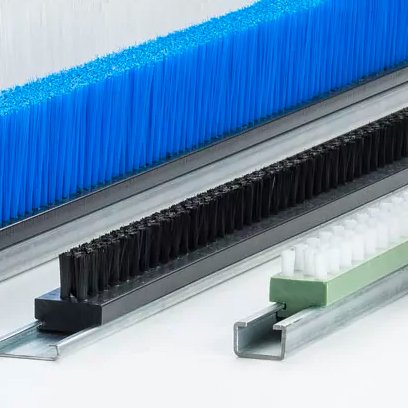
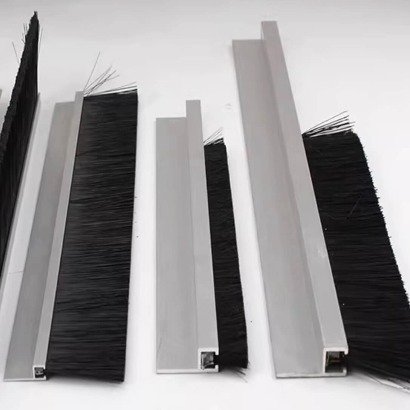
Choosing what materials will be used to create products is one of, if not the main part of designing a product. The Nylon Bristle PVC Plate Brush has been established in the manufacturing industry as the visible industry standard for balancing the durability and price. Bristles made from either Nylon 6.6 or 6.12 will have great recovery after bending; this recovery happens after multiple million times of bending back into their original position.
Using a low-density polyethylene backing offers a solid structure to support products at a reasonable weight. Unlike wood, which can rot when wet or metal, which can corrode when exposed to water, polyethylene cannot absorb moisture or any of the vast majority of industrial coolants. Thus, the use of nylon bristle plate brushes with polyethylene will serve as an essential plate brush tool in applications where there is a high humidity level, and/or chemicals come into contact with the brushes.
Performance Characteristics of the PVC lath Brush
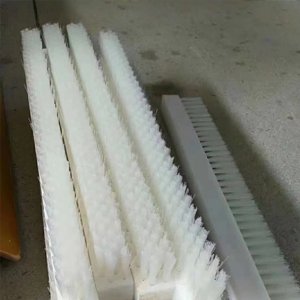
The PVC lath Brush is frequently integrated into CNC panels and conveyor systems due to its excellent dimensional stability. It does not swell or contract significantly with temperature changes, ensuring that the seal remains tight throughout the production shift. Furthermore, PVC lath Brush can be easily machined into custom shapes—such as circles, arcs, or complex polygons—to match the unique contours of specialized equipment.
Comparative Analysis: Standard vs. Custom Specifications
To understand the impact of customization, it is helpful to compare the capabilities of generic brushes against those designed for specific engineering needs.
| Feature | Standard Plate Brush | Custom Tufted Plate Brush |
| Dimensional Fit | Limited standard sizes | Tailored to microns (A, B, C) |
| Filament Density | Fixed/Uniform | Optimized for S1 or S2 patterns |
| Material Choice | General-purpose nylon | Specialized (Anti-static, Heat-resistant) |
| Longevity | Moderate | High (Material matched to environment) |
| Application | Light-duty cleaning | Heavy-duty sealing & industrial processing |
Integration with CNC and Automated Systems
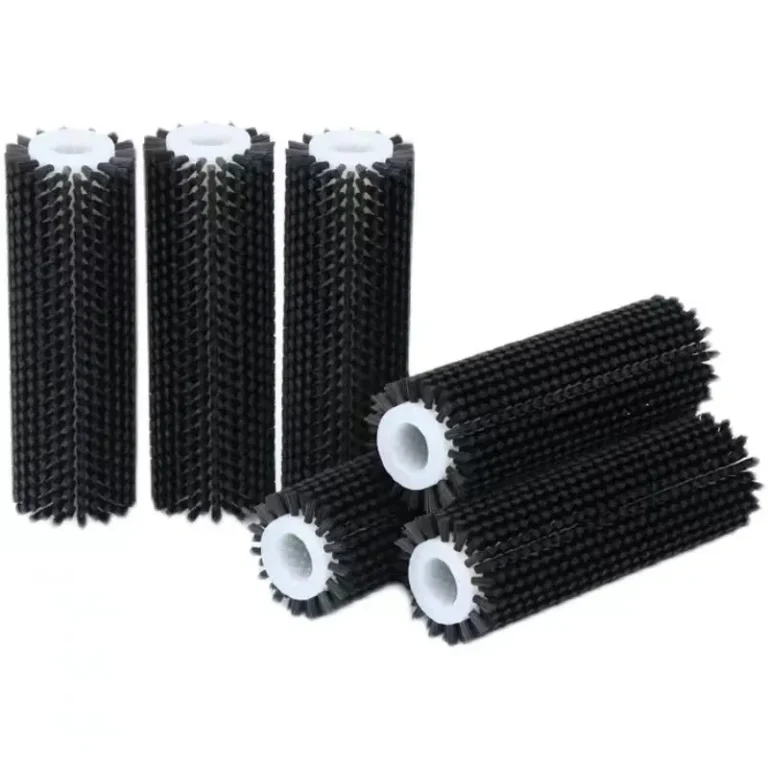
Today’s workshops focus on being clean and precise. Using a professional plate Brush in a CNC lathe or machining center will help keep metal chips and coolant spray away from the workpiece. Manufacturers should also protect sensitive electrical equipment and guideways by applying a Nylon Bristle PVC Plate Brush to seal panels.
Due to its flexible nature, a tufted plate brush can maintain its seal even as the components of a machine move in all directions. Because of this sealing capability, engineering teams will spend an extensive amount of time calculating the exact interference fit (where the bristles compress against the moving component) during the design process.
Conclusion: The Value of Expert Sourcing
To meet the specific engineering requirements for your product you will need both a supplier and a partner who understands the mechanical intricacies of brush technology. When you invest in a custom plate Brush most likely your first phase of design will be more time-consuming and complex; however, ultimately, by investing in a custom plate brush you will benefit from decreased maintenance costs, fewer part failures, and better quality production due to improved performance of the end item. Industrial Operators who utilize only the best materials such as Nylon Bristle PVC Plate Brush for their application will continue to keep their equipment protected and running at peak performance even in the most severe operating environments.
FAQ
Q1: How do I determine the correct tuft pattern (S1 vs. S2) for my application?
In order to achieve total sealing or liquid retention, it is suggested that you use a staggered (S1) pattern to create a gap-free seal. If your goal is just to provide some guidance, a linear (S2) pattern would likely suffice and be less expensive.
Q2: Is it possible to tailor PVC backing for a plate brush to accommodate various shapes?
Yes, the PVC backing can have various shapes made by CNC machining based on your technical drawings (A, B, C), including curves and irregular shapes, to suit your machine’s panel or enclosure.
Q3: What are the advantages of using Nylon 6.6 in tufted plate brushes?
The use of nylon 6.6 offers an ideal balance between abrasion resistance and recovery from bending. This makes it a good choice for high-cycle industrial cleaning because the brush will better maintain its shape over time.