The Problem with Rigid Brushes on Curved Surfaces
Rigid, flat strip brushes do an excellent job of cleaning straight lines; however, the majority of industrial equipment does not follow simple geometric shapes (for example — conveyor transitions, cylinders, arched door frames, and tapered rollers). Thus, it is not possible for a standard brush to conform to any of these surfaces without leaving some area uncleaned or having inconsistent contact pressure on the areas that are cleaned.
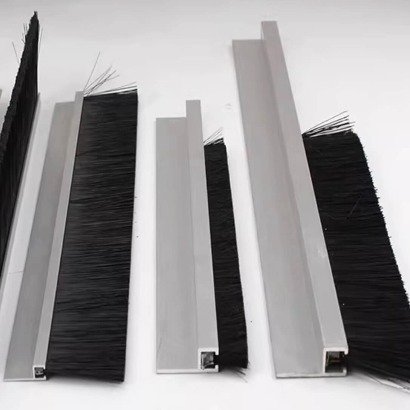
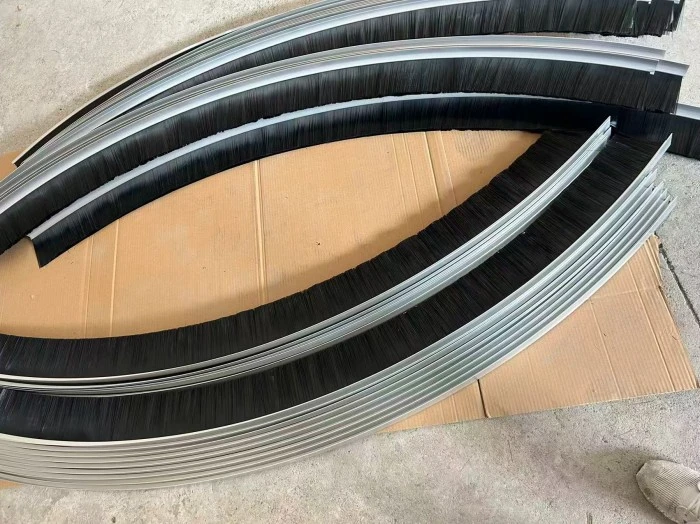
A flexible nylon strip brush is designed to solve this. These brushes feature thin, flexible rolls of metal channel that help maintain contact with the target surface, allowing them to conform perfectly. The flexibility of a flexible nylon strip brush across a diverse variety of applications—packaging lines, woodworking equipment, and materials handling systems—provides better sealing ability than a rigid alternative. In addition, the life expectancy of a flexible nylon brush compared to a rigid nylon brush is typically longer.
How a Flexible Nylon Strip Brush Is Constructed
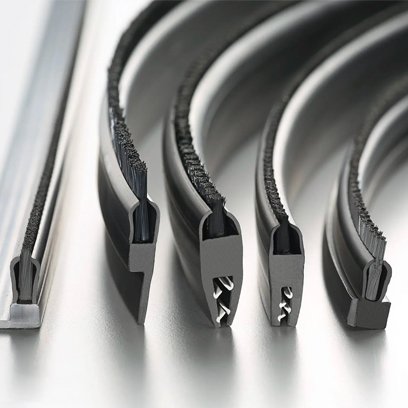
The channel in any flexible strip brush is at the core of the product. The channel is made of a lightweight metal strip (usually stainless or galvanized steel) that has been roll-formed around a filament core. The thinner the channel wall, the smaller the curve that can be achieved. Conversely, a thicker channel wall provides more lateral stability for applications that require the brush to withstand side loads while following a reasonable curve.
Nylon is the filament of choice for most general-purpose applications. It resists moisture, tolerates moderate heat, and delivers reliable abrasion life across a wide range of operating conditions.
| Nylon Grade | Moisture Absorption | Stiffness | Typical Use Case |
| Nylon 6 | High | High | Dry cleaning, debris removal |
| Nylon 6.12 | Low | Medium | Wet environments, sealing |
| Nylon 612 | Low | Medium | General industrial use |
| Abrasive-filled | Low | High | Surface finishing, deburring |
Selecting the right grade matters. A brush specified for a wet conveyor seal will underperform if the wrong nylon absorbs moisture and loses stiffness within weeks of installation.
Where Flexible Nylon Strip Brushes Perform Best
The range of applications is broader than many procurement teams initially expect. The most common use cases include:
- Sealing gaps on curved conveyor transitions to prevent debris migration.
- Wrapping around cylindrical drum housings for dust containment.
- Conforming to arched or irregularly framed door and panel openings.
- Maintaining uniform bristle contact on tapered or round workpieces.
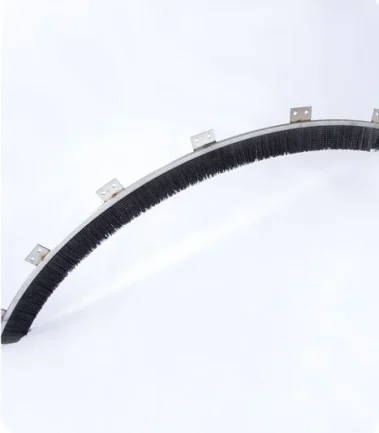
For curved drum and roller applications specifically, a curved strip brush configuration allows the metal channel to follow the circumference of the cylinder, keeping bristle pressure consistent across the full contact arc. This is particularly valuable in printing, textile, and food processing equipment. Explore the full range of curved strip brush options to find configurations suited to specific roller diameters.
Flexible Brush Seal: Sealing That Moves With the Surface
Sealing is one of the greatest challenges in using a strip brush, while a flexible brush seal makes for a very effective, dynamic barrier that adjusts to surface irregularities, minor misalignment, and constant movement—all of which can quickly compromise the effectiveness of rubber or felt seals.
In comparison to traditional sealing materials, there are practical and well-documented benefits:
- Conforms to surface variation without producing gaps.
- Causes less friction than solid seals, which reduces wear on moving components.
- Tolerates repeated flexing without fatigue cracking.
- Allows controlled airflow where full isolation is not required.
The brush seal’s ability to preserve contact through many cycles of opening and closing makes it an ideal option for sealing doors and enclosures. A properly specified flexible brush seal on a curved enclosure edge will likely last much longer than a rubber equivalent as the channel distributes the flex stress rather than concentrating it on fixed locations.
Metal Channel Strip Spiral Brush: Full Circumference Coverage
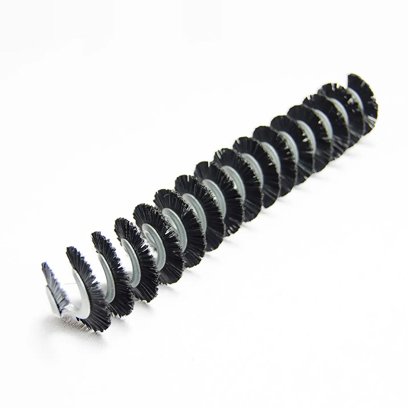
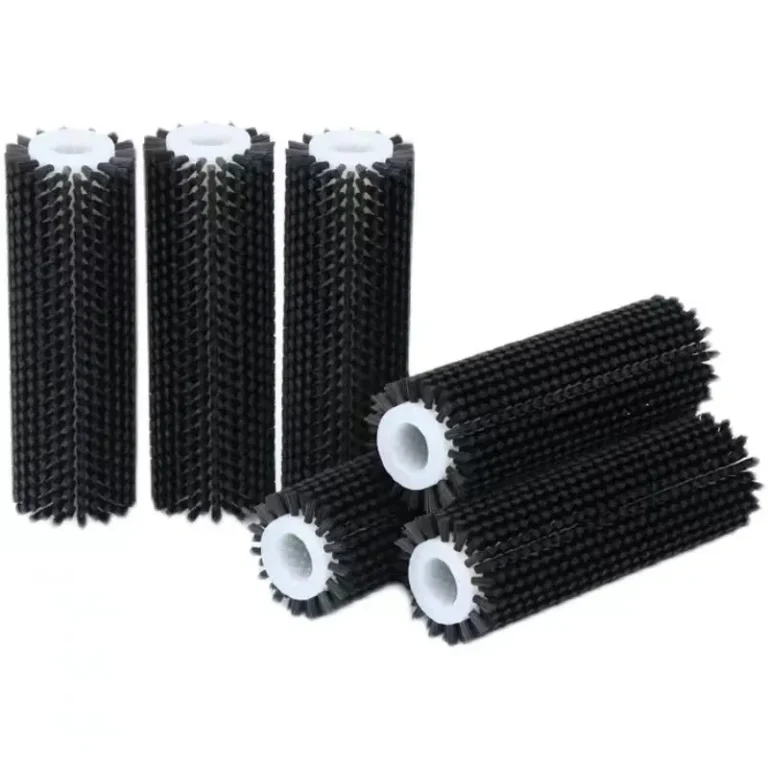
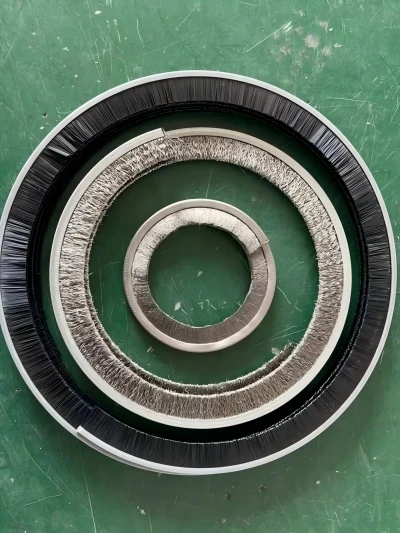
The conventional solution for applications requiring continuous contact with bristles on all sides of a shaft or roller is a metal channel strip spiral brush. These brushes consist of a strip helically wound around a core, and the flexible channel conforms to the diameter of the cylinder when assembled, thus providing seamless contact across 360 degrees.
Spiral Wound vs. Staple-Set: Choosing the Right Build
The decision typically comes down to three factors:
- Operating speed: High-RPM applications generally favor staple-set for superior filament retention.
- Roller diameter: Large diameters are more cost-efficient to produce in spiral-wound format.
- Serviceability: Spiral designs allow section replacement rather than full brush disposal.
Specifying a Custom Configuration
Getting the specification right before ordering avoids costly remakes. The key parameters to confirm are:
- Target bend radius or surface diameter.
- Filament material and wire/fiber diameter.
- Trim length (bristle extension beyond channel).
- Total strip length required.
- Channel material and gauge.
- Mounting method (adhesive-back, screw slot, or friction fit).
Providing a drawing or template is a huge help to speed up the quoting process. For door, seal, or panel applications, we provide measuring, cutting, and fitting tips for choosing the right strip brush to get a reliable seal at the first attempt.
FAQ
What is the Minimum Curve Radius for a Flexible Nylon Strip Brush?
Most standard channels are designed to flex up to an approximate radius of 50mm. Thinner-gauge channels allow for more flexible configurations, however, manufacturer specifications regarding filament density and channel integrity should be followed.
Will the curved strip brush perform adequately in a wet or washdown environment?
Provided the appropriate selection of nylon and channel materials is made, the answer is yes. The most commonly used nylon grade is 6.12, and the most common channel material is stainless steel.
Flexible Brush Seal Trim Length Determination
The trim length of a flexible brush seal should be between 1.5 and 2 times the sealed gap width. Increased trim length increases the seal’s ability to conform; however, it also reduces bristle stiffness and sealing force.