Condenser tubes are at the heart of industrial heat exchange systems, from large-scale HVAC chillers to power generation units and chemical processing plants. Over time, mineral deposits, biological films, and suspended solids accumulate on the inner walls of these tubes. This buildup, commonly called scale, acts as an insulating barrier between the cooling medium and the tube surface. Even a scale layer as thin as 0.6 mm can reduce heat transfer efficiency by 20% or more, forcing compressors and pumps to work harder and driving energy costs upward. A Condenser Tube Cleaning Brush offers a simple yet effective way to remove these deposits before they compromise performance.
Scale formation is not just an efficiency problem. It also accelerates localized corrosion, increases flow resistance, and shortens the service life of chiller tubes. Chemical treatment alone rarely removes hard mineral deposits completely. Mechanical cleaning with a well-chosen tube brush fills this gap. Among all mechanical options, spiral wire brushes have become the preferred tool for routine scale prevention across industries because they offer consistent contact with the tube wall, adapt to minor diameter variations, and can be driven by electric or pneumatic rotary tools for fast, repeatable results.
A Condenser Tube Cleaning Brush prevents scale buildup by mechanically scrubbing the inner tube wall with abrasive bristles, dislodging mineral deposits before they harden into insulating layers that degrade heat transfer. When used on a regular schedule, these brushes maintain thermal efficiency, extend equipment lifespan, and reduce the need for aggressive chemical descaling.
Scale prevention is more cost-effective than scale removal. A reactive approach, waiting until chiller performance drops noticeably, often requires chemical flushing, higher labor hours, and unplanned downtime. A proactive cleaning routine using the right brushes keeps systems within their design efficiency range. The following sections explain how to choose the right brush type, match materials to your tube metallurgy, and build a maintenance schedule that pays for itself through energy savings.
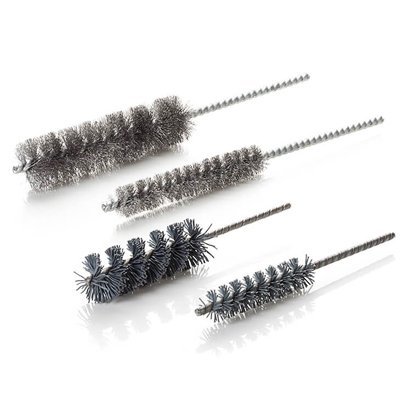
How Does Scale Damage Condenser Tube Performance
How Scale Reduces Heat Transfer Efficiency and Increases Energy Consumption
Scale deposits reduce condenser tube performance by lowering the overall heat transfer coefficient, increasing energy consumption, raising head pressure, and creating dead zones where corrosion can initiate undetected.
Heat exchangers rely on thin, clean tube walls to transfer thermal energy efficiently. When mineral scale coats the inside of a tube, it introduces a low-conductivity layer. Calcium carbonate, the most common scale component in water-cooled systems, has a thermal conductivity roughly 100 times lower than copper and 500 times lower than stainless steel. The result is that the chiller must run longer and at higher compressor loads to achieve the same cooling output.
The Cost of Scale: Approach Temperature Rise and Energy Penalty
Field data from industrial HVAC audits shows a clear pattern. A condenser with clean tubes operates at a typical approach temperature of 1 to 3 degrees Celsius. After six months without mechanical cleaning, the approach temperature often rises to 5 to 8 degrees. Each degree increase above design specification adds roughly 2 to 4 percent to the system’s energy consumption. For a 500-ton chiller running 4,000 hours per year, this translates to thousands of dollars in avoidable electricity costs.
Beyond Energy Loss: Pitting Corrosion and Tube Leak Risks
Beyond energy loss, scale creates uneven surface conditions inside tubes. Pitting corrosion begins in areas where scale partially detaches and exposes bare metal to oxygenated water. Once pitting starts, tube wall thickness decreases, and the risk of a tube leak increases. In shell-and-tube condensers, a single leaking tube can contaminate the entire cooling water loop and force a costly, unplanned shutdown.
What Types of Tube Cleaning Brushes Work Best for Scale Prevention
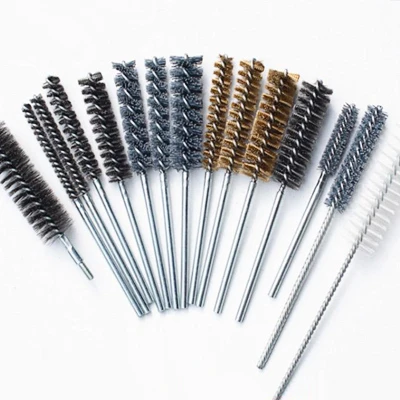
Spiral wire brushes, including copper wire pipe spiral brushes and stainless steel spiral designs, are the most effective for scale prevention because their helical bristle pattern maintains full circumferential contact with the tube wall and scrapes deposits loose with each pass.
Several brush types are available for condenser tube maintenance. The table below compares the main categories and their suitability for scale prevention work.
| Brush Type | Bristle Material | Best Application | Scale Prevention Rating |
|---|---|---|---|
| Spiral wire brush | Stainless steel or copper | Hard mineral scale, light rust | High |
| Twisted wire brush | Copper wire | Soft deposits, polishing, finishing | Medium |
| Nylon bristle brush | Nylon or polypropylene | Light biofilm, soft fouling | Low |
| Crimped wire brush | Carbon steel | Heavy rust removal in ferrous tubes | Medium |
A stainless steel spiral brush delivers aggressive cutting action against hard water scale without deforming under repeated use. The helical arrangement means each revolution advances the brush while keeping bristles in constant contact with the surface, unlike straight-bristle designs that can skip over uneven deposits.
For softer copper or brass tubes where mechanical abrasion must be controlled, a copper wire pipe spiral brush offers effective scale removal without risking tube wall damage. Copper bristles are softer than stainless steel but harder than nylon, and they leave a polished surface that resists rapid re-fouling. The spiral pattern also helps push loosened debris forward and out of the tube rather than packing it into a clog further inside.
A copper wire twisted pipe brush works best as a secondary finishing tool. After a spiral brush breaks loose the main scale layer, a twisted wire brush can polish the tube interior to a smoother finish. Smoother surfaces collect scale more slowly, so this two-step approach often extends the interval between cleaning cycles.
The structure and materials behind each brush design matter. As covered in our condenser brush structure guide, the stem material, wire gauge, and bristle density all affect how a brush performs in a given tube diameter. Selecting a brush with the correct fill density ensures that bristles make firm contact without jamming.
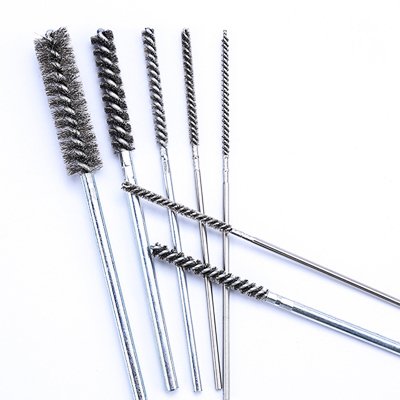
How to Select the Right Condenser Tube Cleaning Brush for Your System
Brush selection depends on three primary factors: tube material and wall thickness, scale type and hardness, and tube inner diameter. Matching the bristle material to the tube metallurgy prevents galvanic corrosion while achieving effective scale removal.
Start by identifying your tube material. Copper and copper-nickel tubes are softer and require non-ferrous brushes to avoid scratching or introducing iron particles that could initiate corrosion cells. Stainless steel and titanium tubes can handle harder bristle materials. The table below summarizes the recommended pairings.
| Tube Material | Recommended Bristle | Avoid | Reason |
|---|---|---|---|
| Copper | Copper, brass, nylon | Stainless steel, carbon steel | Risk of surface scoring and iron contamination |
| Copper-nickel (90/10, 70/30) | Copper, phosphor bronze | Carbon steel | Galvanic incompatibility |
| Stainless steel (304, 316) | Stainless steel, brass | Carbon steel | Galvanic incompatibility |
| Titanium | Stainless steel, nylon | Carbon steel | Prevent iron transfer |
| Admiralty brass | Copper, nylon | Stainless steel | Surface hardness mismatch |
Next, measure the tube inner diameter accurately. A brush should be 1 to 2 mm larger than the tube ID to maintain proper bristle pressure against the wall. A brush that is too small will leave scale in place. One that is too large will jam, bend the stem, or snap during rotation. Professionals often keep a set of brushes in 1 mm diameter increments for the most common tube sizes they service.
Operating speed also matters. Most spiral wire brushes perform well at 800 to 1,500 RPM when driven by an electric or pneumatic rotary tube cleaner. Running at excessive speed overheats the bristles and accelerates wear. Running too slowly reduces the scrubbing action and leaves scale behind. A feed rate of 30 to 60 cm per second through the tube typically achieves uniform cleaning in a single pass.
Scale hardness determines how many passes are needed. Light calcium carbonate scale usually comes off in one pass with a stainless steel spiral brush. Hard silica-based scale may require two or three passes. In these tougher cases, alternating brush types, starting with an aggressive spiral brush and finishing with a twisted wire brush, produces better results without overworking a single tool.
Best Practices for Routine Condenser Tube Maintenance
Why a Scheduled Cleaning Program Matters
A scheduled mechanical cleaning program, combined with water treatment, reduces annual chiller energy consumption by 5 to 15 percent and extends tube service life by preventing under-deposit corrosion. Above all, consistency matters more than intensity. In fact, the most effective maintenance programs clean tubes on a fixed schedule rather than waiting for performance alarms. For example, quarterly cleaning is common for open-loop cooling tower systems in hard water areas, whereas semi-annual cleaning works for closed-loop systems with good chemical treatment. Meanwhile, monthly cleaning may be needed in process environments where particulate load is high or where the cooling water source carries heavy silt.
Step-by-Step Cleaning Procedure
Each cleaning session should follow a consistent procedure. To begin, isolate and drain the condenser water box. Next, remove the end covers and inspect the tube sheet for visible scale or blockage patterns. Additionally, photograph the tube sheet before cleaning. This creates a record that helps identify tubes that foul faster than others and may have flow distribution issues. After that, run the brush through each tube at the correct speed, making sure the brush exits completely at the far end before retracting. Furthermore, always verify that the brush diameter matches the tube size to avoid jamming or ineffective cleaning.
Post-Cleaning Inspection and Documentation
Once mechanical cleaning is complete, flush the tubes with clean water to carry away loosened debris. Then, re-inspect a sample of tubes to verify that scale has been removed. Likewise, replace the end cover gaskets if they show signs of compression set or cracking. Moreover, record the date, the brush type used, and any tubes that required extra passes. This log becomes the basis for adjusting cleaning intervals over time. Consequently, maintenance teams can fine-tune their schedule based on real performance data rather than guesswork.
Common Brush Problems and Broader Applications
However, even the best procedure can encounter issues. For instance, common problems with tube cleaning brushes include bristle breakage, stem fatigue, and incorrect sizing. Our guide on common tube brush problems covers inspection routines that catch worn brushes before they cause tube damage. Specifically, a brush with missing bristle sections leaves scale stripes inside the tube and should be replaced immediately. Otherwise, cleaning effectiveness drops significantly.
In addition, the broader value of mechanical tube maintenance extends beyond condensers. For example, the same spiral brush designs used in HVAC chillers also serve in tube cleaning across industries. Food processing plants use stainless steel variants for sanitary tube cleaning, while pharmaceutical manufacturers use smaller diameter brushes for condenser coils in lyophilizers. Ultimately, the core principle remains the same: consistent mechanical cleaning preserves heat transfer efficiency and prevents costly equipment degradation.
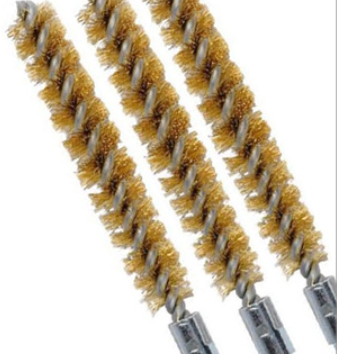
Summary
Scale prevention in condenser tubes is a measurable maintenance investment with a clear payback. A Condenser Tube Cleaning Brush used on a regular schedule keeps approach temperatures low, reduces compressor energy draw, and prevents the hidden cost of under-deposit corrosion. The key decisions are straightforward: match the bristle material to the tube metallurgy, select a spiral or twisted wire design calibrated to the tube diameter, and commit to a fixed cleaning interval rather than a reactive one.
Facilities that pair mechanical brushing with basic water chemistry monitoring see the longest tube life and the lowest total maintenance cost. The brushes themselves are consumable tools, but the cost of replacement brushes is negligible compared to the energy waste and equipment risk caused by unchecked scale accumulation.
Frequently Asked Questions
How often should condenser tubes be cleaned to prevent scale?
For open-loop cooling tower systems in areas with hard water, quarterly cleaning is the standard recommendation. Semi-annual cleaning works for closed-loop systems with effective chemical water treatment. High-silt or process-heavy environments may need monthly cleaning. The best approach is to log approach temperature trends after each cleaning and let the data dictate the interval. When the approach temperature rises by 2 degrees above the clean baseline, it is time to clean.
Can a tube cleaning brush damage condenser tubes?
A properly sized brush with the correct bristle material does not damage tubes. The risk of damage comes from three mistakes: using a brush with bristles that are harder than the tube material, selecting a brush with too large a diameter for the tube, or running the brush at excessive RPM. Copper tubes cleaned with copper or nylon brushes show no measurable wall loss even after years of routine cleaning. Stainless steel tubes can safely handle stainless steel bristles as long as the brush diameter and speed stay within recommended ranges.
What is the difference between a spiral brush and a twisted wire brush?
A spiral brush has bristles wound in a continuous helical pattern around a single or double stem. This design maintains full 360-degree contact with the tube wall and is the primary choice for scale removal. A twisted wire brush has bristles captured between two twisted wire stems. It applies less radial pressure than a spiral brush and is typically used for polishing and finishing after the main scale layer has been removed. Many maintenance teams use a spiral brush for the first pass and a twisted wire brush for the final pass to achieve both thorough cleaning and a smooth surface