In a concrete block production plant, the focus naturally gravitates toward the machine’s hydraulic system, vibration unit, and mixing ratios. Operators track cycle times and output volumes meticulously. Yet a quieter, more persistent factor consistently separates high-performing plants from struggling ones: the cleanliness of molds and pallets. Every production cycle leaves behind cement residue, fine-aggregate particles, and hardened-concrete deposits on mold surfaces and pallet boards. What begins as a thin film of dust accumulates over hours and days into a layer thick enough to distort block dimensions, increase rejection rates, and accelerate wear on precision components worth tens of thousands of dollars, highlighting the critical need for a reliable Block Machine Strip Brush.
The concrete block manufacturing industry has long recognized that maintenance extends equipment life. Still, mold and pallet cleaning is frequently treated as an afterthought—a task delegated to the end of a shift when operators are fatigued, and production pressure has eased. This approach is costly. Production boards and molds are not passive platforms; they are active participants in every compaction cycle. When their surfaces are compromised by buildup, the entire forming process suffers, from compaction uniformity to block release and final aesthetics.
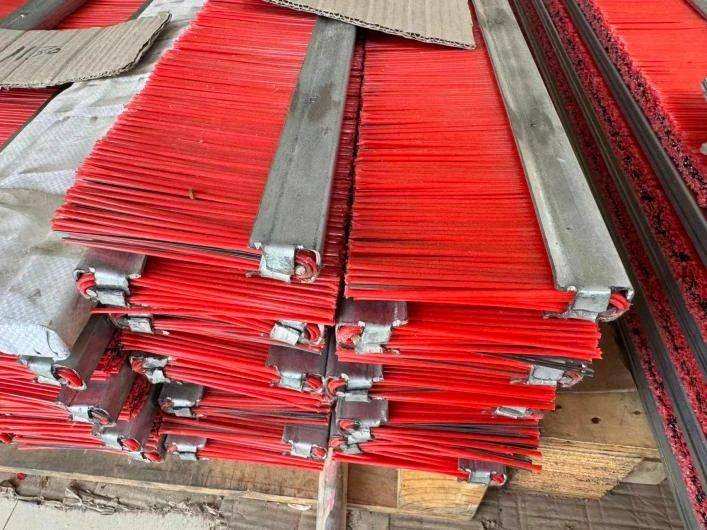
Mold and pallet cleaning is not an optional housekeeping task. It is a core production discipline that directly governs block dimensional accuracy, surface finish quality, mold service life, pallet longevity, production uptime, and ultimately the profitability of the entire block-making operation.
Understanding why cleaning matters is the first step. The deeper question is how to implement a cleaning regimen that is both effective and economically sustainable. This article examines the technical reasons that mold and pallet cleanliness directly impact block quality, explores how specialized tools such as the Strip Brush for Brick Equipment transform cleaning efficiency, and provides a practical framework that plant managers can apply to their daily, weekly, and long-term maintenance schedules. By the end, the connection between a clean production surface and a healthy profit margin will be clear and actionable.
What Happens When Mold and Pallet Cleaning Is Neglected
Neglecting mold and pallet cleaning leads to a cascade of production failures: uneven block dimensions, surface defects, increased mold wear, premature pallet replacement, higher rejection rates, more frequent machine downtime, and elevated per-block production costs that erode competitiveness over time.
Dimensional Inaccuracy and Surface Defects
Concrete residue that hardens on mold walls and pallet surfaces does not simply sit there inertly. It changes the effective volume of the mold cavity. When even 0.5 mm of hardened material coats the inner walls of a mold, the resulting block emerges with altered dimensions. In applications where blocks must meet tight engineering tolerances—load-bearing walls, retaining structures, interlocking pavers—this deviation is unacceptable. Inspectors on construction sites routinely reject blocks that fall outside dimensional specifications, and the cost of a returned shipment far exceeds any savings from postponed cleaning.
Surface defects follow a similar pattern. Residue on pallets creates an uneven base for block formation. During vibration and compaction, the concrete mix settles into the contours of whatever lies beneath it. A pallet with crusted cement patches produces blocks with pitted, irregular bottom surfaces. These aesthetic flaws may not compromise structural integrity in every case, but they signal poor quality control to buyers and erode brand reputation. In markets where visual finish is a competitive differentiator, surface blemishes directly reduce the price per block that a manufacturer can command.
Accelerated Wear on High-Value Components
The abrasive nature of hardened concrete residue is frequently underestimated. Cement paste contains silica particles that, once cured, act as a grinding compound. Every time a mold closes onto a dirty pallet, or a stripper head presses against a fouled mold surface, microscopic abrasion occurs. Over thousands of cycles, this abrasion wears down mold liners, enlarges clearances, and rounds off edges that were designed to be sharp. The table below illustrates the measurable impact of cleaning discipline on component lifespan:
| Component | Average Life with Daily Cleaning | Average Life with Weekly Cleaning | Average Life with Irregular Cleaning |
| Mold liners | 18-24 months | 12-15 months | 6-9 months |
| Production pallets (steel) | 5-7 years | 3-4 years | 1.5-2 years |
| Stripper head plates | 24-30 months | 15-18 months | 8-12 months |
| Feed box shoes | 12-18 months | 8-10 months | 4-6 months |
The financial implication is straightforward. A set of mold liners can cost between $3,000 and $8,000 depending on mold complexity. Doubling their service life through consistent cleaning directly saves thousands of dollars annually per mold set. When a plant operates multiple molds and dozens of pallets in continuous rotation, the aggregate savings from extended component life become a material contributor to operating margin.
Production Downtime and Labor Costs
Build-up that reaches a critical threshold eventually forces unplanned stoppages. Blocks begin sticking during demolding, requiring operator intervention. The feed box may jam because hardened material obstructs its travel path. Sensors and limit switches accumulate dust and fail to register positions accurately, triggering false fault alarms. Each of these events stops production. In a plant producing 3,000 blocks per shift, a single hour of unplanned downtime represents roughly 400-500 lost blocks. When downtime recurs weekly, the annual production loss can reach tens of thousands of units.
Moreover, deferred cleaning does not eliminate the labor—it concentrates it. When operators finally address heavily encrusted surfaces, they spend far longer scraping, chiseling, and scrubbing than they would have with daily maintenance. The labor hours consumed by reactive deep cleaning consistently exceed those required for a disciplined preventive approach.
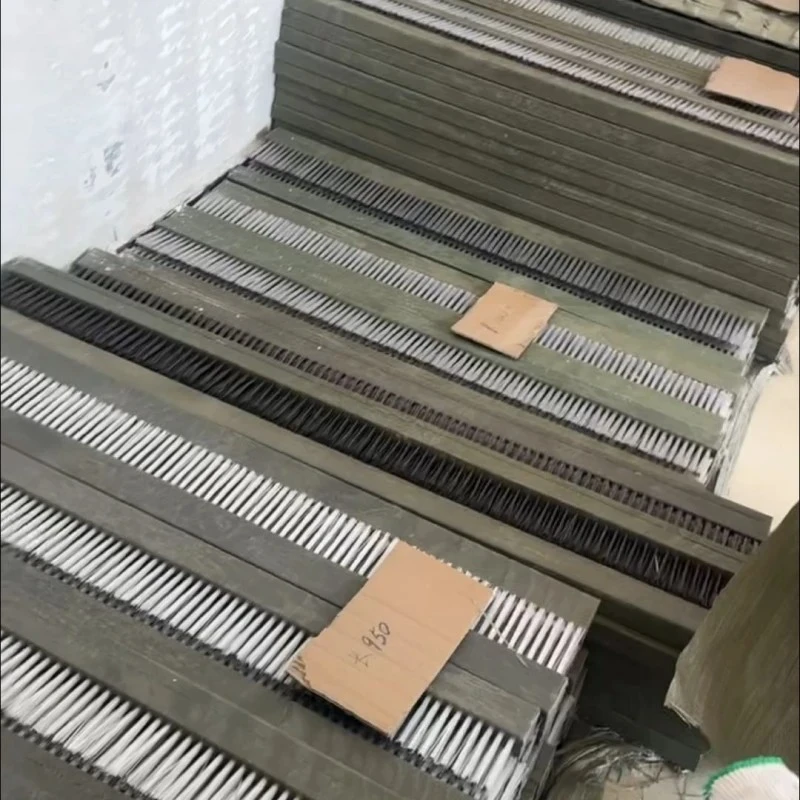
How a Block Machine Strip Brush Transforms Mold Cleaning Efficiency
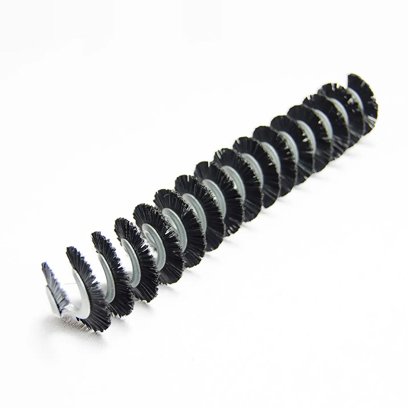
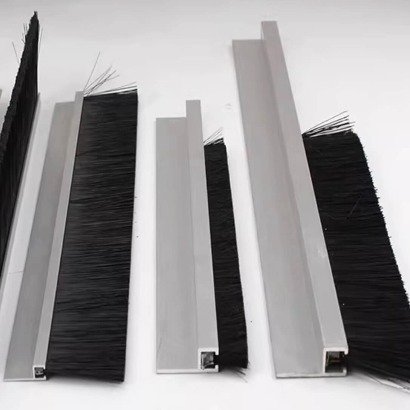
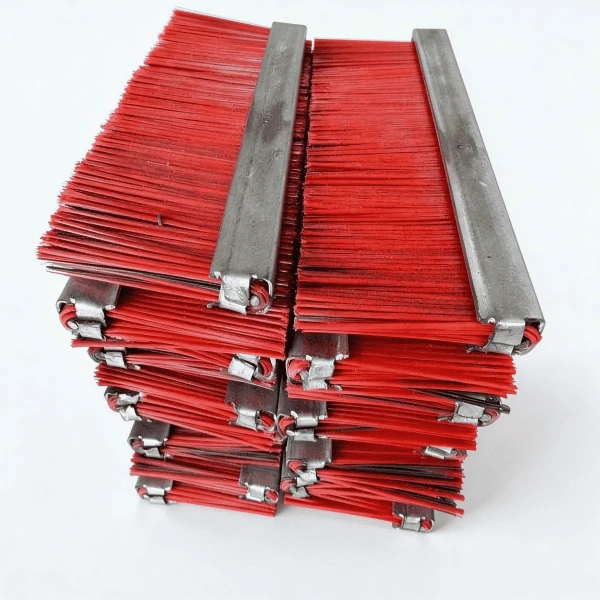
A block machine strip brush, designed with a combination of durable polypropylene filaments and stainless steel wire bristles mounted in a rigid channel backing, removes both fresh cement slurry and hardened deposits from mold surfaces, pallet boards, and conveyor tracks in a single pass, dramatically reducing manual cleaning time while protecting precision surfaces from damage.
Understanding the Tool: Design and Material Engineering
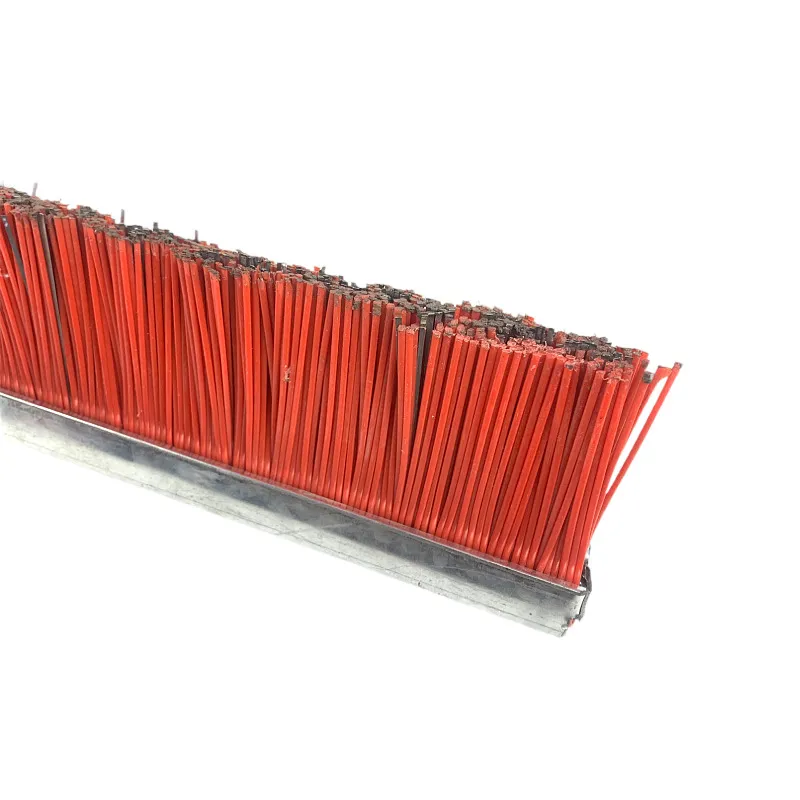
The block machine strip brush is not a generic industrial brush. It is purpose-built for the harsh conditions of concrete block production: high-frequency vibration, abrasive dust, moisture, and continuous mechanical contact. The most effective designs combine two bristle materials in a single strip:
Polypropylene (PP) filaments provide flexibility and sweep away loose dust, fines, and fresh slurry before they have time to cure. PP bristles are resistant to moisture absorption and maintain their shape under repeated flexing, making them ideal for the softer, non-abrasive side of cleaning.
Stainless steel wire bristles deliver the stiffness needed to dislodge partially cured or fully hardened concrete deposits. Unlike carbon steel, stainless wire resists corrosion in the damp, alkaline environment typical of block plants. This dual-material construction allows a single brush to handle the full spectrum of cleaning demands without switching tools.
The backing channel—typically galvanized steel or stainless steel—provides mounting rigidity and ensures the brush maintains consistent contact pressure across its entire length. Custom lengths from 500 mm to over 2,000 mm accommodate different machine widths and mold configurations.
Efficiency Gains Over Conventional Cleaning Methods
Traditional mold cleaning relies on manual scraping with putty knives, wire brushes, and occasionally pneumatic chisels for stubborn deposits. Each of these methods shares a common flaw: they are slow, inconsistent, and operator-dependent. A fatigued operator at the end of a shift cleans differently than a fresh operator at the start. The result is variable surface quality across production runs.
A properly installed block machine strip brush operates inline—positioned so that molds and pallets pass through or under the brush as part of the normal production cycle. This integration eliminates the separate cleaning step. Instead of allocating 10-15 minutes per shift to manual mold cleaning, the brush performs continuous cleaning with every cycle. The efficiency comparison is stark:
| Cleaning Method | Time per Mold (per shift) | Consistency | Surface Protection | Labor Requirement |
| Manual scraping | 10-15 minutes | Operator-dependent | Risk of scratching | 1 dedicated operator |
| Wire brush (handheld) | 8-12 minutes | Moderate | Moderate risk | 1 dedicated operator |
| Pneumatic chisel | 15-20 minutes | Low | High risk of damage | 1 skilled operator |
| Block machine strip brush (inline) | 0 minutes (continuous) | High, machine-controlled | Low risk, material-matched | 0 additional operators |
The elimination of dedicated cleaning labor does not mean operators are idle. It means they are redirected to higher-value tasks: quality inspection, raw material management, or operating additional production lines. For a plant running two shifts, the annual labor savings from automated inline brushing can exceed $15,000 per year, depending on local wage rates.
Protecting Mold Surface Integrity
One of the least appreciated advantages of a block machine strip brush is its gentleness on mold surfaces compared to manual tools. Operators under time pressure frequently reach for metal scrapers or screwdrivers to chip away hardened concrete. These hard tools scratch mold liners and wear surfaces, creating micro-grooves where future concrete adheres even more tenaciously. Each scratch initiates a vicious cycle: more adhesion leads to more aggressive scraping, which creates deeper scratches, which cause more adhesion.
The brush’s polypropylene filaments are softer than mold steel and will not scratch even polished surfaces. The stainless steel wires, while stiff enough to remove deposits, are engineered to flex rather than gouge. This material-matched approach preserves the mold’s original surface finish, maintaining the low-friction release characteristics that are essential for clean demolding and high-quality block surfaces.
The Direct Link Between Pallet Cleanliness and Block Quality
Clean pallets produce blocks with consistent height, flat bottom surfaces, and uniform compaction density. Dirty pallets introduce height variation, surface irregularities, and localized weak zones that increase rejection rates and undermine the structural reliability of the final product.
How Pallet Surface Condition Affects Compaction
During the block forming cycle, the concrete mix is fed into the mold cavity, which sits directly on the pallet. Vibration and pressure from the tamper head compact the mix against the pallet surface. If that surface is clean and flat, compaction forces distribute evenly, and the block achieves uniform density throughout its volume. If the pallet has crusted patches of old concrete, those high spots create localized pressure concentrations. The concrete above the high spots compacts more than the surrounding material, while the areas beside the deposits may be under-compacted.
This uneven compaction has measurable consequences. Blocks with density variation exceeding 5% across their cross-section exhibit lower compressive strength and higher water absorption in the less-dense regions. In freeze-thaw cycling, these weak zones absorb water, freeze, and spall, causing premature surface degradation. The block that looked acceptable when leaving the plant becomes a warranty claim six months later.
Pallet Wear and Its Cascading Effects
Pallets are consumable assets with finite service lives, but the rate at which they degrade is heavily influenced by surface cleanliness. A pallet that passes through production covered in abrasive particles experiences accelerated surface wear. The table below shows how different cleaning practices affect pallet longevity:
| Cleaning Practice | Average Pallet Life | Annual Pallet Replacement Cost (100 pallets) | Block Rejection Rate |
| No systematic cleaning | 1.5-2 years | $18,000-$25,000 | 3-5% |
| Manual daily wiping | 3-4 years | $9,000-$12,000 | 1.5-2.5% |
| Automated inline brushing | 5-7 years | $5,000-$7,000 | 0.5-1% |
These figures translate into tangible operational outcomes. A plant producing 10 million blocks annually with a 3% rejection rate loses 300,000 saleable units to quality defects. At a conservative $0.30 per block, that represents $90,000 in lost revenue that proper pallet maintenance could largely recover.
The Role of Release Agent Application
Clean pallets also accept release oil more uniformly. When oil is applied over crusted residue, it pools in low spots and leaves high spots dry. Blocks stick to dry patches during demolding, causing edge chipping and surface tears. A clean, flat pallet surface allows a thin, even coat of release agent, which is both more effective and more economical—plants with clean pallet programs consistently report 15-20% lower release agent consumption.
Daily, Weekly, and Monthly Cleaning Protocols That Protect Your Investment
A structured, tiered cleaning protocol that addresses molds and pallets at daily, weekly, and monthly intervals provides the most cost-effective balance between production continuity and equipment protection, preventing both the gradual degradation caused by skipped daily cleaning and the catastrophic failures that result from deferred deep maintenance.
Daily Cleaning Protocol (End of Every Shift)
Daily cleaning is the foundation of the entire maintenance program. Its objective is to prevent fresh concrete from curing on critical surfaces. The protocol consists of four steps:
Immediate post-production rinse: As soon as the last cycle completes, flush mold surfaces and the tamper head with water to remove uncured slurry. Use low-pressure water—high-pressure jets can force water into bearings and electrical connections.
Brush pass with block machine strip brush: Run the strip brush across all mold surfaces, pallet tops, and the feed box discharge area. This removes the thin film of cement paste that water alone cannot dislodge.
Compressed air blow-down: Use compressed air to clear moisture and fine particles from sensor housings, limit switches, and electrical enclosures. This prevents dust accumulation that causes false sensor readings.
Visual inspection: Walk the entire mold and pallet path. Look for early signs of buildup in corners, around bolt heads, and along weld seams. Note any areas that require extra attention and adjust the next day’s cleaning focus accordingly.
Daily cleaning should take no more than 15-20 minutes per shift. When it takes longer, it is usually a sign that prior shifts have been skipping the protocol and buildup has already begun.
Weekly Deep Cleaning Protocol
Weekly cleaning addresses areas that daily cleaning cannot fully reach and catches problems before they become serious. This session requires 1-2 hours and should be scheduled during a planned production pause.
Mold disassembly and inspection: Remove the tamper head and inspect the mold cavity walls. Use a block machine strip brush with a higher stainless steel wire ratio to clean corners and edges where daily brushing may not fully penetrate. Check for the beginning of liner wear—edges that were once sharp and are now rounding indicate that the mold is entering the second half of its service life.
Pallet surface measurement: Randomly select 5-10 pallets from the rotation and measure their thickness at multiple points using a micrometer or dial indicator. Pallets worn more than 1-2 mm from their original thickness create block height variation. Mark pallets approaching their wear limit and schedule their replacement before they cause quality issues.
Release agent system check: Inspect the oiling mechanism (whether manual spray or automated applicator) for nozzle clogging or uneven spray pattern. Residue from pallet surfaces can contaminate the release agent reservoir over time.
Monthly Comprehensive Inspection
Monthly maintenance requires 3-4 hours and access to the machine with power locked out. This is the right time to assess overall equipment condition and plan replacements.
Mold flatness verification: Place a precision straight edge across the tamper head and mold base. Any gap exceeding 0.5 mm indicates warping that will produce blocks with non-parallel faces. Warped molds require professional re-grinding or replacement.
Strip brush condition assessment: The block machine strip brush itself is a wear item. Inspect bristle length and density. When PP filaments have lost more than 30% of their original length or when stainless steel wires show significant bending fatigue, the brush loses cleaning effectiveness. Replace the brush strip before it becomes a source of inadequate cleaning rather than the solution.
Complete bolt torque check: Vibration loosens fasteners throughout the machine. Systematically torque all mold mounting bolts, vibrator mount bolts, and pallet guide rail fasteners to manufacturer specifications. A single loose bolt on a mold can shift alignment enough to create die-to-die variation across multiple cavities.
Key Performance Indicators to Track
| KPI | Target | Measurement Method | Corrective Action If Missed |
| Block rejection rate | Below 1% | Daily tally of rejected blocks vs. total production | Increase cleaning frequency; inspect pallets |
| Mold liner life | Over 18 months | Log installation date; measure wear monthly | Review cleaning tools and techniques |
| Pallet replacement rate | Under 15% annually | Annual pallet inventory count | Implement or upgrade inline brushing |
| Unplanned downtime (cleaning-related) | Under 2 hours/month | Maintenance log analysis | Audit shift-end cleaning compliance |
Manual vs. Automated Cleaning: A Cost-Benefit Comparison
Automated inline brushing systems deliver a payback period of 12-18 months through labor savings, extended pallet and mold life, and reduced rejection rates, making them the economically superior choice for plants producing over 5,000 blocks per day, while manual cleaning remains viable only for very low-volume operations where the capital cost of automation cannot be justified by the smaller savings base.
The True Cost of Manual Cleaning
Manual cleaning appears inexpensive because it requires no capital investment beyond basic hand tools. However, this surface-level analysis misses three hidden costs:
Labor cost: A plant running two shifts requires approximately 30-40 minutes of total daily cleaning labor (15-20 minutes per shift). At an average operator wage, this translates to roughly $4,000-$6,000 per year. This labor is non-value-adding: it produces no blocks and generates no revenue.
Inconsistency cost: As noted earlier, manual cleaning quality varies with operator fatigue, skill, and motivation. This inconsistency directly increases rejection rates by an estimated 1-2 percentage points compared to automated cleaning, representing significant lost revenue.
Damage cost: Manual scraping with hard tools shortens mold and pallet life. The accelerated replacement cost of prematurely worn components is the largest hidden expense in manual cleaning programs.
Automated Inline Brushing: Investment and Return
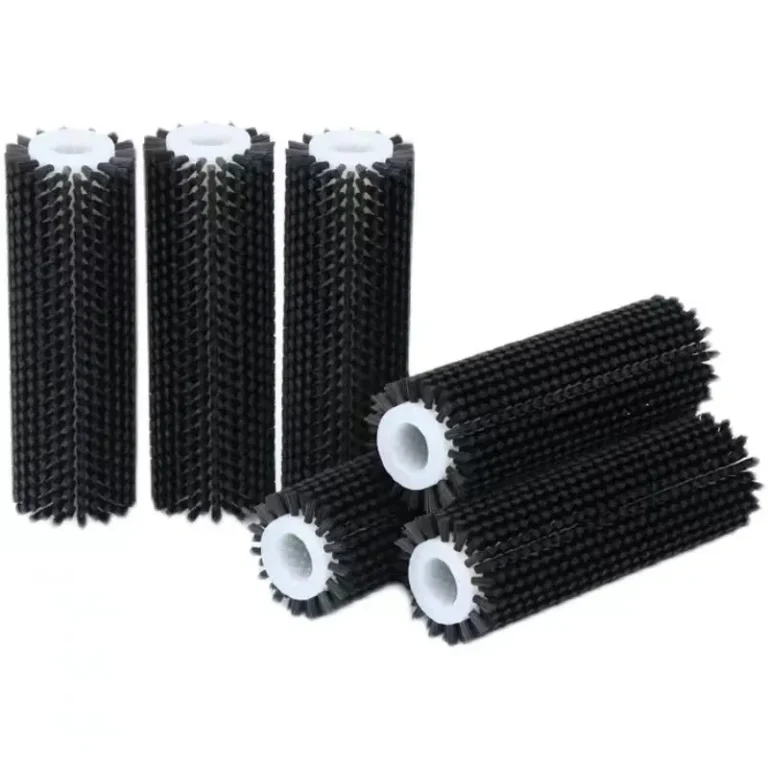
An automated inline brushing system consists of a motor-driven rotary or oscillating brush unit installed after the block ejection station. As each pallet exits the machine, it passes through the brushing station where a block machine strip brush removes surface residue before the pallet re-enters circulation. Key financial metrics for a typical installation:
| Cost/Benefit Category | Manual Cleaning | Automated Brushing |
| Initial investment | $200-$500 (hand tools) | $8,000-$15,000 (system + installation) |
| Annual labor cost | $4,000-$6,000 | $500-$1,000 (maintenance only) |
| Annual pallet replacement savings | Baseline | $3,000-$5,000 |
| Annual mold life extension savings | Baseline | $2,000-$4,000 |
| Rejection rate reduction savings | Baseline | $5,000-$15,000 (depending on volume) |
| Net annual benefit over manual | Baseline | $13,500-$25,500 |
| Payback period | N/A | 6-14 months |
For a medium-sized plant producing 8,000 blocks per day, the annual savings from automated brushing typically fall in the $15,000-$20,000 range, yielding a payback period well under one year. After payback, the system generates pure cost savings for the remainder of its 8-10 year service life.
Transitioning from Manual to Automated
The transition does not require a complete production line shutdown. Most brushing systems can be installed during a scheduled maintenance weekend. The key steps are:
- Measure pallet dimensions and machine exit height to specify the correct brush size and mounting configuration.
- Install the brushing unit frame and motor on the pallet return conveyor.
- Mount the block machine strip brush at the correct height for consistent contact with passing pallets.
- Connect the drive motor to the machine’s control system so the brush activates only when pallets are in motion.
- Run test cycles and adjust brush pressure to achieve full-surface cleaning without excessive bristle wear.
Plants that have completed this transition report that the most immediate benefit is not financial but operational: the elimination of end-of-shift cleaning removes a source of operator fatigue and shift-change friction, improving workplace morale and shift handover quality.
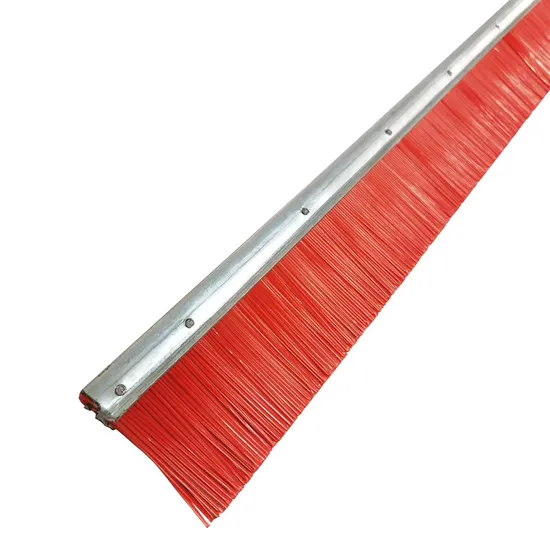
Key Factors to Evaluate When Selecting a Block Machine Strip Brush
The ideal block machine strip brush matches the specific operating conditions of the production line: bristle material ratio suited to the concrete mix formulation, brush dimensions that fit the machine’s mold and pallet geometry, a backing channel material compatible with the plant’s moisture and chemical environment, and a bristle density that balances cleaning aggressiveness with an acceptable wear rate.
Bristle Material Selection
The ratio of polypropylene filaments to stainless steel wire is the single most important specification. The right ratio depends on what the brush is cleaning and under what conditions:
| Application | Recommended PP: Steel Ratio | Rationale |
| Dry concrete dust and fines | 70:30 | PP bristles effectively sweep fine particles; minimal steel is needed |
| Fresh, uncured cement slurry | 50:50 | Steel wires cut through wet paste; PP sweeps away loosened material |
| Partially cured deposits (24-48 hours) | 30:70 | Higher steel content is needed for mechanical dislodging |
| Heavily cured, hard deposits (3+ days) | 20:80 | Maximum steel for aggressive cleaning; PP provides follow-up sweeping |
For most block plants running consistent daily cleaning, a 50:50 or 40:60 PP-to-steel ratio provides the best all-around performance. Plants that occasionally skip cleaning and face harder deposits should be biased toward higher steel content.
Brush Dimensions and Mounting Configuration
The brush must match the physical dimensions of the target surface. Key measurements to take before ordering:
- Overall brush length: Must span the full width of the widest mold or pallet being cleaned, plus 20-30 mm of overhang on each side to ensure edge-to-edge coverage.
- Bristle height (trim length): Determines how far the bristles extend from the backing channel. Typical heights range from 60 mm to 120 mm. Taller bristles provide more flexibility and longer wear life but may reduce cleaning pressure.
- Backing channel dimensions: The steel or plastic channel that holds the bristles must fit the mounting bracket on the machine. Common channel widths are 3 mm, 4 mm, and 5 mm. Measure the existing bracket slot before ordering.
- Mounting type: Options include bolt-on flanges, slide-in channel inserts, and custom bracket attachments. The mounting method must withstand the vibration environment without loosening.
Environmental Durability Considerations
Block plants present a challenging environment: alkaline concrete slurry, frequent water exposure, temperature fluctuations, and continuous mechanical vibration. The brush must withstand all of these:
Backing channel corrosion resistance: Galvanized steel provides adequate protection for most plants. Stainless steel backing (304 or 316 grade) is recommended for plants with high humidity, chemical cleaning agents, or salt-exposed aggregate mixes.
Bristle chemical resistance: Polypropylene resists most mild acids and alkalis but softens at sustained temperatures above 80°C (176°F). Plants using steam curing near the brush location should verify ambient temperatures at the brush position.
Filament diameter: Thicker filaments (0.5 mm to 1.0 mm) provide more aggressive cleaning and longer life but less flexibility. Thinner filaments (0.3 mm to 0.5 mm) are gentler on surfaces and better for reaching into narrow mold features. Most applications benefit from 0.5 mm to 0.8 mm filament diameters.
Brush Replacement Schedule and Inventory Planning
Block machine strip brushes are consumable items with predictable wear rates. A brush processing 5,000 pallet cycles per day in a moderate-wear application will typically require replacement every 3-6 months. Plants should:
- Keep at least one spare brush set in inventory at all times.
- Track brush installation dates and cycles processed to predict replacement timing.
- Inspect bristle condition during monthly maintenance and replace when bristle length has decreased by more than 30% from original or when obvious bald patches appear.
- Rotate brushes if wear is uneven (e.g., more wear on one side due to pallet tracking bias) to extend overall life.
The cost of a replacement brush strip—typically $50 to $200 depending on length and material—is negligible compared to the cost of operating with a worn brush that no longer cleans effectively.
Conclusion
Mold and pallet cleaning sits at the intersection of production quality, equipment longevity, and operating cost. It is not a peripheral activity that can be deferred without consequence. Every cycle that runs on a fouled mold or a crusted pallet incrementally degrades the precision of the forming process, shortens the life of expensive tooling, and increases the probability that blocks will fail to meet customer specifications.
The evidence from plants that have prioritized cleaning discipline is consistent and compelling. Daily cleaning protocols extended mold liner life by 30-50%. Automated inline brushing reduced pallet replacement costs by 40-60%. Block rejection rates dropped from 3-5% to below 1%. These are not marginal improvements; they are step changes in operating performance that directly strengthen the bottom line.
The block machine strip brush has emerged as the tool of choice for plants seeking to industrialize their cleaning process. Its dual-material bristle design, customizable dimensions, and compatibility with both manual and automated application make it adaptable to virtually any block production environment. Whether integrated into a fully automated inline brushing station or used as a manual tool for end-of-shift cleaning, it delivers faster, more consistent results than traditional scrapers and wire brushes while protecting the surface integrity of expensive molds.
For plant managers evaluating their maintenance programs, the question is not whether mold and pallet cleaning matter. The data makes that answer clear. The actionable question is whether the current cleaning approach is extracting the maximum value from production assets or quietly eroding it, one cycle at a time. In an industry where margins are measured in cents per block, the difference between clean and dirty is the difference between profit and loss.