When it comes to belt brushes and their performance, the most critical component is the selection of the correct material. While most B2B purchasers consider the dimensions and attachment options of a brush, they frequently do not consider which type of filament will be used. This can result in reduced durability, inadequate surface area, or worse, the brush damaging the workpiece. This guide will provide you with an overview of the various materials available, a side-by-side comparison of their physical characteristics, and examples of how to select the appropriate filament for actual applications.
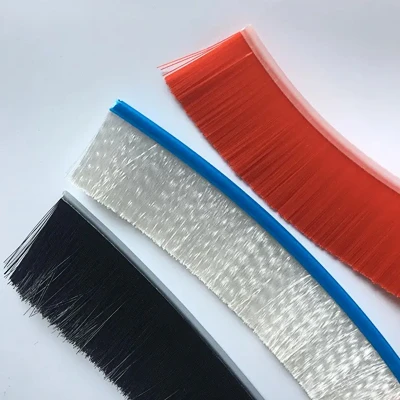
Why Material Choice Matters
The filament material affects a belt brush’s interaction of with the surface of the product itself. If the filament material is too rigid, it can scratch delicate surfaces and if it is too compliant, it may not be able to effectively remove debris. A polymer that is used in hot weather could warp or melt within hours.
The type of material chosen for any belt cleaning brush application will affect:
- Cleaning efficiency and finish quality
- Brush life in continual service
- Chemical and temperature resistance
- Cost per cycle of operation
Choosing the correct material upfront will reduce replacement costs and downtime due to unplanned production stoppages.
Common Materials Used for Filaments in Belt Brushes
Nylon – PA 6 / PA 6.6
Nylon is the most commonly used filament for industrial belt brushes, due to its excellent abrasion resistance, flexibility, and consistent return from being bent or deflected. The higher temperature capabilities of PA 6.6 also make it suitable for use in warm environments on conveyor systems.
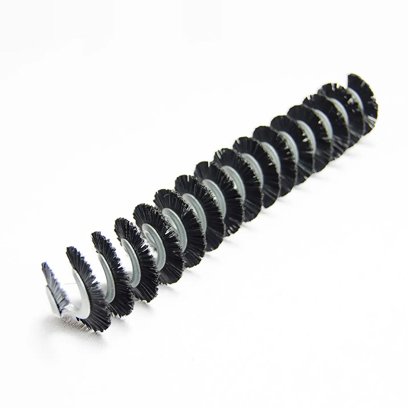
In most cases, experienced brush designers recommend using nylon as the base filament when creating brush designs for any number of general-purpose applications such as cleaning or conveying. When creating brushes that require particular-type contour contact, we have many options for customizing our nylon strip brushes by adjusting the filament density and the length of the trimmed ends to supply us with filament shapes that are appropriate for very complex surfaces.
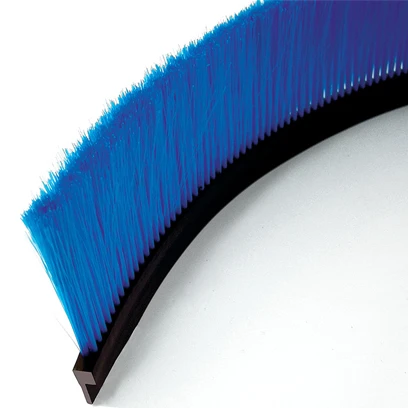
Polypropylene — PP
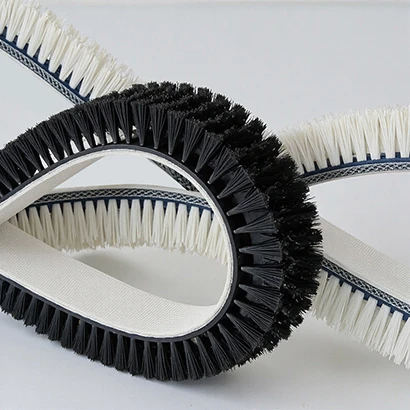
Compared to nylon, polypropylene has superior chemical resistance at a fraction of the price. In addition, PP performs better in wet and/or acidic conditions than Nylon does due to its capacity to absorb moisture and consequently lose rigidity. Although polypropylene has less heat tolerance than nylon, and will wear faster than nylon when used under heavy mechanical loads, many food and beverage operations opt for polypropylene filaments for conveyor brush systems because of their resistance to typical cleaning chemicals that would destroy other materials.
Horsehair / Tampico Natural Fibers
Natural fiber filaments provide a very gentle touch and are great for polishing and dusting, as well as handling high-value surfaces such as those found in electronics or optical components. The disadvantage of natural fibers is that they will wear out much faster than synthetic fibers, and they do not work well in wet or hot conditions.
Abrasive Nylon — SiC / Aluminum Oxide
Abrasive nylon has abrasive grit incorporated into the filament. The abrasive grit helps with deburring, finishing, or texturing metal and composite surfaces, while also helping convey products down the line. Grit sizes are typically in the 46–1000 range (i.e., from coarse to fine). This material can be used for both fabrication of metal and finishing of parts in an automotive environment where there are inline surface conditioning needs.
Comparison of Materials at a Quick Glance
| Attribute | Nylon (PA 6.6) | Polypropylene | Natural Fibre | Abrasive Nylon |
|---|---|---|---|---|
| Resistance to Abrasion | High | Medium | Low | Very High |
| Maximum Temp. | +120 °C | +80 °C | +60 °C | +120 °C |
| Chemical Resistance | Moderate | High | Low | Moderate |
| Water Absorption | Moderate | Very Low | High | Moderate |
| Cost Level | Medium | Low | Medium–High | High |
| Best Application | General cleaning | Wet / Chemical lines | Polishing / Dusting | Deburring / Finishing |
How to Select Your Right Material
To choose the right material for your use, follow the logical sequence of choosing the right environment of operation, then applying the right characteristics required by your workpiece.
- Evaluate operational conditions — Look at the brush contact point and determine what temperature the surface is experiencing, what level of moisture exists, and what chemical exposure may occur.
- Assess surface sensitivity — Find out how easily the workpiece scratches with normal use, as well as if it will tolerate rough handling.
- Determine primary function — Each process of cleaning, conveying, polishing or deburring, will require a different level of stiffness in the filament brush, and different grades of grit.
- Test prior to placing a full order — Request a sample of the brush to be run through the actual production process and check performance under those conditions. Simply using a specification sheet will not show all of the performance issues associated with a given brush.
The use of a curved strip brush design with the right filament creates more even pressure on curved or non-flat contact surfaces than just using a flat belt configuration alone.
Field-Based Best Practices
When using high-speed brushes, filament diameter has an impact on how much flex there will be when brushing. When the filament is thin, it will be able to flex more easily, but we will lose filament in a shorter period of time. If the filament is thicker, it may last longer; however, it could also limit the amount of surface conformity that you will achieve.
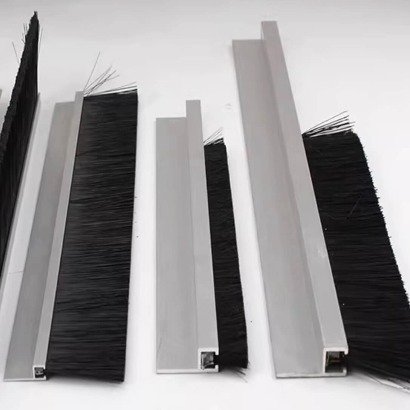
Material stiffness is a key factor in determining how much compression you get when using the brushes in sealing or shielding applications, as well as controlling the amount of airflow through the brushes. Utilizing guidelines for strip brush sealing and installation will help to minimize the number of mistakes you will experience during the setup process.
To enable rapid changeover to another type of product, running two different belt brush styles and filaments on multi-use lines will result in a quality cleaning operation without interrupting the cleanliness achieved.
To ensure materials used to manufacture belt brushes for food processing applications comply with food-grade and/or FDA regulations, it is imperative to review the nylon and Polypropylene (PP) grade(s) that you are considering.
Common-Wisdom Questions
Belt Brush Material That Is Most Durable?
Abrasive nylon with silicon carbide provides the best wear resistance. Non-abrasive cleaning applications use PA 6.6 nylon; a good balance of durability and flexibility at affordable prices.
Can I Use One Material for All Types of Belt Brushes?
It is not possible to have a single material serve as the best solution to all applications. There are many variables that make different filaments applicable to different applications; such as temperature, exposure to chemicals, and how sensitive surfaces are. Choosing the proper filament for each application can help reduce premature wear or damage to the workpiece.
When Is It Time to Replace a Belt Cleaning Brush?
Your replacement needs depend on factors such as the type of material being used, line speed, and load. Most users check the condition of their brushes after 500–1,000 hours of operation and will replace when they see signs of excessive wear or failure.