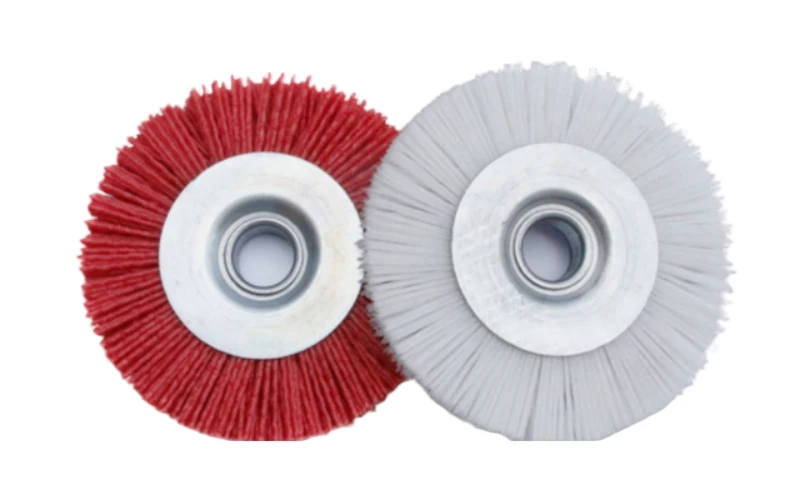
Choosing between a Nylon Wheel Brush and Steel Wheel Brushes is one of the most practical decisions a finishing professional makes on the shop floor. The wrong choice risks surface damage, contamination, or costly rework — while the right choice delivers consistent results and extends tool life. This guide breaks down the key differences, identifies the best applications for each brush type, and gives procurement and production teams a clear framework for making the correct specification decision.
Comparison Table
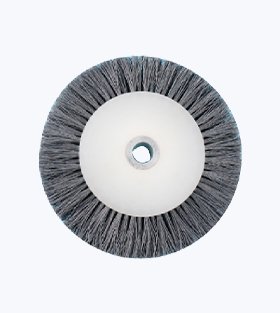
The table below provides a quick overview of the main differences between the two brush types.
| eature | Nylon Wheel Brush | Steel Wheel Brushes |
|---|---|---|
| Main Construction Material | Abrasive nylon filaments | Stainless steel or Carbon steel wires |
| Best Uses | Deburring / Finishing / Light Surface Prep | Rust removal / Weld Cleaning / Paint Stripping |
| Suits Workpieces Like | Aluminum / Brass / Plastic / Composites / Wood | Steel / Cast Iron / Stainless Steel |
| Level Of Aggression | Low To Medium | Medium To Very High |
The two brush types are equally effective but serve different purposes; no one type or accessory has a monopoly on performance as a whole, therefore qualified professional finishers should maintain both types.
When to Choose a Nylon Wheel Brush
Applications That Favor Nylon
The Nylon Wheel Brush is an especially important tool when surface integrity and dimensional accuracy are of high importance. The abrasive-filled filaments of the brush will flex and conform to match the contour of the surface that they are being applied to make this type of product versatile across many different applications while not altering the geometry of the part. Common applications of the nylon wheel brush include the following examples:
- Deburring machined aluminum or brass components
- Finishing plastic parts as well as composite materials
- Preparation of surfaces prior to coating or painting
- Cleaning delicate surfaces where dimensional tolerance is an important factor
Why Nylon Performs Consistently Over Time
Nylon filament will “self-sharpen” through usage, ensuring that the brush delivers consistent cutting performance for its entire useful life; this consistency in performance from nylon filament provides significant benefits to high-volume finishing lines and reduces the amount of variation between production runs caused by inconsistent cutter movement (among other factors). The nylon wire brush also eliminates the possibility of metallic contamination on non-ferrous workpieces, which is of great concern when working on aerospace and electronics components.
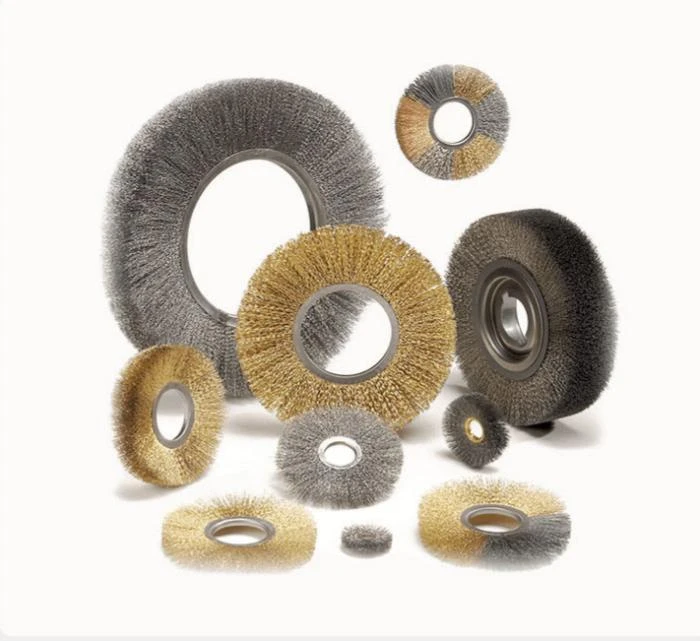
The operators using nylon brush machines are required to remain within the RPM (revolutions per minute) range of low to moderate. When these brushes are used too fast, they wear out the nylon filaments quickly and decrease the quality of the surfaces they are brushing.
The Best Uses for Steel Wheel Brushes
Heavy-Duty Surface Prep
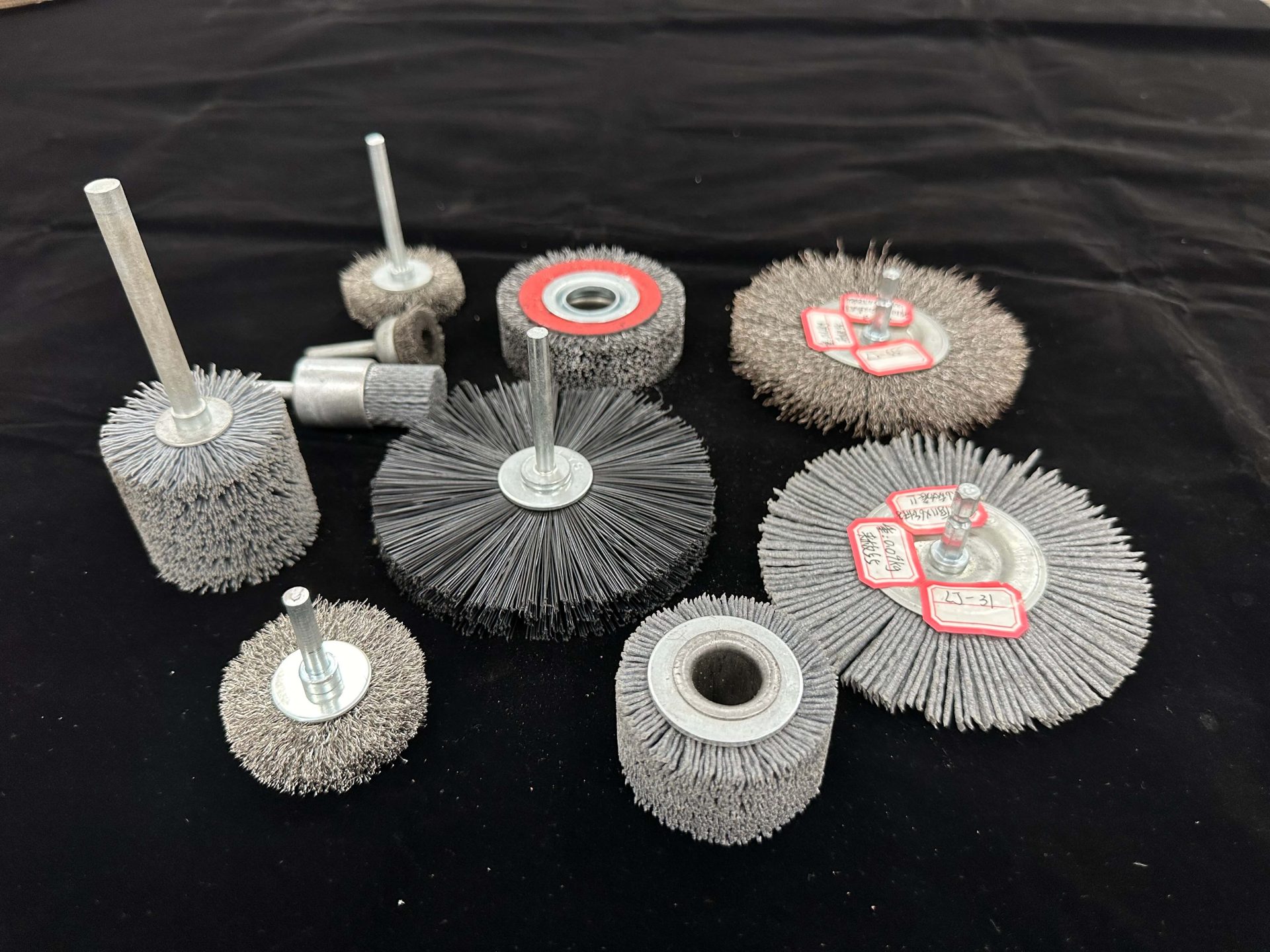
Steel Wheel Brushes are ideal for surface preparation because they provide mechanical force to perform the heavy-duty abrasive work that nylon brushes cannot. The two configurations used for steel wheel brushes are carbon steel and stainless steel. These types of brushes can accomplish any job that nylon can do but require a lot more power than nylon brushes.
- Eliminating thick rust and mill scale from ferrous materials
- Cleaning up spatter from welding and affected areas due to temperature
- Stripping off paint and/or other coatings from structural steel
- Preparing rough surfaces before being thermal spray welded
Twisted Wire Compared to Standard Wire
The way the wires are arranged in the brush makes a significant difference in how the brush cuts. Twisted wire brushes pack the wires closer together giving it greater stiffness and making it cut more aggressively than standard straight wire brushes which provide a little less aggressive cut but cover a larger area better than twisted wire brushes when cleaning welds or removing a lot of rust from an item. Twisted wire typically cuts faster than standard wire when cleaning welds and removing rust.
Why Stainless Steel Wire Matters for Certain Jobs
When carbon steel wire is used to brush a surface, the iron particles imbedded in that surface can trigger corrosion. This defeats the purpose of selecting stainless steel as a material. Compared to a wire wheel brush made from carbon steel, a wire wheel brush made from stainless steel will eliminate cross-contamination and preserve the corrosion resistance of the substrate. This is especially significant in food processing, pharmaceutical, and marine industries where an emphasis is placed on surface cleanliness.
Selecting an Appropriate Brush — Three Factors
Experts in finishing usually review three main determining factors when choosing a brush:
- Material type — Brush material will vary depending on whether the subject materials are soft and non-ferrous thereby requiring a nylon wheel brush or whether the materials are hard and ferrous hence using steel wire brushes.
- Finish requirement — Applications requiring a consistently smooth, defect-free surface area, will require nylon. Applications where texture on the surface area is acceptable or preferred, work well with steel wire.
- Contamination risk — All stainless-steel workpieces should use only stainless steel wire brushes. Introducing carbon steel to a stainless surface will create an opportunity for corrosion. This could create a problem that reworking will not necessarily fix.
Working through these three factors in order narrows the choice quickly and reduces the likelihood of specifying the wrong tool.
Brush Longevity and Cost Efficiency
In general, when compared to steel wire brushes, nylon wheel brushes will normally provide greater durability and longer wear during repetitive use with lower loads, as their bristles will naturally “self sharpen,” while steel wire bristles will wear out due to fatigue from use. On the other hand, for heavy-duty applications, steel wire brushes typically remove much more material on each pass than nylon wheel brushes, thus it is reasonable for the steel wire brushes to have a shorter service life.
It is critical that manufacturers of both types of brush keep track of replacement intervals for each application independently, instead of having all brushes on one replacement schedule. A brush’s condition will have a direct impact upon the quality of the finished surface as well as production efficiency, therefore the brush should be replaced based on performance rather than a calendar schedule to achieve the best result.
Frequently Asked Questions
Q1: Are nylon brushes able to take the place of a stainless steel wire brush when removing rust from industries?
Most of the time the answer is no, as nylon is used for lighter prepping of surfaces but is not able to deliver the strength and mechanical power associated with a steel wire brush to remove rust or mill scale from a surface.
Q2: Will a carbon steel brush cause permanent damage to stainless steel?
Yes, the transfer of iron from the brush onto the stainless steel part’s surface can begin to cause corrosion. Be sure to match the brush material to the material of the workpiece in order to prevent contamination and the need for rework.
Q3: What method should procurement teams use to determine how many of each brush type to order?
Audit your application mix first. Facilities that run a combination of ferrous and non-ferrous work will benefit from stocking both brush types in the same proportion to their finishing volume.