Sourcing the appropriate sandpaper brush goes beyond merely choosing the lowest-priced option. Picking the wrong specification results in an uneven surface finish and can lead to high return rates and delays in manufacturing, which will ultimately cost significantly more than the price of the brush itself. This B2B buyers’ guide provides a clear direction on the items that should be reviewed prior to submitting an order.
Understanding What You’re Actually Buying
The Core Construction of a Sandpaper Brush
A sandpaper brush is a type of abrasive tool made by combining an abrasive material (usually strips or sheets of sandpaper) with a brush head that provides the ability to use the tool flexibly and at a constant pressure against the surface being worked. As opposed to sanding blocks and rigid abrasive wheels, the use of a brush allows for the ability to use the abrasive against irregularly shaped surfaces; therefore, they are especially useful when sanding contoured or profiled parts.
The following are the two most popular setups for industrial/furniture applications:
- Disc / roller design for continuous surface treatment on production lines.
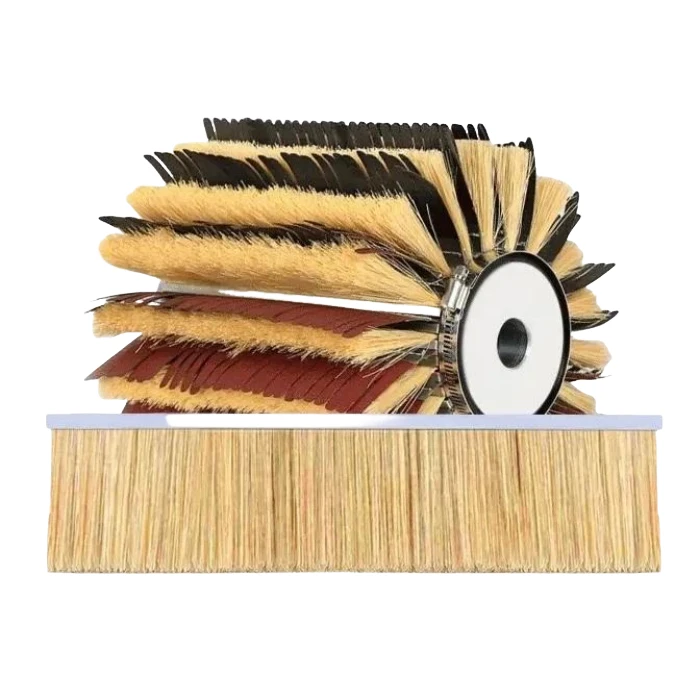
- Cylinder / roller with different media in a “mixed-media” system when using sisal and sandpaper on the same tool to perform a two-step finish in one pass.
Sisal and Sandpaper: Why the Combination Works
Design of the sisal sandpaper brush is worth noting individually. The sisal fiber serves as a natural polish, and the sandpaper portion provides abrasion — together they provide an end finish that is not equal to either of the two materials on its own. The combination of both is very popular in manufacturing furniture, flooring, and any other wooden component.
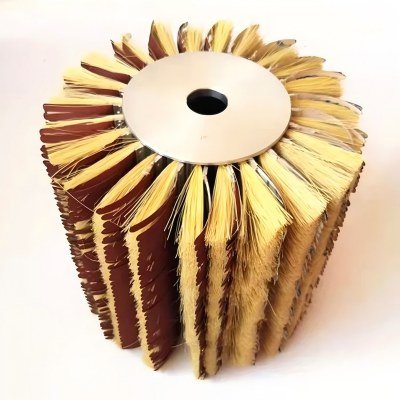
By utilizing this design theory for creating your own wood polishing brush, you will have fewer processing steps resulting in the total cost per piece being lower due to the decreased number of processes required. This is especially important when ordering wholesale products because there will be enough actual product produced that any reduction in costs can make a huge impact.
Important Specifications That Are Must-Haves for All Wholesale and OEM Purchasing Agents
One of the biggest errors most buyers make when ordering brushes is not managing their specification before placing orders. The following table indicates the important specifications to consider when selecting a sand paper brush:
| Specification | What to Confirm |
|---|---|
| Brush Diameter & Face Width | Must conform to the brush mounting specifications of your equipment |
| Grit Size (60–240) | Determines the quality and finish of your surface |
| Fill Material | Sandpaper only, or sandpaper and sisal — determines finish and tool longevity |
| Core Material | Steel, aluminum, or plastic — impacts RPM rating and durability |
| Arbor Hole Size | Flat bottom standard or tapered — determines machine compatibility |
| Maximum RPM | Manufacturer-recommended maximum RPM for safe and compliant performance |
When managing multiple SKUs across production lines, having accurate specifications upfront can prevent the costs associated with having to return goods that could not be processed correctly because of incorrect specifications.
Selecting the Right Brush for the End Use
Finishing Furniture or Other Wood-Based Surfaces
The largest user grouping of the sandpaper brush category is furniture manufacturers, and their main method of finishing products is accomplished through the use of an abrasive material (sisal) and a sandpaper material working in unison with each other to complete the entire finishing process (from leveling to polishing) with one brush pass, which has resulted in manufacturers using this brush style as a standard for their high volume cabinetry and flooring manufacturing lines.
For buyers who supply wood furniture manufacturers with sandpaper brushes for machinery, it is essential to carry both:
- Medium grit (80–120)
- Fine grit (180–240)
This will provide sandpaper that meets the needs of the majority of your customers without creating too many different SKUs to manage.
Industrial Surface Preparation
Besides wood, sandpaper brushes are also commonly used for:
- Deburring metal
- Preparing the surfaces of composite materials for joining
- Scuffing the surfaces of painted products prior to refinishing
In these applications, the type of filler and density of the fill material are even more important than the type of fiber used in making the brush. When buying brush products to sell to industrial distribution customers, look for products that have been tested at high RPMs and that are built using high quality materials.
Buyers often rely on detailed resources about sandpaper brush grit selection when optimizing surface finishing consistency across different production materials.
Original Equipment Manufacturer (OEM) Customization
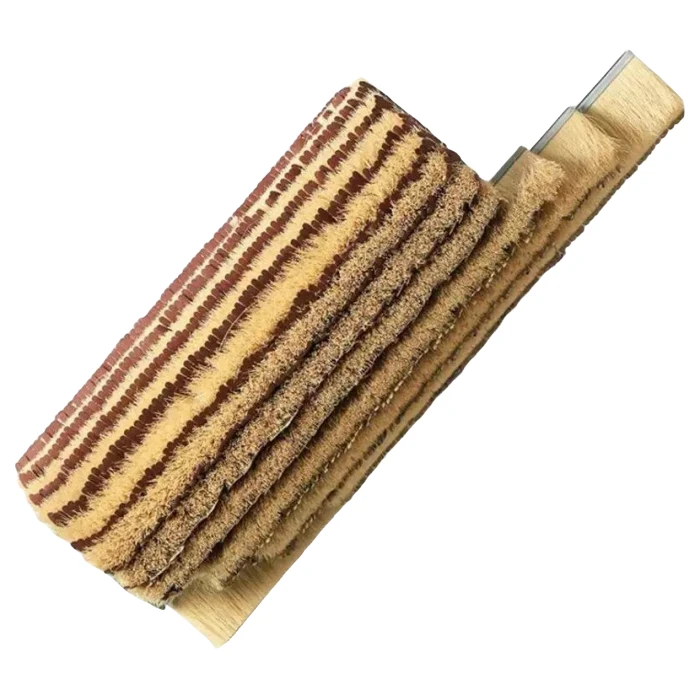
Modern OEM makers can provide realistic customizations, in terms of providing brushes that fit in with the configuration of existing machines, supplying private label products and accommodating many other OEM customization requests:
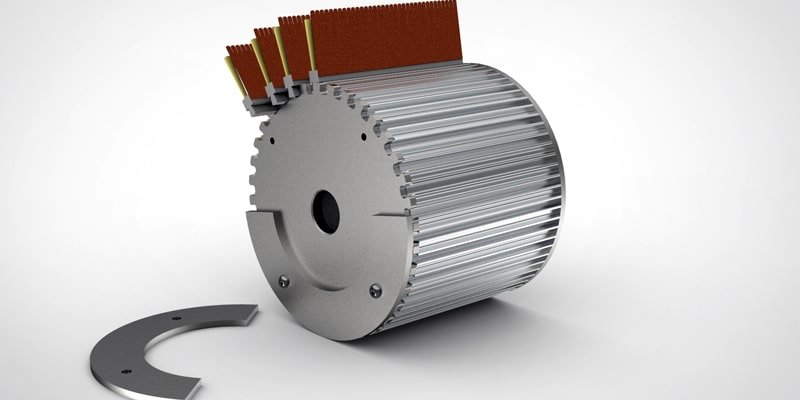
- The outer diameter and face width are custom-made to fit proprietary machine specifications.
- Arbor bore sizes that are not standard.
- Different fill ratios.
- Different custom grit combinations in the same brush.
- Private labeled packaging and product marking.
Time to receive your custom order typically will take 3–6 weeks, depending on the order volume and complexity; therefore, the buyer should account for this lead-time while planning production, especially for first tooling runs.
Before confirming OEM specifications, many procurement teams review a detailed sandpaper brush guide to compare finishing performance across different brush configurations.
Supplier Evaluation Criteria for Wholesale / OEM Suppliers
Not all manufacturers produce their products to the same quality. Experienced purchasing agents will generally evaluate suppliers on the following criteria when determining whom to establish a long-term wholesale or OEM relationship with:
- Sample-to-bulk consistency — Ensure that quality of produced samples will match quality of bulk orders.
- Material transparency — Document all materials used in production (i.e. sandpaper grit & fiber source).
- Flexible MOQ tiers — Suppliers who will work with tiered minimum order quantities indicate true orientation toward B2B transactions.
- Technical support — The ability to provide advice on the specifications of the product.
- Lead-time reliability — Delivered on time as quoted, not just promised.
By using the same company to purchase standard catalog products and custom OEM products, it reduces the coordination complexity with multiple sources and this often results in better pricing when purchasing products in bulk.
Frequently Asked Questions
Q: What is the typical minimum order quantity for custom brushes?
Generally manufacturers have a minimum of 50 to 200 units for custom orders depending on complexity and core materials used.
Q: Do you produce a hybrid wood sanding and polishing brush that will work for both in one pass?
A sisal sandpaper brush with mixed fills provides both burnishing and abrasiveness to reduce process steps and improve throughput on wood finishing lines.
Q: Which grit sizes should wholesale distributors stock to cover most customers?
Stock 80-grit for material removal, 120-grit for general finishing, and 180–240-grit for fine finishing — these cover the requirements of most industrial and furniture trades.