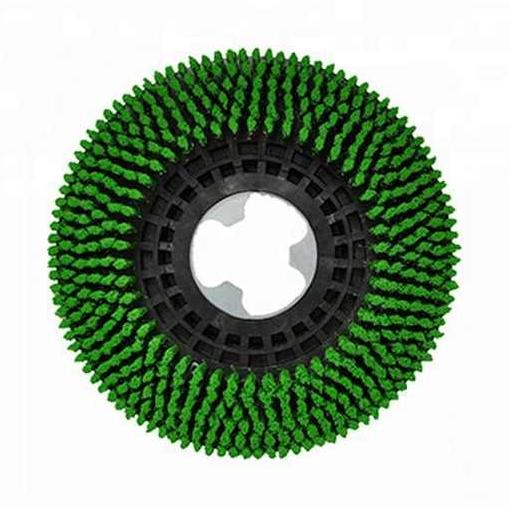
A disk brush performs much more than what is commonly perceived. In the manufacturing industry, food processing, warehousing, and metalworking, these tools do heavy-duty floor scrubbing and precision surface finishing. Although many procurement teams still do not realize it, the right disk brush can affect operational efficiency and product quality, along with long-term equipment costs. This article will discuss the general industrial applications that have been known to provide valuable results when using disk brushes. These applications include the specific requirements for each application and explain which type of brush is most suitable.
Why Disk Brushes Matter in Industrial Settings
Industrial facilities are always under the pressure of keeping surfaces clean, meeting quality standards, and reducing production downtime. A well-selected disk brush can address all these three issues at the same time. Unlike single-purpose tools, disk brushes can be used with different machines, surface materials, and cleaning intensities simply by changing the type of bristle, fill density, or abrasive grade. From factory floors to CNC finishing stations, good maintenance managers know that the choice of brushes will directly affect the quality of output. The selection guide of industrial disk brushes gives a detailed framework for evaluating the options based on the requirements of applications.
Four Industrial Applications Where Disk Brushes Excel
1. Floor Cleaning and Surface Maintenance
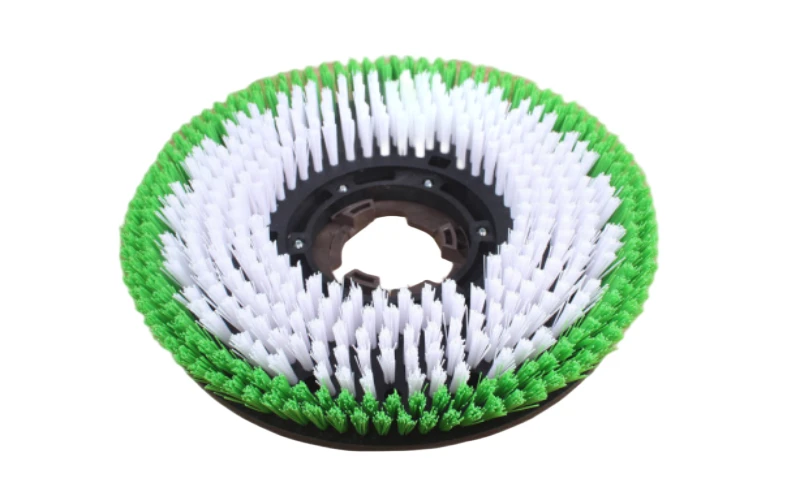
This is one of the most common and conspicuous applications of disk brushes in commercial and industrial floor maintenance. Rotary floor machines that use disk brushes for removing dirt, grease, and chemical residues from warehouses, food processing plants, stores, and manufacturing facilities are some of the examples. A good floor scrub brush must balance cleaning power with surface protection. Aggressive enough to do the job but not so much that it damages epoxy coatings or polished concrete. Too soft, and stubborn grime remains embedded in the surface.
Typical floor cleaning scenarios include:
- Degreasing concrete floors in warehouses and workshops
- Scrubbing tile surfaces in food-grade processing areas
- Maintaining polished or coated commercial flooring
- Removing rubber marks and scuff lines in high-traffic zones
The floor scrubber brush gives even scrubbing pressure over a large surface. Teams running operations with a rotary scrub brush on multiple types of floors should check out the hands-on guide to using a rotary scrub brush on different surfaces — it’ll help steer clear of the most common surface damage mistakes.
2. Deburring and Edge Finishing
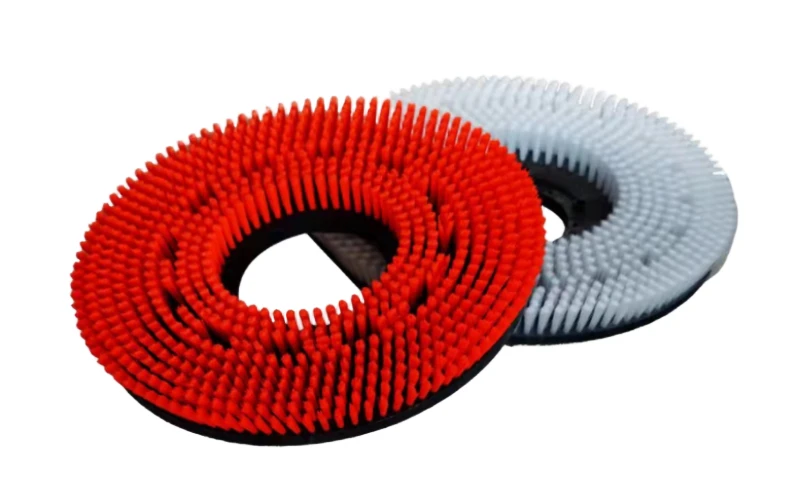
Burr removal is a major application because burrs created from stamping, laser cutting, punching, and milling leave sharp edges and rough surfaces on workpieces. Such imperfections not only create safety hazards but also interfere with assembly and reduce product quality. Disk brushes remove burrs quickly and do not alter critical part dimensions.
A nylon disc brush filled with abrasive filaments is very good at most deburring. The flexible bristles can shape themselves to the contours of the parts, reaching into edges and curves that solid tools cannot. This makes the disk brush particularly useful for high-volume parts with complex profiles.
The main benefits of disk brush deburring are as follows:
- Consistent edge quality in large production runs
- Very little material removal beyond the burr itself
- Less manual labor compared to hand deburring
- Works with automatic deburring machines
Many manufacturers that process stamped sheet metal, machined castings, or laser-cut parts make abrasive nylon disc brush setups a common standard for their deburring lines.
3. Surface Grinding and Material Preparation
Metal and composite surfaces require proper preparation before coating, painting, or bonding. Silicon Carbide Grinding Disk Brush or aluminum oxide make uniform surface profiles to promote adhesion and remove oxidation layers. It is ideal for applications that require aggressive stock removal on hard metals. It removes rust, mill scale, and old coatings while establishing a consistent scratch pattern for good bonding of paint or adhesives.
Typical tasks of surface preparation include:
- Removal of weld discoloration and heat tint from stainless steel
- Preparation of aluminum or steel panels for powder coating
- Cleaning of pipe and tube surfaces before welding
- Texturing surfaces for improved mechanical adhesion
A surface cleaning brush designed for preparation work shall serve as a cleaner as well as a conditioner. This serves to reduce the steps in processing and also to minimize the production cycle time.
4. Polishing and Final Surface Treatment
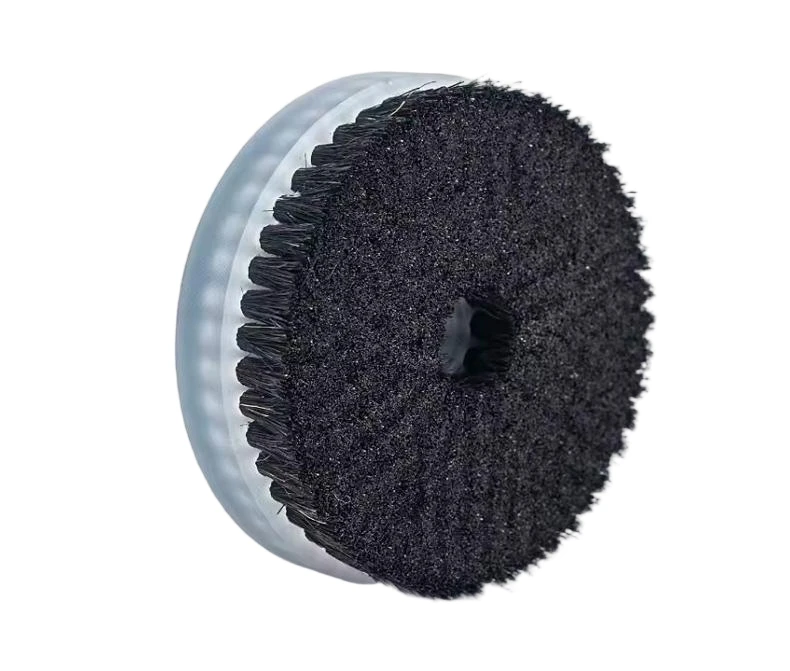
Some applications require a fine, visually pleasing finish, not aggressive material removal. Softer disk brushes take on these polishing tasks without scratching or overworking the surface.
The horse hair disk brush is one of the best choices for soft polishing and buffing. Bristles made of natural horsehair leave a smooth, spotless shine on wood, leather, stone, and fragile metals. Sectors like furniture making, automotive detailing, and architectural metalwork use this brush type for the final finishing stages on a regular basis.
Polishing applications typically involve:
- Bristles with low stiffness to prevent surface marring
- Bristles of the same length for uniform pressure over the contact area
- Compatibility with polishing compounds or waxes
Application Comparison at a Glance
| Application | Primary Goal | Recommended Bristle Type | Typical Industries |
|---|---|---|---|
| Floor cleaning | Remove dirt, grease, and residue | Nylon or polypropylene | Warehousing, and food processing |
| Deburring | Remove burrs and sharp edges | Abrasive nylon | Metal fabrication and stamping |
| Surface grinding | Strip coatings and prepare surfaces | Silicon carbide and aluminum oxide | Welding, coating and painting |
| Polishing | Achieve a smooth and refined finish | Horse hair and soft nylon | Furniture, automotive and architecture |
This table will serve as a quick reference for procurement teams when matching disk brush types to specific operational needs.
Selecting the Right Disk Brush for Each Task
The best selection of brushes can be made if one has a clear understanding of the following three factors:
- Material of the surface: Hard metals can bear aggressive abrasive brushes. Soft materials require gentle bristle options.
- Desired outcome: Stiff, abrasive-loaded filaments for heavy cleaning and grinding operations; soft, natural, or fine synthetic bristles for polishing and light maintenance.
- Machine Compatibility: Check that the disk brush diameter, arbor hole, and RPM rating are in line with the specifications of the equipment.
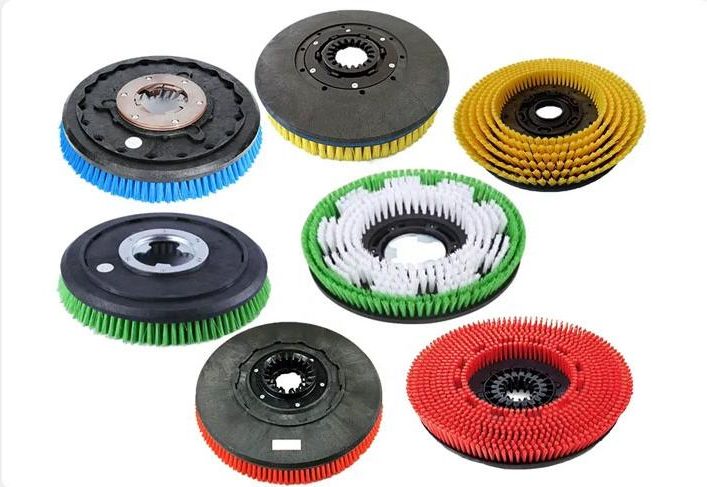
By going through the entire range of products of disk brushes, buyers can easily compare the specifications side by side and identify the best match for their exact application requirements.
FAQ
Which type of disc brush for floor cleaning is ideal in industries?
Nylon or polypropylene bristle disc brushes are most suitable for general industrial floors. They balance scrubbing strength with safety to the surface, working well on grease, grime, and chemical residue.
Can one disc brush take care of deburring and polishing at the same time?
Not really. Deburring needs abrasive filaments while polishing requires soft bristles. The best results will be achieved and the quality of the surface will be protected by using separate brushes for each of the tasks.
What is the replacement cycle of disk brushes in industrial plants?
The replacement cycle is directly related to the intensity of use and wear of the bristles. In general, most industries check the brushes on a weekly basis and change them when the height of the bristles falls to less than 60% of their original length.