Every production cycle counts in the competitive industry of concrete block manufacturing. Over time, there is a persistent operational challenge due to the buildup of concrete residue, cement dust, and aggregate on the molds, feed carriages, and conveyor systems, directly impacting product quality, machine longevity, and overall throughput. When molds are not cleaned thoroughly between cycles, rough patches of hardened residual concrete transfer surface defects to the next batch of blocks. These deposits eventually accumulate into stubborn crusts and require aggressive mechanical intervention for removal, thus escalating both maintenance costs and unplanned downtime.
Strip brushes are the best and most commonly used solution for the automated cleaning of molds in concrete block machines because they continuously remove debris, which in turn keeps the quality of the mold surface intact, reduces variability in cycle time, and prevents abrasive buildup on critical contact surfaces to extend the life of the equipment.
Buying the right industrial brush configuration is not like buying a commodity. It is a precision-engineered component that has to match the particular geometry, material compatibility, and mechanical demands of your block production line. This guide covers design principles, material science, operational benefits, and selection criteria that determine whether a strip brush will perform reliably over thousands of production cycles or become a recurring source of frustration and hidden cost. Whether you run a single stationary block machine or a multi-line automated plant, you need to know how these brushes work to optimize your cleaning strategy and protect your capital equipment investment.
What Is the Use Of Strip Brushes in Concrete Block Machines?
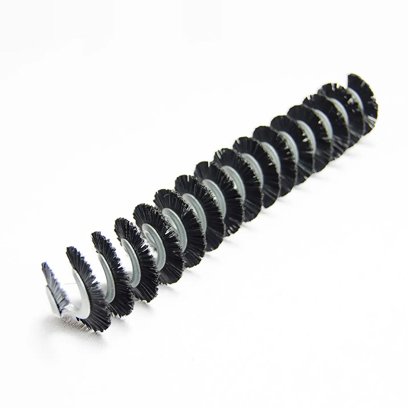
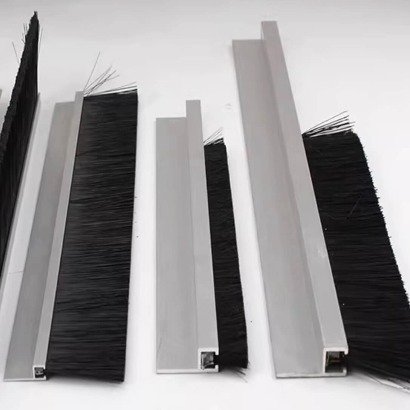
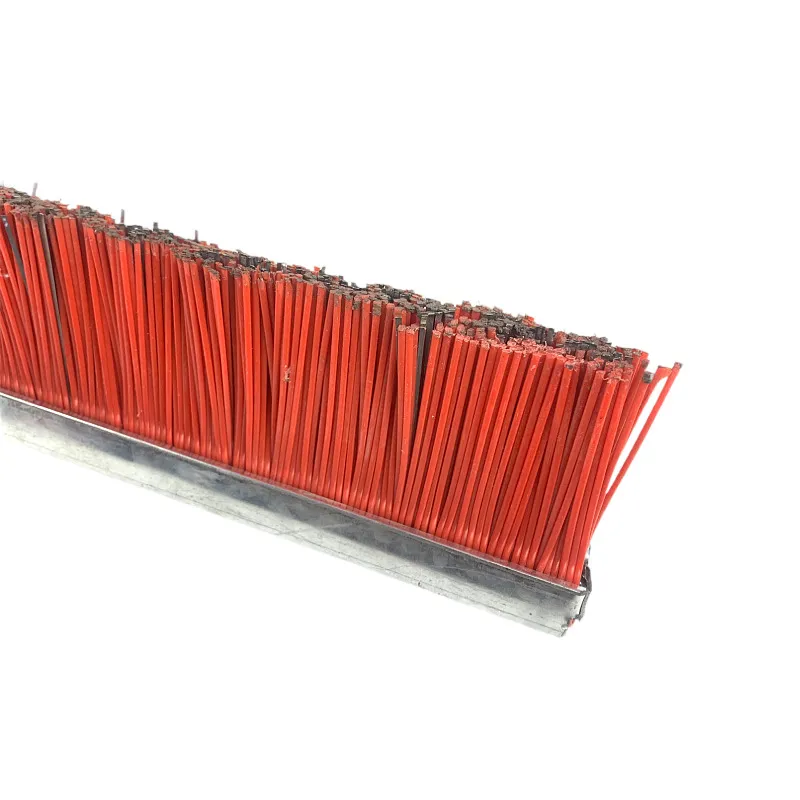
In the context of this application, a strip brush for concrete block machines is defined as a straight brush with high bristle density, mounted on a rigid base channel of metal or plastic, intended for scraping, sweeping, and removing residues of both wet and cured concrete in the molds, feed trays, and pallet surfaces during the automatic production cycles of blocks.
Special Requirements of a Concrete Block Machine Brush
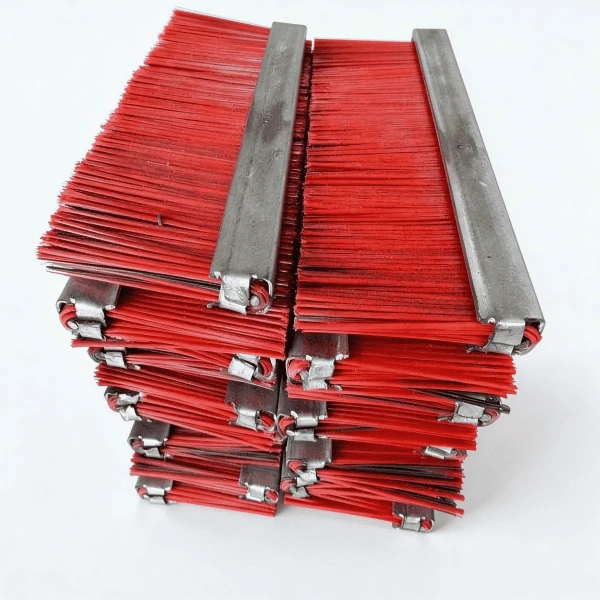
A concrete block machine brush is fundamentally different from a general-purpose industrial brush. Instead of relying on ordinary cleaning performance, it is engineered to remove aggressive debris at high cycling rates under abrasive conditions. As a result, the bristles must resist constant impacts from cement slurry, sand, and aggregate particles, which means they need to be exceptionally strong. Typically, the brush uses a U-shaped galvanized steel base or a heavy-duty plastic base.
Moreover, the base clamps and secures the bristle fill so that, even under continuous mechanical stress, the filaments do not pull out. Brush lengths usually range from 500 mm up to more than 2,000 mm. However, they can also be custom-cut to match specific mold dimensions. Generally, the overall brush height and width fall between 100 mm and 130 mm, although these parameters can be adjusted according to the machine model and the required cleaning clearance.
Working Principle and Durability Focus
Although the operational principle is straightforward, the real working conditions are demanding. As the block machine cycles, the strip brush directly contacts the mold surfaces, feed carriage plates, and the underside of the pallet. Under pressure, the bristles flex to remove fresh cement paste as it sets, and they also scrape away deposits of partially cured paste from previous cycles.
Furthermore, because the brush operates in a high-frequency reciprocating or rotary environment, fatigue resistance of the filaments and rigidity of the base material become critical for stable performance. Therefore, if a strip brush is poorly made, it can shed its bristles quickly. As a result, foreign material contamination may enter the concrete mix, and it could ultimately affect mold alignment.
Key Materials and Construction of Block Machine Strip Brushes
Block machine strip brushes are made of a mix of high-carbon steel wire, polyamide (nylon), and polypropylene filaments set in base channels of galvanized steel, stainless steel, or engineered plastic, with the base channel material chosen based on the required cleaning aggressiveness, operating temperature range, and chemical exposure in the concrete production environment.
Filament Material: The Key to Brush Performance
The bristle material largely determines a brush’s performance and service life. On the market, three filament types dominate use, and each works best for specific cleaning conditions.
Polyamide (PA) filaments, also known as nylon bristles, deliver strong abrasion resistance, good flexibility, and reliable recovery memory. As a result, they are ideal for general sweeping of loose cement dust, sand, and light slurry on mold surfaces—especially when you do not need aggressive scraping.
Meanwhile, polypropylene (PP) filaments offer excellent chemical resistance and do not absorb moisture. Therefore, they perform well in wet-cast concrete applications where the brush stays in contact with alkaline cement paste. In addition, most synthetic filaments come in diameters of about 0.3 mm to 0.8 mm; thicker filaments provide more stiffness and typically extend wear life.
Mixed Cleaning Fill for Aggressive Block-Machine Cleaning
For block machines, an effective aggressive cleaning fill usually combines synthetic filaments with high-carbon steel wire. On one hand, the steel wire bristles loosen hardened concrete crusts by scraping them aggressively. On the other hand, they also protect the mold surface by preventing direct metal-to-metal contact.
Generally, steel wires measure 0.3 mm to 0.5 mm in diameter. Depending on the required aggressiveness, you can specify them as straight, corrugated, or as a flat-strip profile. Moreover, industry practice shows that a mixed fill of steel wire and polyamide can extend the mold cleaning interval by around 40% compared with brushes made entirely from synthetic filaments.
Base Channel Materials and Sizing
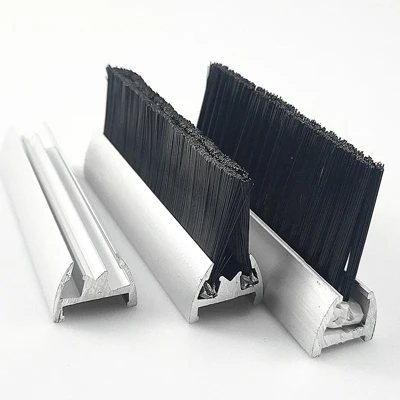
From a design perspective, the base channel material also plays a critical role in stability and durability. Galvanized steel U-channels provide maximum structural rigidity, so they are the most common choice for heavy-duty block-machine applications where lateral forces on the brush can be significant. Furthermore, stainless steel bases are recommended when you need higher corrosion resistance—particularly in facilities using water-based cleaning systems or operating in high-humidity conditions.
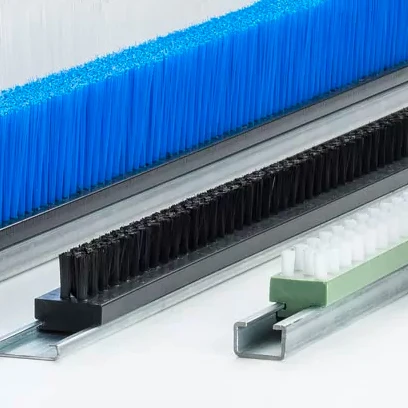
Alternatively, engineered plastic bases made from high-density polyethylene or reinforced nylon offer a lighter-weight option with inherent chemical resistance. However, they may flex more under extreme load conditions. In most cases, the base channel width comes in 8 mm or 13 mm to fit the mounting slots of standard machines, but you should confirm the correct dimension for your specific block-machine model before ordering.
How Strip Brushes Improve Concrete Block Production Efficiency
Strip brushes optimise efficiency in the production of concrete blocks by keeping the surface of the mould clean between cycles, thus maintaining uniform block dimensions and reducing rejection rates due to surface irregularities; they also cut out unplanned downtime for manual cleaning of the mould and help to extend the life of the expensive mould assembly.
Better Mold Cleaning Improves Product Consistency
The most immediate and measurable impact of good mold cleaning shows up in product quality consistency. When cement residue cakes onto mold surfaces, each subsequent block inherits surface defects—ranging from mild roughness to visible gouges—along with dimensional deviations. As a result, those defects drive higher rejection rates at quality inspection stations. In high-volume block plants producing tens of thousands of units per day, even a 1% rise in rejection rate becomes a major financial loss. Therefore, a properly specified concrete block machine brush, operating at the correct pressure and contact angle, removes freshly deposited cement paste before it bonds to the mold surface. Consequently, every block comes out against a cleaner, smoother face.
Cleaning Efficiency Boosts Overall Equipment Effectiveness
In addition to quality, cleaning efficiency directly affects overall equipment effectiveness. Manual cleaning typically requires stopping the line, letting the mold assembly cool, and then assigning operators to remove stubborn buildup with hand tools or pressure washers. The process often takes 30 to 60 minutes per cleaning cycle, and teams must repeat it multiple times per shift—depending on the concrete mix characteristics and production volume. By contrast, automated strip brushes within the machine cycle reduce most manual work. The brush cleans continuously during each production stroke, which cuts daily cumulative downtime by roughly 45 to 90 minutes in typical operations. As a result, plants can gain about 190 to 375 extra hours over a 250-day production year.
The protective function of strip brushes goes beyond just cleaning. Cement paste is highly alkaline and can chemically attack ferrous metals. When deposits are allowed to build up and then cure on mold surfaces, it results in prolonged chemical attack that accelerates pitting corrosion as well as dimensional warping of precision-machined mold components. A complete mold assembly can represent a capital investment of between $15,000 and $50,000 or more, depending on size and complexity. Even if the service life of the mold can be extended by 12 months through consistent automated brushing, the return on investment is much higher than the cost of the brushes themselves.
Selecting the Right Strip Brush for Your Brick Equipment
Choose the appropriate strip brush for bricking machinery by considering five key parameters: filament material composition in line with cleaning aggressiveness requirements, base channel dimensions that fit machine mounting slots, brush length equated to mold width, overall bristle height for proper contact pressure, and environmental resistance to concrete mix chemistry in your production line.
Evaluate Residue First
The selection process begins with a detailed assessment of residue type and how difficult it is to remove in your specific application. For example, light cement dust and dry aggregate particles call for a softer brush setup. In this case, operators typically choose filaments made from polypropylene or nylon with diameters between 0.3 mm and 0.5 mm. As a result, these brushes sweep efficiently while minimizing unnecessary wear on the mold.
Match Brush Aggressiveness to Mix Conditions
However, high-cement-content mixes, rapid-setting compounds, or long cycle times that leave partial curing on mold surfaces demand a more aggressive approach. Therefore, many plants switch to mixed-fill brushes that incorporate steel wire. Meanwhile, the table below provides a structured comparison of brush configurations mapped to common production scenarios, so you can select the right option with confidence.
| Residue Type | Recommended Filament | Filament Diameter | Base Material | Typical Service Life |
| Dry cement dust and sand | Polypropylene (PP) | 0.3–0.5 mm | Plastic or galvanized steel | 800–1,200 hours |
| Wet cement slurry | Nylon/Polyamide (PA) | 0.4–0.7 mm | Galvanized steel | 600–1,000 hours |
| Partially cured concrete | Mixed PA + steel wire | 0.5 mm PA + 0.3 mm steel | Galvanized steel | 400–800 hours |
| Heavily cured crusts | Steel wire dominant mix | 0.5 mm corrugated steel + PA | Stainless steel | 300–600 hours |
Brush Sizing and Fit Pressure
The brush length must match the full width of the surface you need to clean on the mold or feed carriage. To ensure edge coverage, manufacturers allow a general tolerance of ±5 mm. In addition, the base channel thickness is most often 8 mm or 13 mm, and it must match the mounting slot dimensions of the specific block machine model.
Next, the total bristle height controls the interference fit and therefore the contact pressure. If the bristles are too short, the brush cannot generate enough force for effective cleaning. However, excessive bristle height only increases friction, which accelerates filament wear and raises drive motor load. Accordingly, most manufacturers recommend a bristle protrusion that produces a 3 mm to 5 mm compression against the target surface during installation.
Environmental and Material Compatibility
Environmental factors also determine long-term performance.
For example, concrete mixes with chemical admixtures—such as accelerators, water reducers, or air-entraining agents—may release solvents or plasticizers that can attack certain filament materials. Generally, polypropylene offers a very broad chemical resistance profile. Therefore, PP is often the safer choice when you cannot fully predict the chemistry of the batch.
Meanwhile, thermal exposure matters in hot climates or when you use heated concrete mixes. You should verify the thermal rating of the selected filament: polyamide softens above roughly 90°C, while polypropylene begins to degrade above about 100°C. As a result, choosing the wrong filament for temperature conditions can shorten service life even if the brush otherwise matches the required dimensions.
Installation and Maintenance Best Practices
Block machine strip brushes are installed by aligning the brush base in the mounting channel, ensuring that there is uniform pressure between the bristles and the surface along the entire length of the brush, and mechanically securing it to prevent any loosening due to vibrations during its high-cycle operation; maintenance includes periodic checks on wear patterns of filaments, timely rotation or replacement of brushes, and cleaning away lodged dirt which impairs the cleaning efficiency.
Installation Steps and Proper Seating
Start installation by ensuring the brush base channel stays clean, straight, and free from burrs or distortion. Otherwise, the brush may not seat correctly in the machine’s mounting slot. Next, slide the brush into the slot using moderate hand pressure. If the fit feels loose, the brush can vibrate and shift during operation, which leads to uneven wear and may even damage the mold it contacts.
On the other hand, an overly tight fit can deform the base channel during installation. That deformation creates high-stress regions that accelerate fatigue cracking. Once the brush seats fully, fasten it with the specified fasteners from the machine manufacturer—commonly socket-head cap screws or locking set screws placed at regular intervals along the mounting rail.
Contact Pressure Verification
After mechanical installation, verify contact pressure as the single most critical quality check. Run the machine through a slow-speed cycle and observe how the bristles interact with the mold surface. Ideally, the bristles contact uniformly across the full length, with no visible gaps and no zones of excessive compression.
If you notice uneven contact, the cause usually links to one of several issues: a misaligned mounting rail, a warped brush base, or varying bristle trim heights. As a result, you may see streaky cleaning—some mold sections get heavily scrubbed, while others receive minimal engagement. Therefore, use a feeler gauge or visual inspection during the first few production cycles to confirm that every area achieves adequate bristle engagement.
Maintenance and Replacement Criteria
Next, build clear maintenance protocols into the facility’s preventive maintenance program. Make inspections specific and repeatable. At every shift change, check for visible filament breakage, aggregate particles embedded between bristle rows, and base channel deformation.
Meanwhile, set objective replacement triggers: mark any brush with more than 20% loss of the original bristle fill density, or with more than 30% reduction in filament protrusion length from its original value. Many facilities also use a rotation technique. As brushes wear, they move them from primary cleaning positions to less critical secondary positions to maximize total useful life before disposal. Finally, keep a set of spare pre-cut brushes on the maintenance shelf so replacements do not disrupt production.
Cost-Benefit Analysis: Why Quality Strip Brushes Matter
Purchasing good strip brushes for brick equipment results in a direct payback from reduced costs of mold replacement, lower rates of rejection for products, and reduced costs of manual cleaning labor hours, as well as increased available production time since the total annual savings normally exceed the cost of procuring the brushes by a factor of five to ten in medium- to high-volume block plants. An ideal strip brush for brick equipment is not just a consumable cost but rather an investment in the stability of production.
Labor Cost Reduction
The second major category of savings comes from lower labor costs. In a two-machine plant, manual mold cleaning typically takes four to six hours per day when operators earn 18→18→25 per hour, benefits included. Therefore, if automated brushing eliminates 75% of that manual work, daily labor cost drops by 54→113. Over 250 production days, that equals 13,500→28,250 per year.
In addition, these figures do not include the opportunity cost of lost production time while manual cleaning stops the line. In most cases, that hidden cost exceeds the direct labor expense.
This is the total economic impact when all factors are viewed together. The next table consolidates the results of the annual financial contribution of properly specified and maintained strip brushes in a representative two-machine block plant.
| Benefit Category | Annual Value |
| Mold life extension savings | $33,333 |
| Manual labor cost reduction | $20,000 |
| Reduced reject rates and rework | $12,500 |
| Increased production uptime (200 extra hours at $150/hour) | $30,000 |
| Total Annual Benefits | $95,833 |
| Annual brush procurement cost | ($5,500) |
| Net Annual Benefit | $80,333 |
Broader Benefits of Upgraded Brush Specifications
In practice, many plants have shifted from simple synthetic-only brushes to engineered mixed-fill configurations. Moreover, that change has consistently delivered faster cycle times, fewer unplanned mold changeouts, and improved block surface finish scores. In other words, the brush upgrade often translates into measurable performance gains on the production line.
Even so, this brush still represents a small portion of a block machine’s total capital cost. Therefore, it can create an outsized impact on production economics. Meanwhile, a periodic reexamination of brush specifications—based on evolving concrete mix designs and changing production objectives—helps plant managers and maintenance engineers sustain continuous improvement in operational performance.
Conclusion
In the making of concrete blocks, strip brushes are simple but very important. Their role in keeping the molds clean has a direct effect on the quality of the products as well as the efficiency of production and the life of the equipment. From the choice of material for the filaments that determines how aggressively they will clean to the dimensions that ensure proper integration with the machine, all design parameters carry operational consequences that compound over thousands of production cycles.
This decision is, therefore, an investment in process reliability. Mold assemblies are one of the major single capital items on the balance sheet of a block plant, just next to the block machine itself. Thus, the protection of such an investment through regular automated cleaning can be viewed as a simple risk management and asset preservation exercise.
As concrete mix formulations continue to advance to higher performance and faster setting characteristics, the demands on cleaning systems will only increase. In an ever more cost-sensitive market, plant operators who view brush selection as an engineering decision rather than a commodity purchase will best be able to maintain competitive production economics. Check your current brush specifications against the criteria provided in this guide. A slight change in filament composition, base material, or replacement frequency could lead to substantial gains in overall equipment effectiveness for your production line.