In large-scale photovoltaic (PV) maintenance, selecting the right solar panel cleaning brush is essential for maintaining energy output, protecting panel surfaces, and reducing long-term maintenance costs.
While brush material, diameter, and design are important factors, filament density is one of the key elements that determines how effectively a brush removes dust, sand, and other contaminants from solar panels.
For utility-scale solar farms and automated cleaning systems, the ideal brush density is not simply about adding more bristles. A properly designed brush must balance cleaning coverage, surface protection, water usage, and mechanical load on the cleaning equipment.
Based on custom brush manufacturing experience, filament density is usually optimized together with filament material, filament diameter, trim length, and brush structure to achieve consistent cleaning performance in different PV environments.
The Role of Filament Density in Solar Panel Cleaning Brushes
Filament density refers to the number of bristles installed within a specific area of a brush core. In a professional nylon solar panel cleaning brush, density directly influences the contact area between the brush and the solar panel surface.
A brush with insufficient density may not provide enough contact points to remove fine dust effectively. However, an overly dense brush can increase resistance, add unnecessary weight, and create additional load on robotic or mechanical cleaning systems.
For this reason, manufacturers need to consider the actual cleaning conditions before selecting the appropriate density.
Important factors include:
- Type of contamination
- Solar panel surface sensitivity
- Cleaning frequency
- Water availability
- Brush rotation speed
- Cleaning equipment design
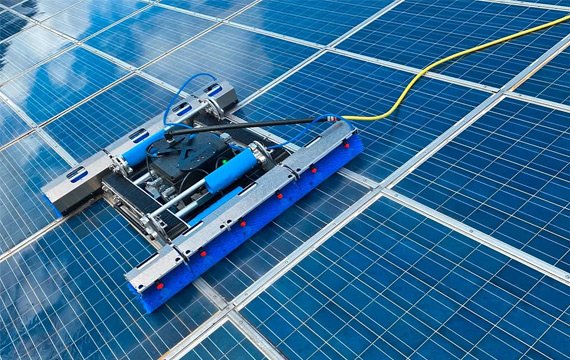
How Filament Density Influences Cleaning Performance
Cleaning Coverage and Dust Removal
One of the most important functions of a solar panel cleaning brush is creating sufficient contact with the panel surface.
Higher filament density increases the number of contact points between bristles and glass, allowing the brush to remove accumulated dust more evenly.
However, higher density does not always mean better cleaning performance. When filament spacing becomes too compact:
- Dust particles may become trapped between filaments.
- Debris removal efficiency can decrease.
- Additional resistance may occur during rotation.
A properly balanced density allows the brush to collect and release contaminants efficiently while maintaining smooth movement across the panel surface.
Water Retention and Cleaning Efficiency
Many PV cleaning systems use water-assisted cleaning. In these applications, filament density affects how water is distributed across the brush surface.
A properly designed brush can retain enough water between filaments to create a thin lubrication layer between the bristles and the solar panel glass.
This helps:
- Reduce friction
- Improve dust removal
- Protect anti-reflective coatings
- Reduce unnecessary water consumption
For example, a brush for solar panel cleaning used in automated systems often requires a density design that balances water retention with debris release.
Too little density may cause insufficient water coverage, while excessive density may hold too much moisture and increase brush resistance.
Filament Density and Mechanical Load
Cleaning Performance vs Equipment Stress
The design of a nylon filament brush requires balancing cleaning power with equipment limitations.
A common misunderstanding is that a higher bristle density always creates better cleaning results. In reality, excessive density can increase:
- Brush weight
- Rotational resistance
- Motor torque requirements
- Energy consumption
For robotic PV cleaning systems, these factors directly influence operating efficiency.
Based on industrial brush manufacturing experience, the optimal density is selected according to the cleaning machine specifications rather than maximizing the number of filaments.
High-Density vs Low-Density Brush Configurations
| Filament Density | Cleaning Performance | Advantages | Suitable Applications |
| Low Density | Flexible and lightweight cleaning | Lower resistance, better debris release | Loose dust and dry cleaning |
| Medium Density | Balanced cleaning performance | Good efficiency and durability | General solar panel cleaning |
| High Density | Increased contact points | Better for heavy contamination | Industrial PV maintenance |
Low-Density Brush Applications
Low-density brushes provide more space between filaments, allowing dust and debris to escape more easily.
Advantages include:
- Lower rotational resistance
- Reduced motor load
- Better airflow during dry cleaning
- Lightweight design for robotic systems
They are commonly used for:
- Loose dust removal
- Regular maintenance cleaning
- Large-area solar farms with frequent cleaning schedules
However, if density is too low, the brush may not provide enough surface contact, resulting in incomplete cleaning or requiring multiple passes.
High-Density Brush Applications
High-density brushes provide more bristle contact points, making them suitable for removing heavier contamination.
Applications may include:
- Bird droppings
- Industrial dust
- Sticky environmental deposits
However, high-density designs require careful engineering.
If the density is excessive:
- The brush may become too rigid.
- Sand particles can remain trapped between filaments.
- The cleaning system may require higher torque.
For this reason, professional brush manufacturers adjust density according to the specific PV cleaning environment.
Filament Material and Density Optimization
Filament density cannot be evaluated separately from filament material. The same density configuration can perform differently depending on the properties of the filament itself.
For a professional nylon PV cleaning brush, nylon is commonly selected because of its balance of flexibility, wear resistance, and recovery ability.
Nylon filaments can repeatedly bend during cleaning operations and return to their original position, helping maintain consistent brush contact over long operating cycles.
When designing a solar panel cleaning brush, manufacturers typically consider the relationship between:
- Filament material
- Filament diameter
- Filament density
- Brush rotation speed
- Cleaning pressure
A higher density brush made with flexible filaments may provide smooth cleaning performance, while the same density using a stiffer filament may create excessive contact pressure.
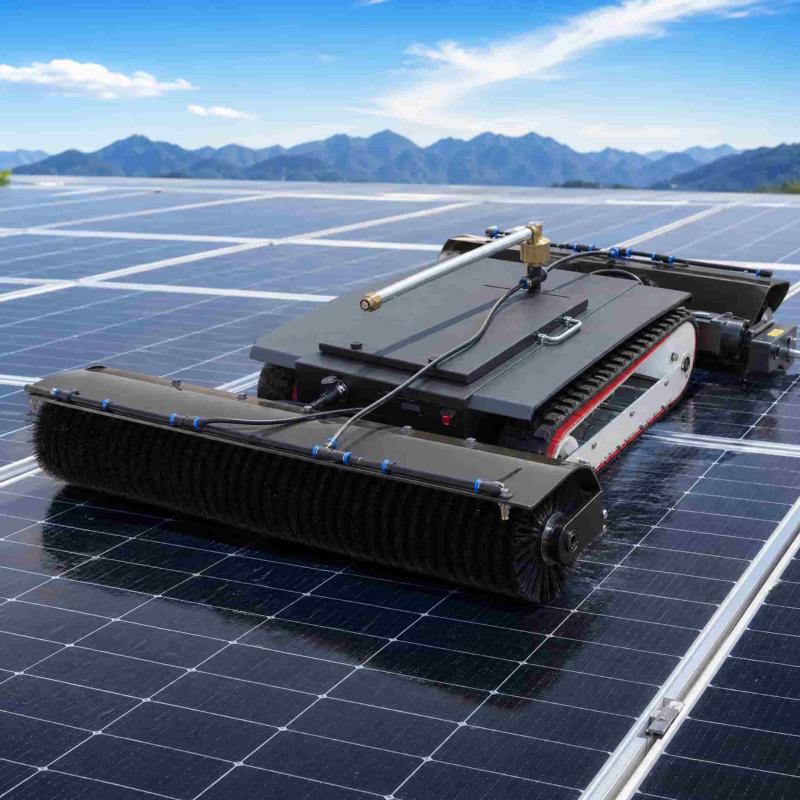
Nylon Filament Performance in PV Cleaning Applications
Nylon is widely used in PV cleaning applications because it provides:
- Good abrasion resistance
- Stable mechanical performance
- Excellent bend recovery
- Compatibility with wet cleaning systems
For automated cleaning equipment, filament recovery is especially important. During repeated rotation, bristles must maintain their original shape to ensure consistent contact with the solar panel surface.
Based on custom brush manufacturing experience, nylon filament density is usually adjusted together with filament diameter and trim length to achieve the right balance between cleaning efficiency and surface protection.
For example:
- Longer filaments provide more flexibility.
- Thicker filaments provide stronger cleaning action.
- Higher density increases contact points.
The correct combination depends on the customer’s cleaning system and operating environment.
Brush Design Factors Beyond Filament Density
Although filament density is an important factor, the overall performance of a solar cleaning brush depends on multiple design parameters.
Filament Diameter
Filament diameter affects brush stiffness and cleaning strength.
Thinner filaments:
- Provide softer contact
- Adapt better to uneven surfaces
- Reduce risk of excessive pressure
Thicker filaments:
- Provide stronger mechanical cleaning
- Handle heavier contamination
- Offer higher wear resistance
Filament Length
Filament length determines flexibility and contact behavior.
Longer filaments:
- Increase flexibility
- Improve surface adaptation
- Reduce aggressive contact
Shorter filaments:
- Increase stiffness
- Provide stronger cleaning force
Brush Structure
The brush construction method also affects density performance.
Different structures include:
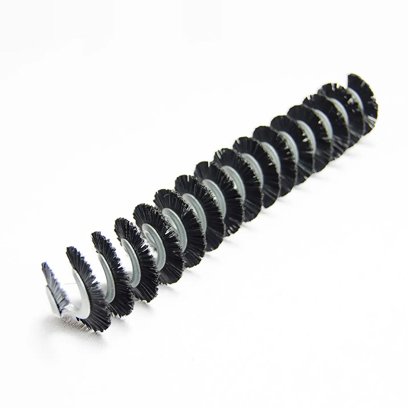
- Spiral wound roller brushes
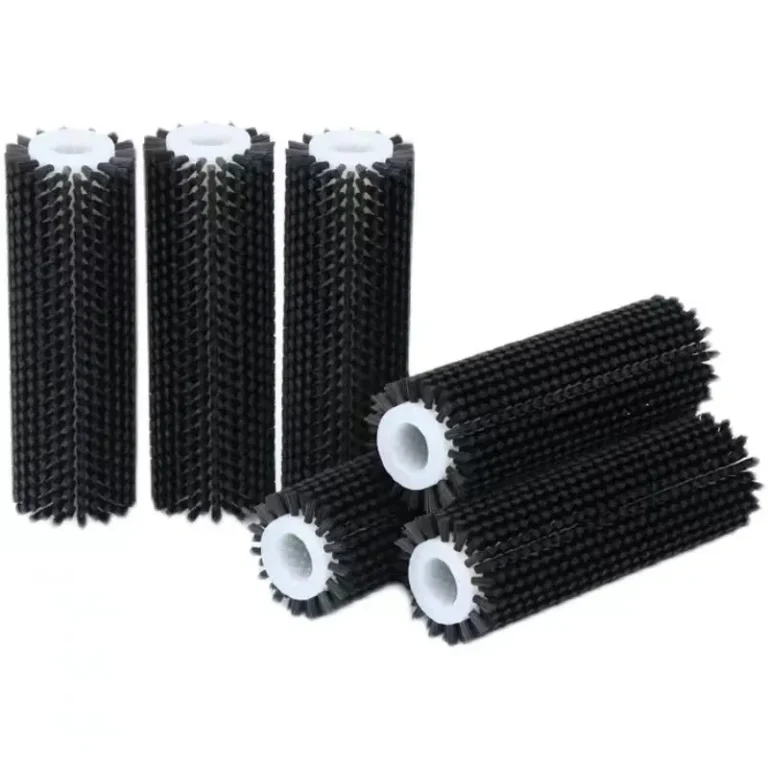
- Tufted brushes
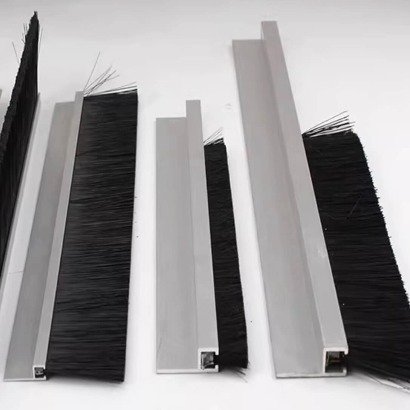
- Strip brush assemblies
- Custom rotary brush designs
Each structure provides different advantages depending on the cleaning equipment.
Optimizing Rotary Brushes for Automated Solar Cleaning
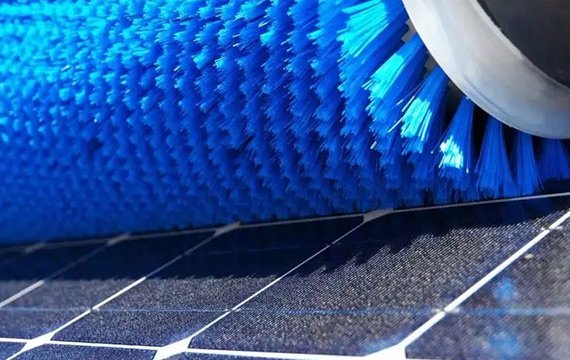
With the increasing adoption of automated PV maintenance systems, brush design has become an important factor in robotic cleaning performance. A rotary brush solar panel cleaning brush must achieve effective cleaning while maintaining low energy consumption.
For robotic systems, excessive brush density may create:
- Higher motor torque requirements
- Faster battery consumption
- Increased mechanical wear
A properly designed rotary brush balances:
- Cleaning coverage
- Brush weight
- Rotation resistance
- Equipment durability
Tufted Design vs Full-Density Design
Many automated cleaning systems use tufted brush structures because they provide better flexibility compared with fully packed filament arrangements.
Advantages of tufted structures include:
- Reduced brush weight
- Lower rotational resistance
- Improved debris release
- Better adaptability to panel surfaces
However, the optimal design depends on:
- Robot specifications
- Cleaning speed
- Panel arrangement
- Contamination conditions
A professional brush manufacturer will adjust filament density and brush structure based on the complete cleaning system rather than using a standard configuration.
Choosing the Right Solar Panel Cleaning Brush Density
Selecting the correct density requires understanding the actual operating environment.
Before manufacturing a customized solar panel cleaning brush, several factors should be evaluated:
| Consideration | Impact on Brush Design |
|---|---|
| Dust type | Determines required cleaning strength |
| Panel surface | Influences filament softness and contact pressure |
| Cleaning frequency | Affects durability requirements |
| Equipment type | Determines weight and torque limitations |
| Water availability | Influences filament arrangement |
For example:
Desert Solar Farms
Typical challenges:
- Fine sand particles
- Large dust accumulation
- Frequent cleaning requirements
Recommended considerations:
- Balanced filament density
- Good debris release
- Durable nylon filaments
Industrial Areas
Typical challenges:
- Oil residue
- Industrial dust
- Sticky contamination
Recommended considerations:
- Higher cleaning contact
- Proper water distribution
- Customized filament configuration
Residential or Small PV Systems
Typical challenges:
- Surface protection
- Lightweight equipment
Recommended considerations:
- Softer filaments
- Lower mechanical pressure
- Flexible brush design
Manufacturing Expertise for Customized Solar Cleaning Brushes
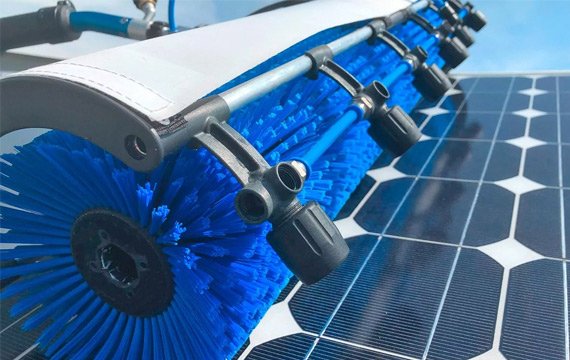
A high-performance brush is not created by increasing filament quantity alone. At marshal, brush performance is optimized through the combination of:
- Filament selection
- Density adjustment
- Diameter control
- Brush structure design
- Application requirements
Based on years of custom brush manufacturing experience, filament density is customized according to the customer’s cleaning conditions, equipment requirements, and expected service life.
For large-scale PV maintenance projects, the right brush specification can help improve:
- Cleaning efficiency
- Equipment reliability
- Maintenance intervals
- Overall operating cost
Economic Benefits of Optimized Brush Density
Investing in a properly designed solar panel cleaning brush provides long-term value beyond initial equipment cost.
Reduced Cleaning Time
A correctly optimized brush can remove contaminants more efficiently, reducing repeated cleaning cycles.
This helps:
- Increase equipment productivity
- Reduce labor requirements
- Improve maintenance efficiency
Lower Equipment Stress
A properly balanced density reduces unnecessary mechanical load.
Benefits include:
- Lower motor strain
- Reduced wear on cleaning systems
- Longer equipment lifespan
Improved Surface Protection
The right density prevents excessive pressure and helps maintain the condition of solar panel coatings.
This is especially important for PV systems using anti-reflective glass coatings.
Conclusion
Filament density is one of the key design factors affecting the performance of a solar panel cleaning brush. However, the highest density is not always the best solution. Effective brush performance depends on the balance between filament arrangement, cleaning requirements, equipment limitations, and environmental conditions.
For PV maintenance applications, a properly engineered nylon solar panel cleaning brush should provide:
- Effective dust removal
- Stable surface contact
- Low mechanical resistance
- Long service life
Through customized filament density and professional brush engineering, solar operators can achieve more reliable cleaning performance while reducing long-term maintenance costs.
FAQ
What does filament density mean in a solar panel cleaning brush?
Filament density refers to the number of bristles installed within a specific area of the brush. It affects contact coverage, cleaning performance, water retention, and mechanical resistance during operation.
Does a higher filament density make a better solar panel cleaning brush?
Not always. A higher density can increase cleaning contact, but excessive density may increase brush resistance and equipment load. The ideal density depends on contamination type, cleaning system design, and operating conditions.
How does filament density affect a nylon solar panel cleaning brush?
Filament density affects how the brush contacts the panel surface, holds water, removes dust, and maintains cleaning efficiency over repeated cycles. The density should be optimized together with filament diameter and brush structure.
What type of brush is suitable for automated solar panel cleaning systems?
A properly designed rotary brush solar panel cleaning brush is commonly used for automated PV cleaning systems. The ideal design depends on robot specifications, cleaning speed, and environmental conditions.
Can a solar panel cleaning brush be customized for different applications?
Yes. Professional manufacturers can customize filament material, density, diameter, trim length, and brush structure according to different solar cleaning requirements.