In the industrial production process, industrial brushes, as a seemingly inconspicuous but actually crucial tool, play a variety of roles such as cleaning, grinding, and polishing. This article will provide a detailed scientific understanding of the classification, materials and applications of industrial brushes, and take you to a deeper understanding of this “master of details” in this industrial field.
1. Classification of industrial brushes
There are many types of industrial brushes. According to different usage scenarios and functional requirements, they can be divided into the following categories:
Classification by shape
(1) Straight handle brushes: suitable for manual operations, such as cleaning small surfaces and cleaning equipment.
(2) Curved handle brushes: convenient for cleaning curved or hard-to-reach areas.
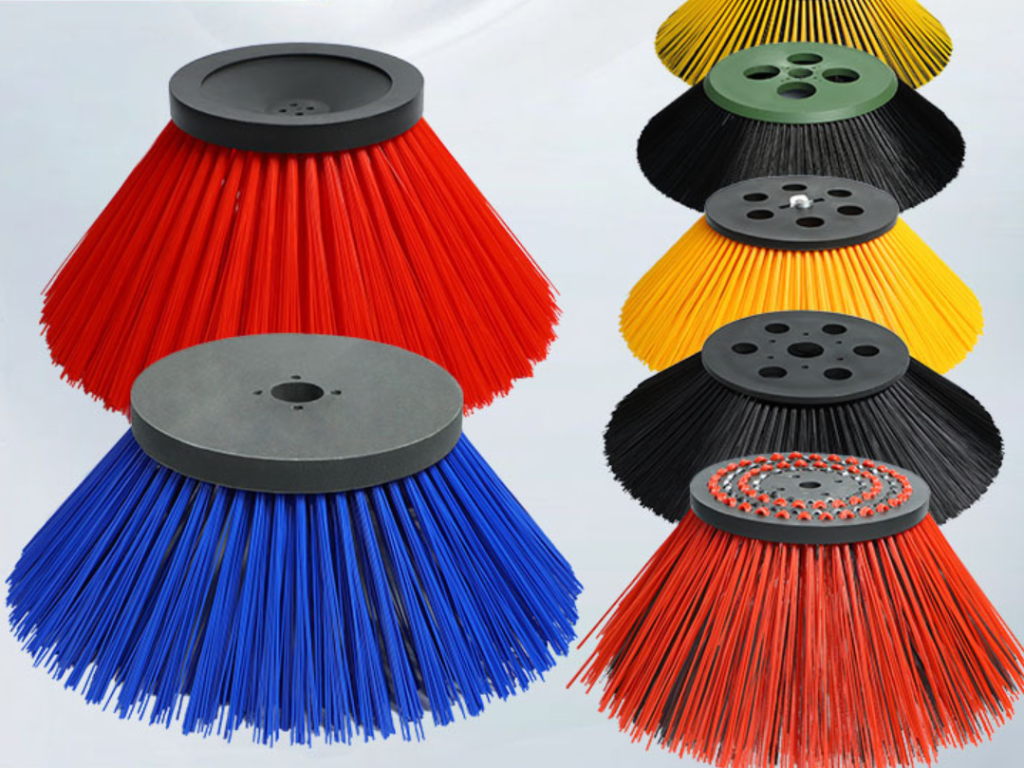
(3) Disc brushes: widely used in automated equipment, such as cleaning machines, polishing machines, etc.
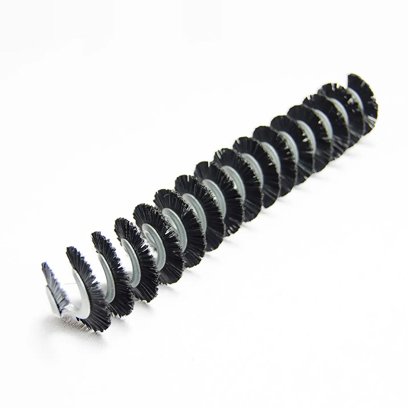
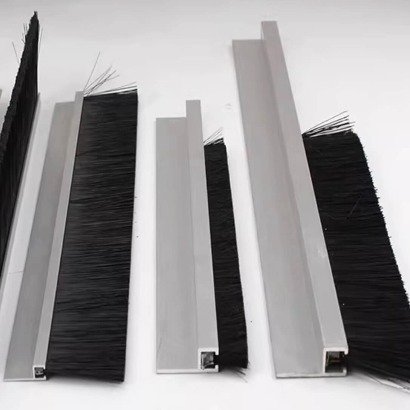
(4) Strip brushes: suitable for linear cleaning or grinding operations.
(5) Plate brushes: used for large-area cleaning or surface treatment of special shapes.
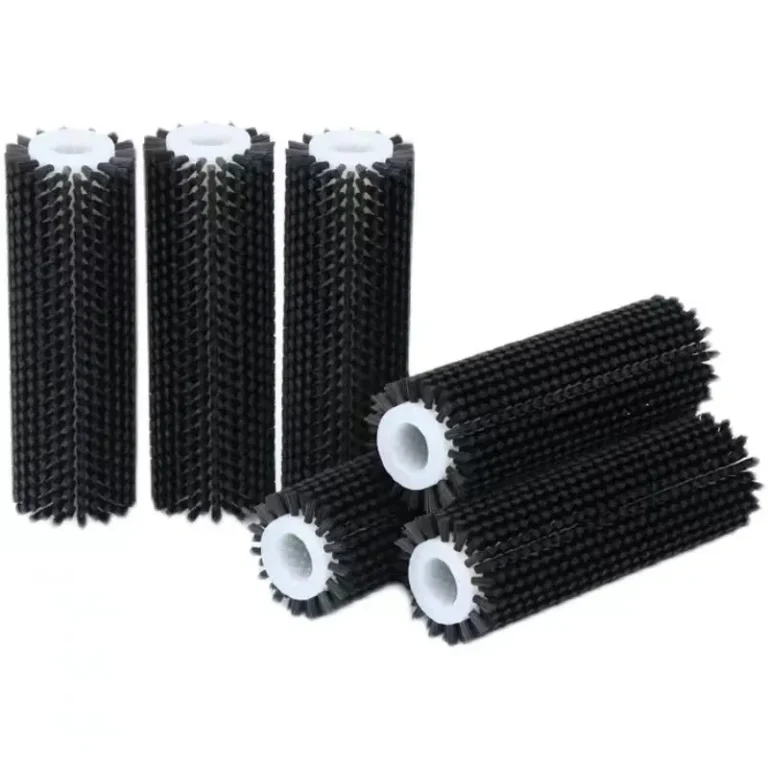
(6) Roller brush: suitable for surface treatment of rolled materials, such as printing, coating, etc.
Classification by function
(1) Cleaning brush: used to clean debris from the ground, conveyor belt and other surfaces.
(2) Polishing brush: used for polishing the surface of metal, wood and other surfaces.
(3) Cleaning brush: used for cleaning containers, bottles, pipes and other surfaces.
(4) Rust removal brush: used for rust removal of metal surfaces.
(5) Welding brush: used for cleaning before and after welding.
(6) Planting brush: used for flocking, flocking and other processes.
Classification by installation method
(1) Handheld: easy to carry, suitable for various occasions.
(2) Fixed: fixed on the equipment, used in automated production lines.
(3) Automatic: integrated in automated equipment to achieve automated operation.
2. The material of industrial brushes
The material of industrial brushes directly affects their service life and performance. The following is an introduction to common brush materials:
Brush material
(1) Pig bristle: natural material with good elasticity and toughness, suitable for polishing and cleaning.
(2) Wool: soft and absorbent, suitable for cleaning and polishing fine surfaces.
(3) Nylon: wear-resistant, high temperature resistant, and chemical corrosion resistant, suitable for most industrial occasions.
(4) PP (polypropylene): acid and alkali corrosion resistant, suitable for the chemical industry.
(5) PVC (polyvinyl chloride): high hardness, suitable for cleaning in special occasions.
(6) Steel wire: high hardness, wear-resistant, suitable for strong rust removal and burr removal.
(7) Carbon fiber: conductive, high temperature resistant, suitable for special industrial occasions.
Bracket material
(1) Stainless steel: corrosion-resistant, high strength, suitable for food, medicine and other industries.
(2) Aluminum alloy: light, corrosion-resistant, suitable for general industrial use.
(3) Plastic: light, low cost, suitable for occasions where strength requirements are not high.
3. Application fields of industrial brushes
Industrial brushes are widely used in the following fields:
(1) Mechanical manufacturing: used for deburring, polishing, cleaning and other processes.
(2) Food processing: used for washing fruits and vegetables, and cleaning production lines.
(3) Construction industry: used for cleaning surfaces such as concrete and bricks.
(4) Electronics industry: used for cleaning circuit boards, removing excess solder, etc.
(5) Glass industry: used for cleaning and polishing glass products.
(6) Automobile manufacturing: used for body painting, interior cleaning, etc.
(7) Metal processing: used for rust removal, deburring, polishing, etc.
4. Selection and maintenance of industrial brushes
Key points for selection
(1) Choose the appropriate brush shape and function according to the application.
(2) Choose corrosion-resistant and wear-resistant materials according to the working environment.
(3) Consider the hardness and elasticity of the brush to meet different process requirements.
Maintenance
(1) Check the wear of the brush regularly and replace the bristles in time.
(2) Keep the brush clean to avoid dirt accumulation.
(3) Avoid moisture during storage to prevent the bristles from deforming and the bracket from rusting.
5. Conclusion
Although industrial brushes are small, they play a huge role. The diversity of their types and materials provides a wealth of choices for different industries. Understanding the classification and materials of industrial brushes will help us better play their important role in industrial production, improve production efficiency and ensure product quality. With the continuous advancement of science and technology, industrial brushes will continue to innovate and contribute to the development of my country’s industry. In the process of purchasing and using, mastering relevant knowledge can give full play to the advantages of this “master of details”.