Introduction: The invisible guardian of industrial cleaning
In the field of precision manufacturing, the stable operation of CNC lathes (CNC) not only relies on advanced technology, but also requires a dust-free and debris-free working environment. According to statistics, about 15% of equipment failures are caused by debris accumulation, while traditional manual cleaning is inefficient and easy to damage the surface of the equipment. With its modular design, high wear resistance and intelligent adaptability, Industrial Plate Brush is becoming a “cleaning expert” in modern factories – it is not only a tool but also a strategic component to improve production efficiency and extend equipment life.
Analysis of the core technology of industrial plate brush
1. Material innovation: the golden combination of nylon wire and substrate
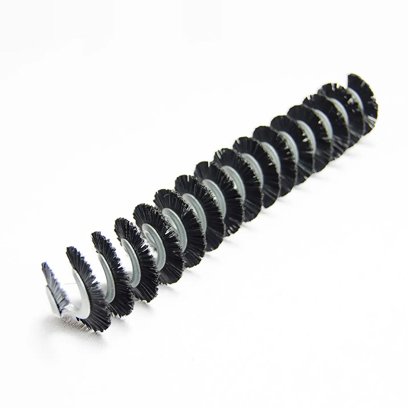
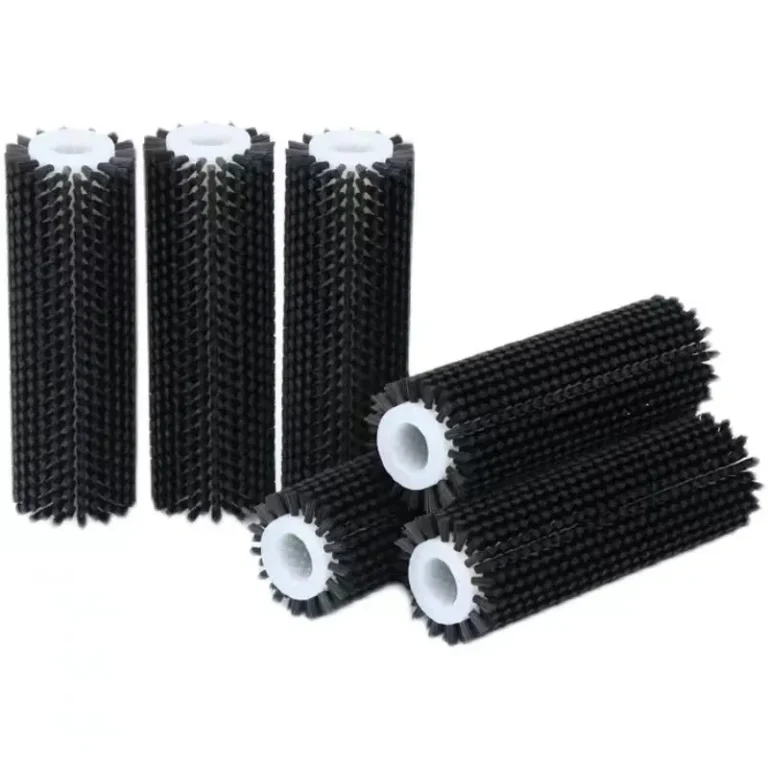
The core competitiveness of Industrial Plate Brush comes from its material science. Taking the nylon wire plate brush as an example, its brush wire is made of PA6/66 nylon polymer, with a diameter range of 0.3-0.5mm and instantaneous temperature resistance of up to 200℃. It can maintain elasticity during high-speed rotation and avoid the risk of sparks caused by metal contact. The substrates include two categories:
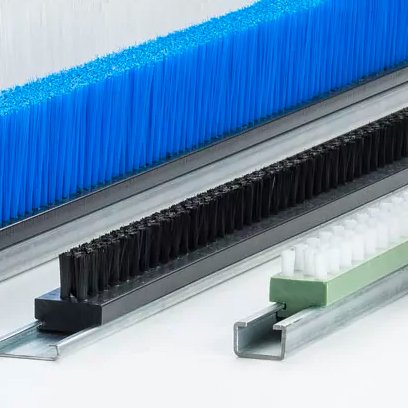
PVC Flat Plate Brush: resistant to acid and alkali corrosion, suitable for humid environments such as food processing and chemical industry, and can withstand temperatures up to 120℃;
Plastic Flat Plate Brush: lightweight design, suitable for conventional industrial scenarios (-20℃~80℃), more cost-effective.
2. Structural design: from static cleaning to dynamic adaptation
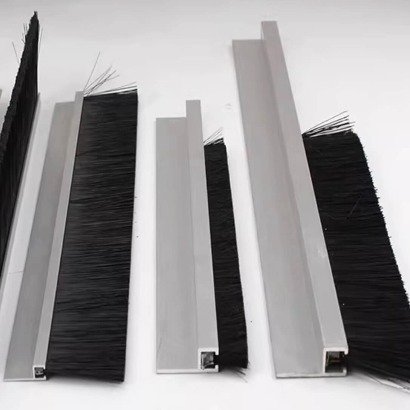
Unlike traditional fixed brushes, industrial plate brushes adopt modular splicing technology.They support customizable widths from 50mm to 300mm. A pressure regulation system ensures precise operational control. For example, in lathe tool path polishing, the contact pressure between the bristles and the workpiece can be accurately controlled at 0.2-0.5MPa by a pneumatic device, which can remove chips without damaging the surface of precision workpieces.
Why must CNC lathes be equipped with special flat plate brushes?
1. The underlying logic of improving cleaning efficiency by 40%
CNC lathes will produce a mixture of micron-level metal dust and oil during processing. Experimental data shows that Plate Brush for CNC can remove more than 90% of residues within 5 minutes through the dual effects of electrostatic adsorption and mechanical sweeping of high-density bristles (120-150 per square centimeter), which is 4 times more efficient than manual cleaning.
2. The economic value of preventive maintenance
The accumulation of debris will accelerate the wear of guide rails and bearings, resulting in reduced equipment accuracy. Regular cleaning with industrial plate brushes can extend the life of lathe spindles by 30% and reduce annual maintenance costs by approximately $12,000 (taking a medium-sized machining center as an example).
3. Environmental protection and safety compliance
The all-plastic/PVC material eliminates the friction sparks of metal brushes and is ISO 14001 certified. In automotive manufacturing, its low-dust design enables workshop air quality to meet OSHA standards and reduce employee respiratory disease complaints.
Selection Guide: Three Golden Rules for Matching Demands
- Working Condition Adaptability: In high-temperature environments, engineers prioritize using PVC substrates, and corrosive scenarios demand the application of acid-resistant and alkali-resistant coatings.;
- Bristle Mechanical Design: Tapered wire is for polishing applications, and flat-head high-density wire 7 is recommended for deburring;
- Supply Chain Responsiveness: Suppliers who support 72-hour sample delivery are preferred to ensure the ability to respond to emergency needs
Conclusion
As manufacturing advances into micron-level precision, the industry’s focus shifts to ultra-fine quality benchmarks.
Industrial plate brushes now exceed traditional roles, emerging as essential quality control assets. It is not only a “scavenger” for CNC lathes, but also the cornerstone of green manufacturing and smart factories. Choosing a professional plate brush means using technology to inject an “invisible shield” into production efficiency and visible excellence in invisible details.