In daily laboratory work, the cleanliness of glassware directly affects the accuracy and repeatability of experimental results. As a core cleaning tool, the choice of test tube brush is often overlooked. According to statistics, more than 30% of experimental errors come from residual contaminants in utensils, and nearly half of these problems can be attributed to improper use of cleaning tools. With its flexible bristle structure and efficient cleaning ability, the spiral brush has become a standard tool in the laboratory. However, when facing glassware of different diameters, how to scientifically choose the specifications of the spiral brush? This article will deeply analyze the key elements of this issue and integrate the technical characteristics of laboratory test tube brushes and industrial spiral brushes to provide professional solutions for your cleaning process.
Diameter matching: the “golden ratio” of spiral brushes and glassware
The scientific basis for diameter selection
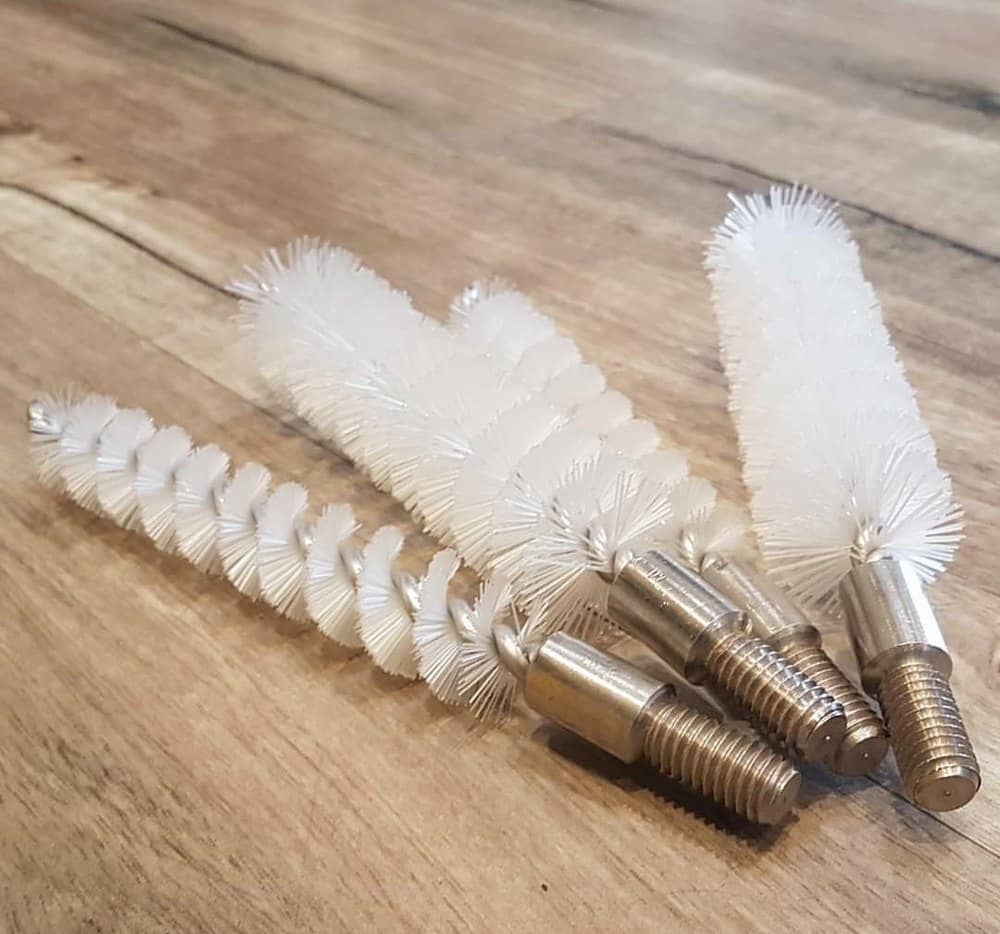
The core function of the spiral brush is to remove residues on the inner wall of the vessel through rotating friction. If the diameter of the brush head is too small, it will lead to insufficient contact area and low cleaning efficiency; on the contrary, if the diameter is too large, it may scratch the glass surface or even cause the vessel to break. According to the recommendations of the International Laboratory Equipment Association (ILEA), the ideal diameter of a test tube cleaning brush should be 1-2 mm smaller than the inner diameter of the vessel to ensure that the bristles are fully spread and not over-extended.
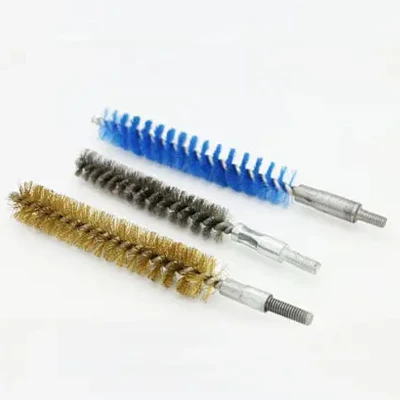
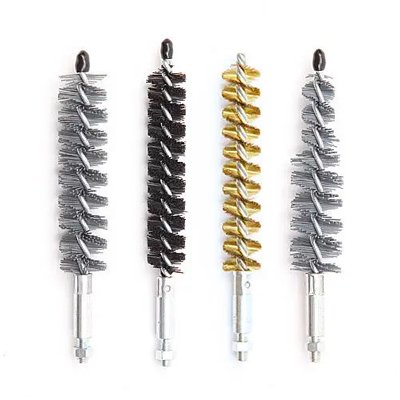
For example, for a test tube with an inner diameter of 25 mm, a spiral brush with a diameter of 23-24 mm is recommended. Both the copper wire pipe spiral brush and the nylon wire tube cleaning brush offer multiple specifications to cover the full range of scenarios from microcentrifuge tubes to large flasks.
Adaptation solutions for special vessels
For special-shaped vessels (such as conical flasks and curved-necked flasks), a spiral brush with an elastic support structure should be selected. For example, the design of nylon bristles with a spring steel core (refer to the nylon spiral brush product page) can maintain a stable cleaning pressure in a curved path to avoid cleaning dead corners caused by deformation of the brush head.
Material selection: the balance between cleaning efficiency and vessel protection
Metal bristles vs. synthetic fibers
Copper wire spiral brush:suitable for stubborn stains (such as crystallized reagents and polymer residues), and its high hardness can quickly remove deposits. However, it should be noted that copper wire may cause minor scratches on the glass surface, so it is recommended to be used only for wear-resistant borosilicate glassware.
Nylon bristles spiral brush:As the mainstream choice for lab test tube brushes, nylon material is both flexible and chemically resistant, especially suitable for cleaning fragile thin-walled vessels. Some high-end products also add silicon carbide abrasives to improve the removal efficiency of organic residues.
Laboratory transformation of industrial-grade technology
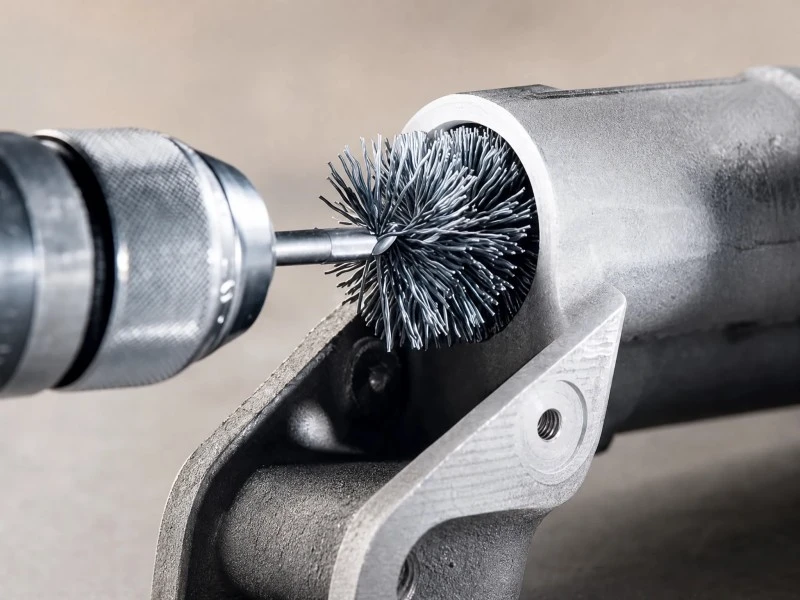
Industrial spiral brush technologies widely used in the industrial field, such as staggered hair planting and double helix structure, are gradually being applied to laboratory tools. For example, a certain brand of nylon spiral brush adopts a “progressive density design”, with dense bristles at the front of the brush head for deep cleaning and sparse areas at the back end for polishing. This design significantly reduces the risk of secondary contamination.
Maintenance and life extension: “Full-cycle management” of spiral brushes
Key points of maintenance after cleaning
Drying treatment: After use, rinse with deionized water and hang to dry immediately to prevent the bristles from becoming brittle due to corrosion from residual reagents (refer to the maintenance guide for industrial spiral brushes).
Regular disinfection: For spiral brushes that come into contact with biological samples, it is recommended to use 121°C high-pressure steam sterilization instead of chemical immersion to prevent degradation of the bristle material.
Life warning signals
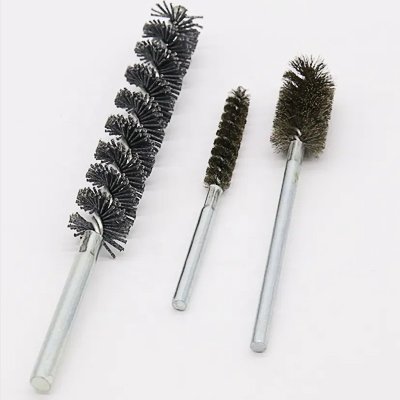
When the spiral brush has the following conditions, it needs to be replaced immediately:
- The bristle lodging rate exceeds 30%, resulting in insufficient cleaning contact surface;
- Rust occurs on the metal core (may contaminate sensitive experiments);
- The tip of the nylon bristle is forked, resulting in the risk of microplastic shedding
Choosing a spiral brush with the right diameter is not only a technical decision for cleaning tools, but also an important link in the experimental quality control chain that cannot be ignored. By accurately matching the specifications of the utensils, scientifically selecting materials, and implementing full-cycle management, laboratory personnel can minimize cleaning errors. As the core concept of German precision tool manufacturer WILPU says: “Excellent experimental results begin with the ingenious choice between millimeters.”