In today’s era of soaring energy costs and heightened environmental awareness, both industrial plant managers and homeowners are striving to find effective ways to reduce energy consumption. We often focus on expensive HVAC system upgrades or wall insulation modifications, easily overlooking a small but crucial detail—door seals.
As the weakest point in a building envelope most prone to air leakage, the gaps at the bottom and sides of doors are the “main channels” for hot and cold air to escape. In this area, traditional rubber seals are gradually showing their limitations, replaced by a more efficient and durable solution: door seal with brushes. This article will delve into why this seemingly simple brush-sealing technology has become a “hidden champion” in improving energy efficiency.
I. Breaking with Tradition: Sealing Advantages from a Fluid Dynamics Perspective
To understand why brush seals are superior, we must first understand how air is lost. Air loss is not merely a simple draft; it involves convection and infiltration at the microscopic level.
Traditional rubber or vinyl door seals rely on the physical compression of the material to block air. However, this “hard-on-hard” contact method has significant drawbacks: when the ground is uneven or the door is slightly deformed, the rubber cannot adhere completely, leading to seal failure; furthermore, excessive friction can hinder door opening and closing and even damage automatic door motors.
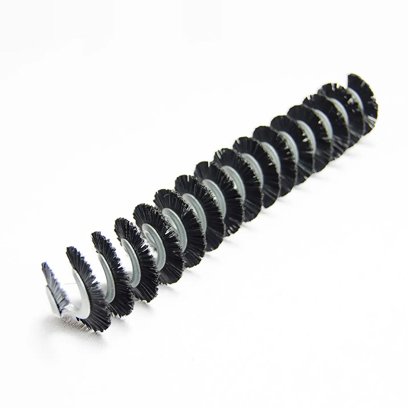
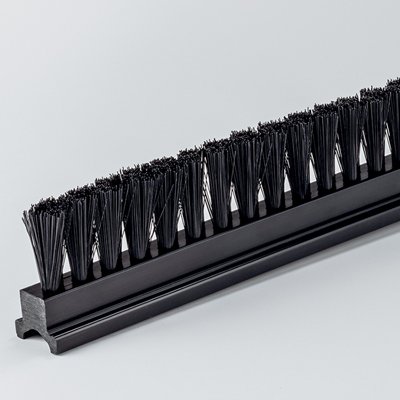
In contrast, door seals with brushes utilize thousands of fine filaments. From a fluid dynamics perspective, these high-density filaments construct a complex labyrinthine barrier. When air molecules attempt to pass through this barrier, they are dispersed and blocked by countless filaments, their kinetic energy greatly weakened, effectively blocking air convection.
This unique structure gives a brush-type door seal with brush excellent compliance. Whether the ground is rough concrete or has subtle elevation differences, the filaments can flexibly fill every tiny gap, achieving a truly seamless seal. This “soft seal” not only significantly improves airtightness, directly reducing the energy consumption required to maintain a constant indoor temperature, but also minimizes frictional resistance when opening and closing the door.
II. Scenario-Specific Advantages: The Perfect Partner for Garage and Industrial Roller Shutters
In residential and industrial applications, garage doors and large roller shutters are often the biggest points of energy leakage. These doors are large and often installed on imperfect floors, posing a significant challenge to sealing.
Energy-Saving Retrofitting of Garage Doors
For garage doors, which are prone to deformation due to their large span, ordinary rubber strips often harden and crack after just one winter. Therefore, installing a high-quality garage door brush seal becomes essential.
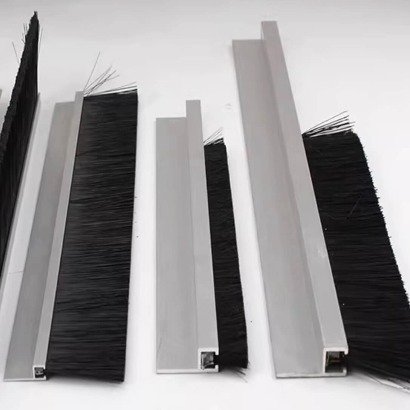
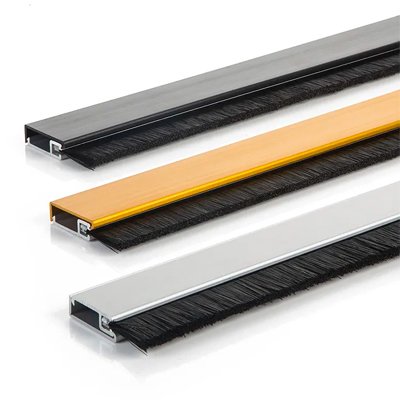
Brush seals from professional manufacturers such as marshal are typically equipped with a durable aluminum alloy holder. This combination not only has a clean appearance, but more importantly, the nylon or polypropylene (PP) bristles have excellent weather resistance and will not become brittle or break even at extreme low temperatures. It effectively blocks the intrusion of cold air from outside, maintaining the interior temperature of the garage. For garages connected to living areas, this directly translates to lower heating costs for homes.
Challenges of Industrial Roller Shutters
In logistics centers or factory workshops, roller shutters frequently rise and fall. Rigid sealing materials wear out quickly. Brush seals for roll-up doors are specifically designed for such high-intensity applications.
Brush seals can be installed on the top, sides, and bottom of the roller shutter. Especially for sealing the sides, the brush bristles maintain continuous contact during the door’s up-and-down movement without generating excessive frictional noise or resistance. This not only reduces heat exchange but also prevents dust and pests from entering, providing essential cleanliness for precision manufacturing environments or food storage warehouses.
III. Materials and Processes: Key Details Determining Energy Efficiency
Referring to product catalogs from industry leaders like marshal, we find that high-quality sealing brushes offer significant advantages in the following aspects:
Uniformity of Bristle Density:
Effective sealing relies on high-density bristle packing. Sparse bristles allow air to penetrate freely. High-quality sealing strips utilize advanced tufting technology to ensure a consistent number of bristles per inch, forming a dense yet flexible air wall.
Scientific Base Design:
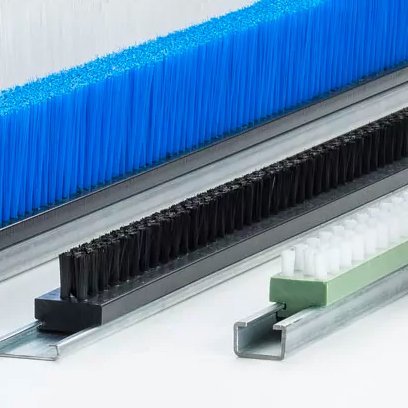
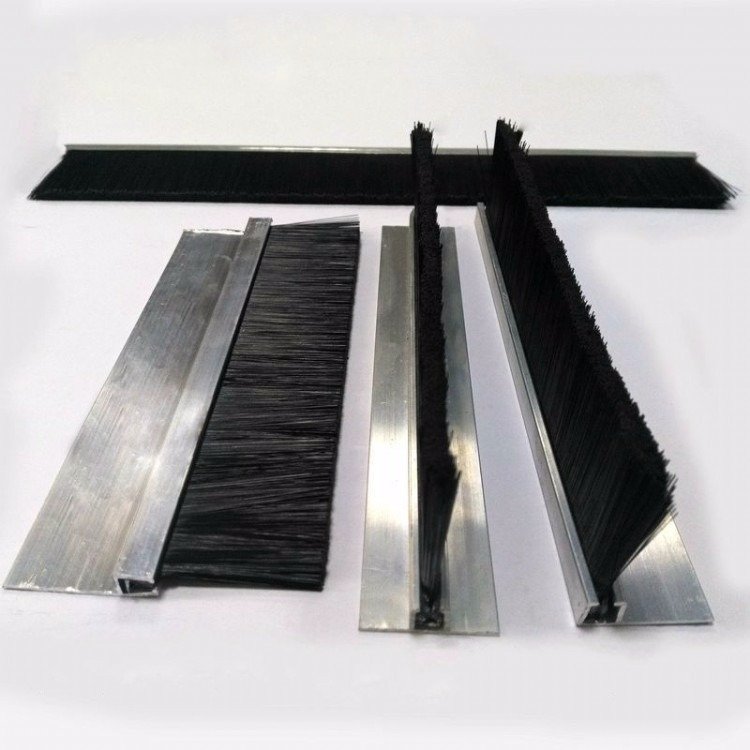
To adapt to different installation environments, aluminum alloy bases are typically designed in H-shape, F-shape, or T-shape.
- F-shape: Commonly used for corner or side installation, suitable for sliding doors.
- H-shape: Suitable for vertical installation at the bottom of doors, providing a strong bottom seal.
This versatile profile design ensures that the optimal installation angle can be found for any door type, eliminating energy loss due to installation gaps.
UV Resistance and Chemical Resistance of the Material:
Sealing strips exposed outdoors must be able to resist ultraviolet (UV) radiation. Inferior plastic bristles will turn to powder under sunlight, while professional black nylon bristles are not only wear-resistant but also typically UV-resistant, ensuring they remain flexible for years. Long-term durability translates to fewer replacements and more sustained energy savings.
IV. A Unique Environmental Perspective: Comprehensive Benefits Beyond Energy Saving
When we talk about door seal with brush, beyond direct energy savings, we should also consider their comprehensive contribution to the “green building” ecosystem.
Protecting the Efficiency of HVAC Systems:
Dust is a hidden killer of air conditioning and heating systems. Unsealed door gaps can draw in large amounts of dust, clogging filters and heat exchangers, leading to increased equipment load and soaring energy consumption. Brush seals, while blocking airflow, also act as an excellent dust barrier, indirectly maintaining the efficient operation of HVAC equipment.
Light Pollution and Noise Control:
In this often-overlooked dimension, brush seals also excel. For laboratories or home theaters requiring light protection, the dense black bristles effectively block light leakage. Simultaneously, it significantly reduces the intrusion of external noise, playing an irreplaceable role in improving the comfort of living and working environments (a factor considered in LEED and other green building certifications).
Physical Barrier for Pest Management:
Compared to chemical pesticides, physical barriers are the most environmentally friendly method of pest control. Rats and insects dislike the stinging sensation of brush bristles; therefore, brush seals effectively prevent biological invasion, protecting the building’s internal insulation materials from rodent damage, thus ensuring the integrity of the overall insulation system.
Conclusion: Small Investment, Long-Term Returns
In conclusion, choosing a door seal with a brush is not merely about filling a gap, but a wise investment based on scientific principles.
From the barrier principle of fluid dynamics to the outstanding performance of garage door brush seals in large-span scenarios, and the durability of brush seals for roll-up doors in high-frequency industrial applications, brush seals, with their unique flexibility, dense physical structure, and excellent weather resistance, have become one of the most cost-effective solutions for building energy-saving renovations.
In this era of pursuing sustainable development, don’t let your energy budget slip away unnoticed. Choosing high-quality brush seals from professional manufacturers like marshal will yield more than just a reduced number on your monthly bill; it will create a cleaner, quieter, more comfortable, and environmentally friendly living space. This small change is enough to build a solid energy defense.