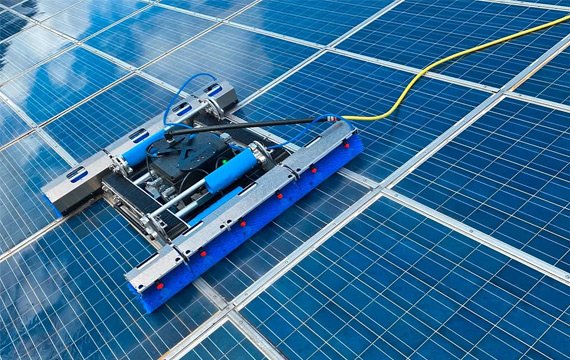
The worldwide shift toward renewable energy has put much focus on the efficiency of photovoltaic (PV) systems. In utility-scale solar farms, maintaining a high performance ratio is primarily dependent on the cleanliness of the PV modules (panels). However, one continuing concern for Operations and Maintenance (O&M) managers is whether the use of a mechanical method of cleaning, such as a Rotary Brush Solar Panel Cleaning Brush, will cause any damage to the anti-reflective coating (ARC) that is on the glass surface of the modules.
Anti-reflective coatings are engineered to reduce light reflection and increase photon absorption. Even microscopic scratches can lead to light scattering, effectively reducing the energy yield of the entire array. Understanding the relationship between brush filament engineering and glass hardness is essential for any professional looking to optimize their cleaning protocols.
The Vulnerability of Anti-Reflective Coatings
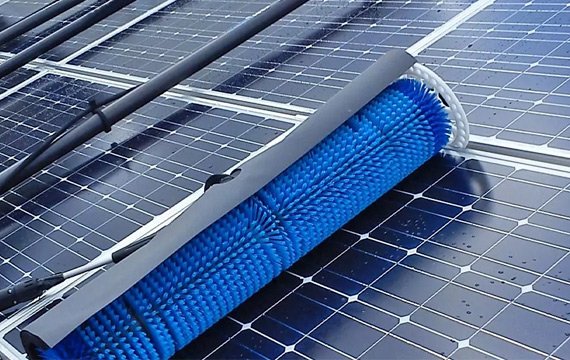
Anti-reflective coatings are typically porous layers of silica or similar materials applied to the solar glass. While they are designed to be durable, they possess a lower Vickers hardness compared to the tempered glass beneath them. Experience in the field suggests that the primary cause of ARC degradation is not the brush itself, but rather the entrapment of abrasive particles like sand and silt between the bristles and the glass.
When a low-quality Solar Panel Cleaning Brush is used without sufficient lubrication, these particles act like sandpaper. Conversely, a high-quality Rotary Brush Solar Panel Cleaning Brush is designed to lift these contaminants away from the surface before they can cause friction-related damage. The risk of scratching is significantly mitigated when the mechanical design prioritizes “float” and water delivery.
Engineering Safety: Filament Selection and Brush Design
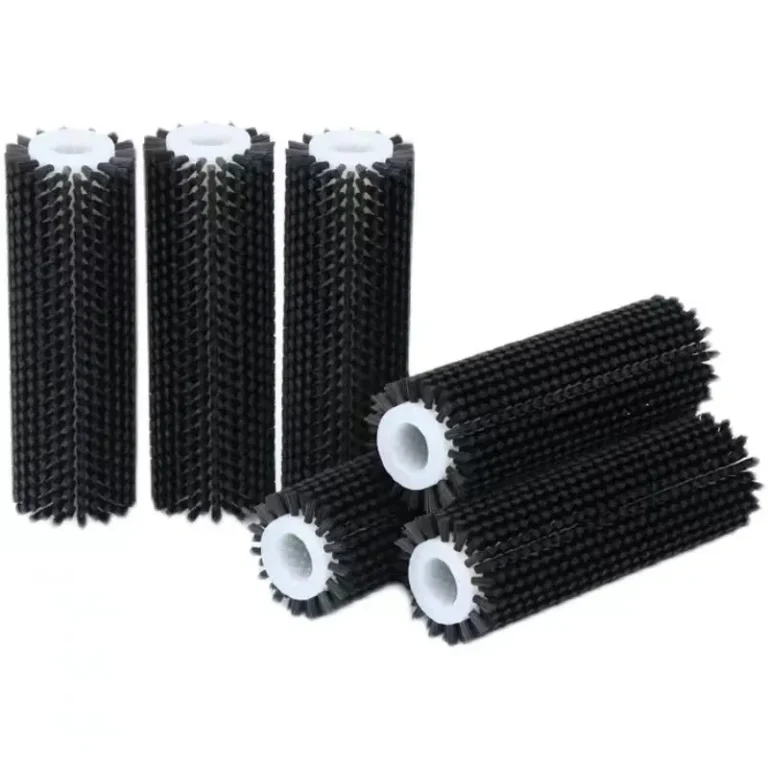
The safety of a solar panel depends on the technical specifications of the cleaning tool. A specialized cylinder Rotary Brush used in automated or semi-automated systems must strike a balance between stiffness (to remove bird droppings and baked-on dust) and softness (to preserve the ARC).
Why Material Science Matters
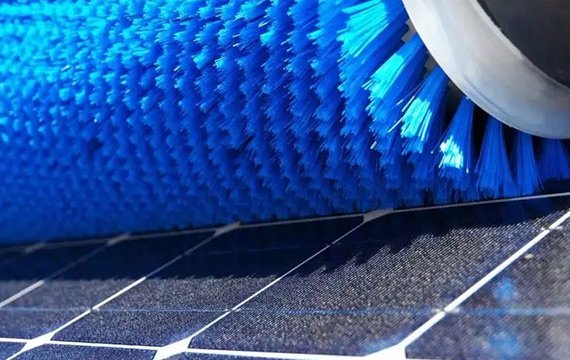
Filament material is the most critical factor in preventing surface abrasion. Most professional-grade brushes utilize ultra-soft Nylon or specialized Polyethylene. These materials have a lower hardness coefficient than the glass coating, ensuring that the bristle itself cannot physically scratch the surface.
Furthermore, the configuration of the roller brush plays a role in safety. Staggered tuft patterns allow for better debris ejection, preventing the “clogging” effect that leads to trapped dirt scratching the panels.
The Role of RPM and Pressure
Mechanical pressure and rotational speed (RPM) are the variables that determine the aggressiveness of the clean. Observations show that high RPMs without adequate water flow create heat, which can soften certain polymer coatings and make them more susceptible to wear. Precision-engineered systems ensure that the Rotary Brush Solar Panel Cleaning Brush maintains a constant, light pressure, relying on the speed of the tips and water lubrication rather than brute force.
Comparative Analysis of Cleaning Media
Not all cleaning filaments are equal. Selecting the wrong material for a specific environment (such as a desert vs. a coastal area) can lead to premature coating wear.
| Filament Type | Hardness Level | ARC Safety | Ideal Application |
| Ultra-Soft Nylon | Low | Excellent | Standard ARC-coated panels in all climates. |
| Soft Polypropylene | Medium | Good | Areas with heavy organic soiling or “sticky” dust. |
| Abrasive Nylon | High | Poor (Avoid) | Industrial metal cleaning only; never for solar. |
| Natural Hair Blend | Very Low | Excellent | Delicate experimental or thin-film modules. |
Best Practices for Scratch-Free Maintenance
To ensure that a Rotary Brush Solar Panel Cleaning Brush provides a safe, clean, O&M teams should adopt a holistic approach to maintenance. It is rarely just about the tool; it is about the system.
- Sufficient Water Lubrication: Water acts as a cooling agent and a transport medium for dirt. A water-fed Solar Panel Cleaning Brush ensures that dust is suspended in liquid and flushed away before mechanical contact is maximized.
- Regular Brush Inspection: Bristles that become “hooked” or matted over time can trap grit. Replacing a worn roller brush is a minor expense compared to the cost of replacing damaged modules.
- Controlled Rotational Speed: High-speed rotation is effective for efficiency but must be balanced. Most ARC-safe systems operate within a specific RPM range to prevent friction heat.
Understanding the solar panel cleaning brush benefits and efficiency is only half the battle; the other half is implementing these technical safeguards to protect the long-term ROI of the asset.
The Importance of “Point of Contact”
In a high-quality cylinder Rotary Brush, the cleaning action occurs at the tips of the bristles. If the brush is pressed too hard against the glass, the “sidewall” of the bristle makes contact. This increases the surface area of friction and the likelihood of trapping particles. Professional systems are designed to allow the bristles to just “flick” the surface, which is the most effective and safest way to remove environmental soiling.
Conclusion: Is Mechanical Brushing Safe?
When evaluated from a technical perspective, a precision-engineered Rotary Brush Solar Panel Cleaning Brush is not only safe but often superior to manual cleaning methods. Manual cleaning often involves inconsistent pressure and recycled water, both of which increase scratch risks. In contrast, an automated roller brush provides uniform pressure and consistent water distribution.
By selecting the correct filament density and ensuring proper system calibration, facility managers can enjoy the solar panel cleaning brush benefits and efficiency without fear of damaging the anti-reflective coatings. The key lies in choosing brushes designed specifically for the solar industry, rather than adapting general-purpose industrial tools. Safe solar cleaning is a science of friction management, and with the right equipment, the integrity of the ARC can be maintained for the full 25-year lifespan of the panels.
FAQ
Q1: Can a Rotary Brush Solar Panel Cleaning Brush be used for dry cleaning safely?
Dry cleaning is only recommended with ultra-soft, specialized filaments in specific desert environments. Generally, water lubrication is preferred to flush away abrasive grit and protect coatings.
Q2: How does a cylinder Rotary Brush compare to manual squeegees for ARC safety?
Automated cylinder Rotary Brushes provide consistent, calibrated pressure, whereas manual squeegees often rely on human force, which can be inconsistent and potentially more damaging to coatings.
Q3: What is the average lifespan of a professional roller brush in solar O&M?
Depending on the environment and cleaning frequency, a high-quality brush typically lasts between 6 to 12 months. Regular replacement ensures the bristles remain soft and effective.